


1930s Ruby Ring
A 1930s ruby ring brings geometric clarity and rich red colour together, offering a striking piece of Art Deco jewellery for daily wear.
1930s Ruby Ring
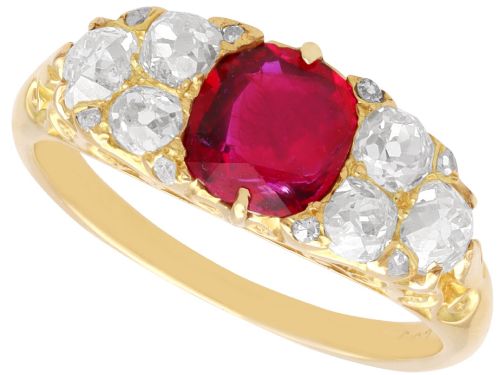
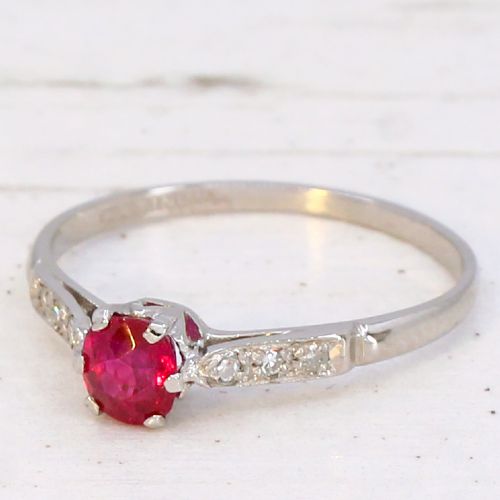
When you search for a 1930s ruby ring, you encounter jewels defined by the sharp lines and symmetrical arrangements of the Art Deco period. These rings pair vibrant rubies with sparkling diamonds, capturing the sophisticated design sensibilities of the 1920s and 1930s.
The most common formats on this page are cluster rings and multi-stone settings, including three stone and five stone configurations. These pieces frequently combine platinum settings with 18ct yellow gold or white gold bands.
How they were made
Goldsmiths of this era utilised platinum alongside 18ct yellow gold and 18ct white gold to construct secure metal mountings that could hold multiple small diamonds around a central ruby. Platinum offered exceptional strength for intricate claw settings without adding unnecessary bulk.
Natural rubies, including Burmese stones, were precision cut into round or cushion shapes and paired with brilliant cut diamonds. The contrasting white of the diamonds and platinum accentuated the deep red hue of the primary ruby.
Every listed piece dates from the 1920 to 1935 period, uniting platinum and 18ct gold with rubies and diamonds under the Art Deco style.
What varies in quality
The distinction between standard examples and exceptional pieces rests upon the origin, carat weight, and saturation of the ruby itself. Natural unheated Burmese stones command particular attention from collectors.
Setting execution and diamond weight heavily influence the overall character of the ring. Heavier diamond entourages and precise geometric placement elevate cluster and dress ring designs.
The 1930s Ruby Ring Glossary
- Art Deco
- A design style dominant in the 1920s and 1930s, characterised by geometric symmetry, clean lines, and stylised motifs. It remains the defining aesthetic of this jewellery category.
- Cluster ring
- A ring design featuring a central gemstone surrounded by a tight cluster of smaller stones, typically diamonds framing a ruby. This layout maximises visual impact and perceived size.
- Trilogy ring
- A ring set with three stones in a row, often representing past, present, and future. In this selection, they appear as ruby and diamond combinations.
- Platinum
- A dense, durable, and naturally white precious metal utilised during this period for securing fine gemstones. Its strength allowed jewellers to create delicate settings.
1930s Ruby Ring: Frequently Asked Questions
How do I care for a 1930s ruby ring?
Rubies are a hard gemstone, making these rings suitable for regular wear when handled with reasonable care. Clean them gently in warm soapy water using a soft brush.
Avoid harsh chemical cleaners and ultrasonic devices, particularly if the stones are treated or the setting is delicate antique work.
What styles define a 1930s ruby ring?
These rings are defined by Art Deco geometry, featuring stepped clusters, clean three stone rows, and balanced dress ring configurations. The metalwork often emphasises straight lines and contrasting white and yellow gold.
Settings are designed to showcase the central red gemstone while framing it with precise arrangements of small diamonds.
Are the rubies in these rings natural?
The inventory includes natural rubies, with specific examples originating from the Mogok region in Burma. These stones display the distinct red hues prized by collectors.
Grading reports often accompany significant natural stones to confirm their origin and treatment status.
Can I resize an antique ruby ring?
Most gold and platinum bands from this period can be adjusted by a skilled jeweller who understands antique mountings. The process depends on the band thickness and the security of the shoulder stones.
Consult a specialist to ensure the geometric setting remains undamaged during the adjustment.