


Vintage Ruby Diamond Jewellery
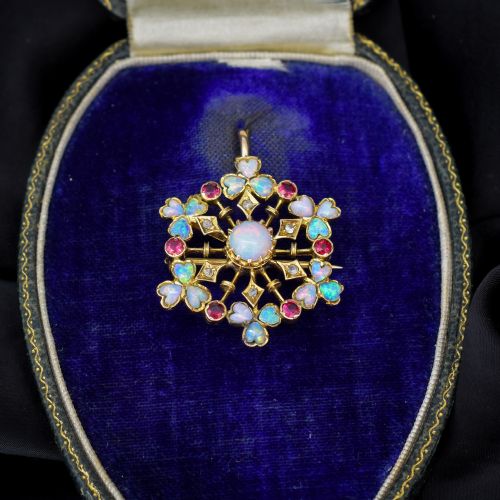
Vintage ruby diamond jewellery combines fiery red stones with sparkling diamonds across rings, brooches, and pendants spanning the Victorian era to the mid-twentieth century.
Vintage Ruby Diamond Jewellery
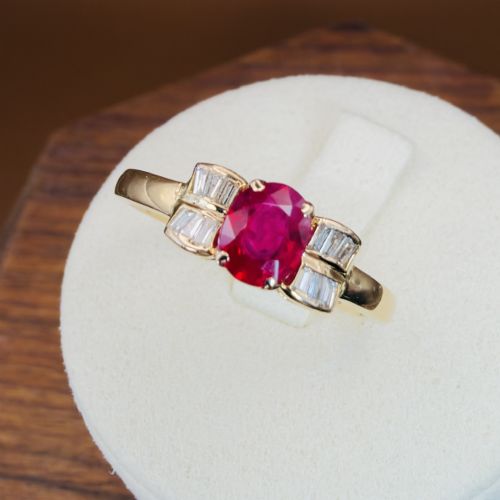
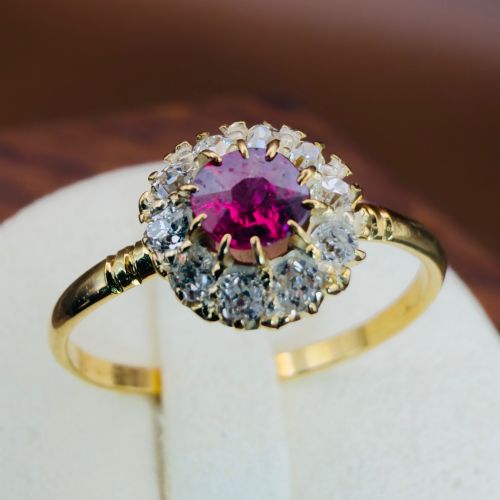
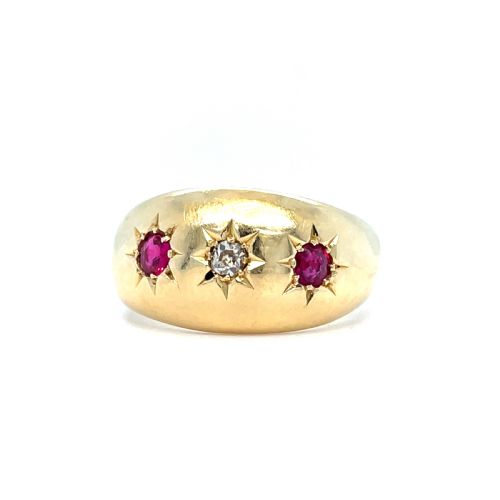
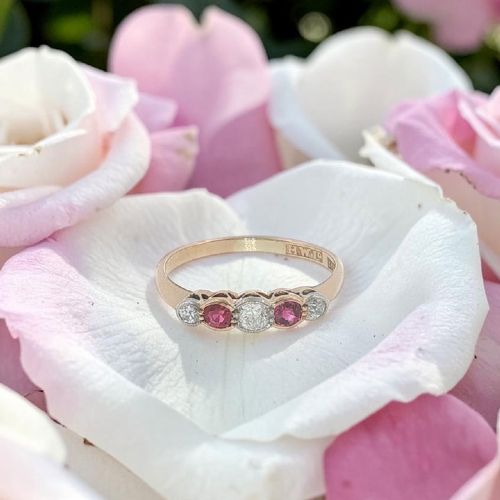
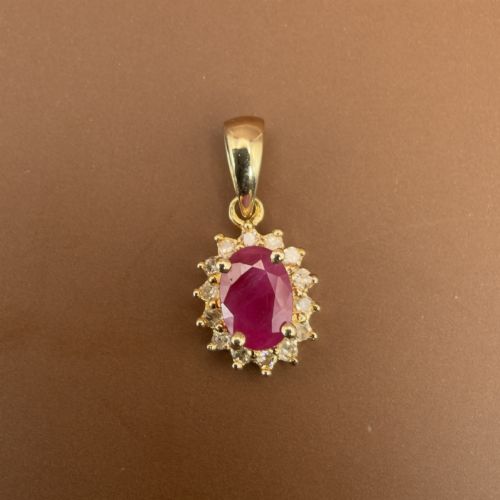
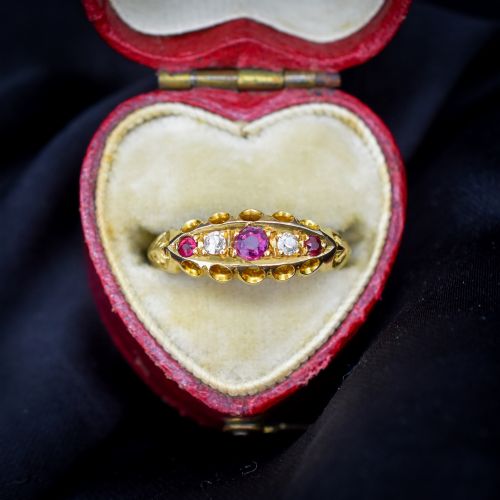
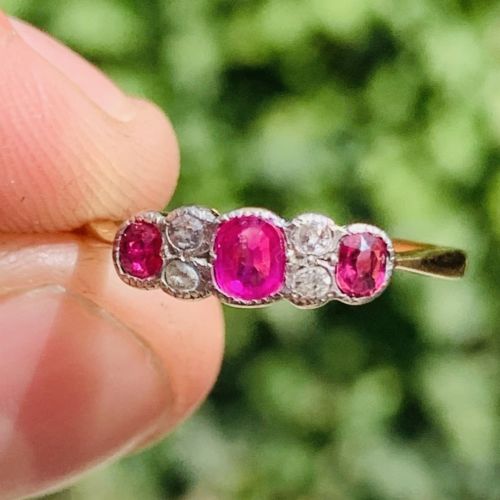
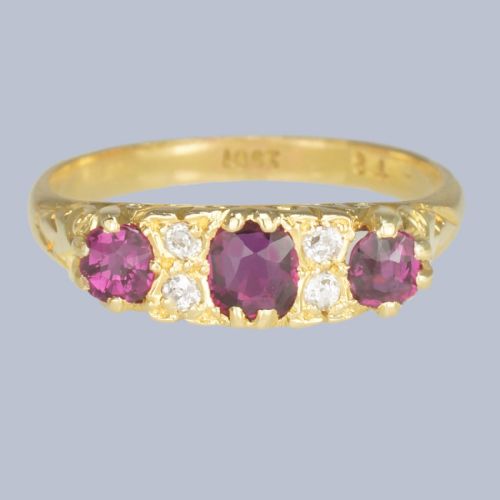
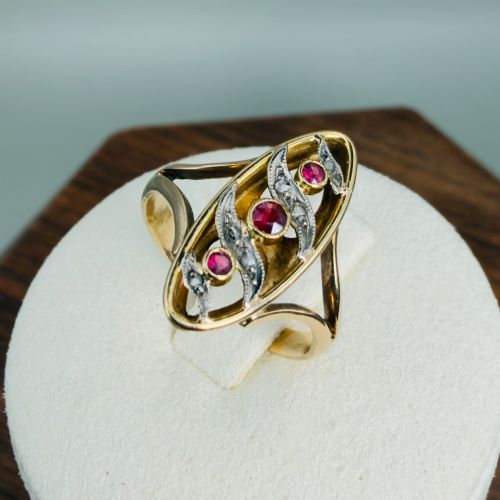
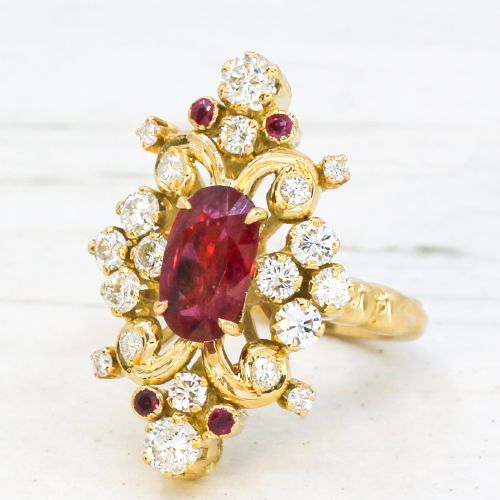
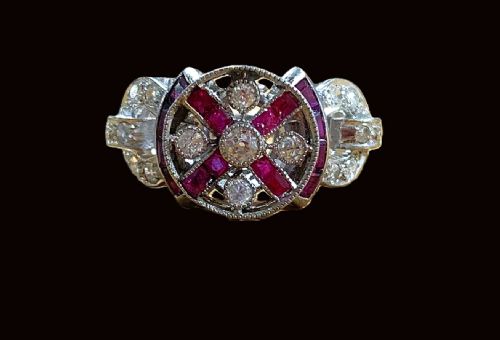
The most common forms on this page are cluster rings and band rings set in eighteen-carat yellow gold, platinum, or eighteen-carat white gold. These pieces display red rubies paired with old-cut, baguette, or brilliant-cut diamonds across various mid-century and antique designs.
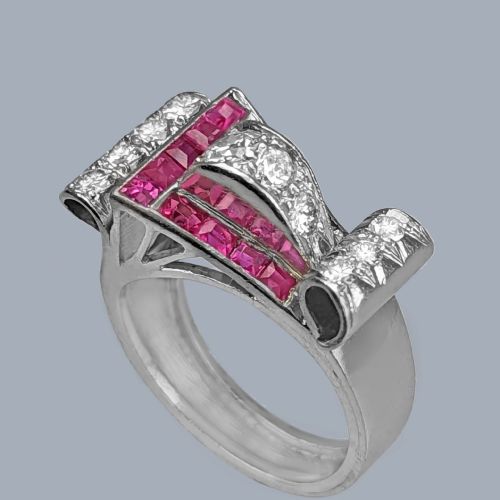
Originating from workshops in Britain and Europe, these items reflect the changing decorative tastes of the nineteenth and twentieth centuries. Pieces span early Victorian star rings through to geometric Art Deco platinum mountings and 1960s floral cluster designs.
Materials and Construction
Items are constructed predominantly from eighteen-carat yellow gold, platinum, and eighteen-carat white gold, occasionally incorporating nine-carat gold bands or fourteen-carat gold settings. Stones are secured in claw settings, flush starburst engravings, or geometric platinum channels.
Goldsmiths combined cast or forged metal foundations with hand-cut gemstones, utilising old-cut, baguette, and brilliant diamond facets alongside oval and unheated rubies originating from Burma or Mogok.
Among the gemstone fauna rests a solitary gem-set rabbit brooch ready to bound across a lapel.
Factors Determining Quality
Quality rests upon the origin and treatment status of the rubies, with unheated Burmese stones commanding distinct regard alongside the clarity and cut precision of the accompanying diamonds. Metalwork execution also dictates standard, visible in the crispness of starburst engravings, platinum millegrain work, and secure claw settings.
Design complexity and period integrity separate standard examples from finer works, particularly where geometric Art Deco platinum mountings or signed pieces demonstrate superior manufacturing technique.
Kutchinsky
The Vintage Ruby Diamond Jewellery Glossary
- Cluster ring
- A ring design featuring a central gemstone surrounded by a border of smaller stones. This arrangement maximises visual impact and was favoured across Victorian and mid-century jewellery.
- Old-cut diamond
- A hand-faceted diamond cut before modern machine-cutting standards were established in the early twentieth century. These stones typically exhibit smaller tables and higher crowns.
- Navette
- A boat-shaped gemstone setting or ring face that tapers to sharp points at either end. The style creates an elongated appearance upon the finger.
- Trilogy ring
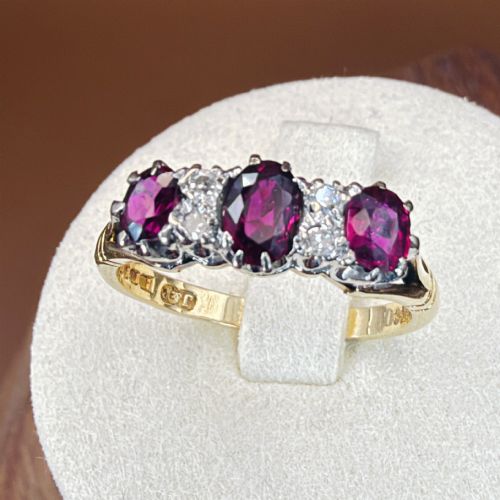
- A ring set with three principal stones representing the past, present, and future. They frequently combine rubies and diamonds in balanced proportions.
- Millegrain
- A decorative jewellery technique involving a line of tiny metal beads along the edges of a setting. It provides a soft texture commonly found in Edwardian and platinum works.
Vintage Ruby Diamond Jewellery: Frequently Asked Questions
What periods do these pieces date from?
The collection spans the nineteenth century through the mid-twentieth century, including Victorian, Edwardian, Art Deco, and 1950s or 1960s eras.
Designs reflect the stylistic shifts of each decade, moving from heavy yellow gold floral motifs to geometric platinum settings.
How do I identify an old-cut diamond?
Old-cut diamonds display smaller tables, open culets visible through the back, and hand-cut facets adapted to candlelight.
These stones differ from modern brilliant cuts by possessing a softer, warmer scintillation.
What metal types are commonly used?
Items utilise eighteen-carat yellow gold, platinum, eighteen-carat white gold, and occasional nine-carat or fourteen-carat gold components.
Platinum gained favour during the Edwardian and Art Deco periods for its strength and white lustre.
How should I care for vintage gemstone rings?
Clean these pieces gently with warm soapy water and a soft brush, avoiding harsh chemical dips that might damage softer stones.
Store items separately to prevent softer metals or diamonds from scratching the ruby surfaces.