


1930s Ruby Engagement Ring
A 1930s ruby engagement ring offers the geometric elegance of the Art Deco period combined with vibrant red gemstones.
1930s Ruby Engagement Ring
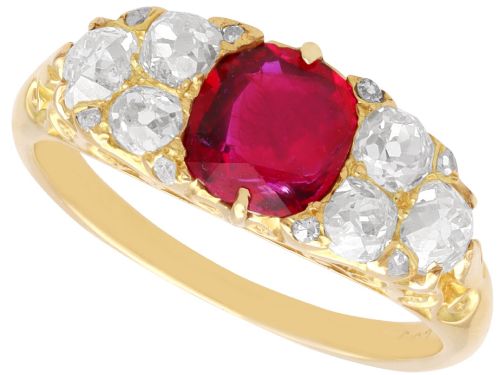
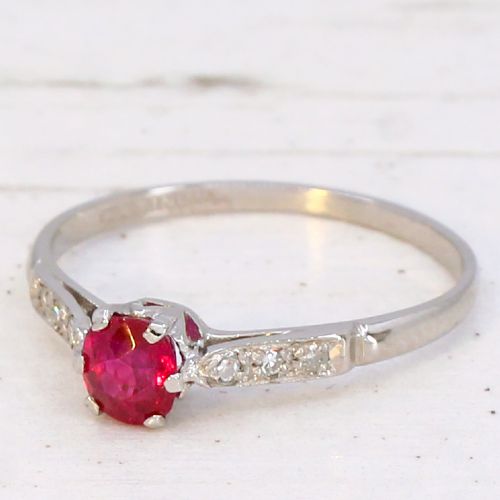
When you search for a 1930s ruby engagement ring, you encounter genuine pieces originating from the 1920 and 1930 periods. The examples found here predominantly display the distinctive Art Deco style that defined the era.
The selections range from striking cluster rings to traditional three stone and five stone configurations. Central red gems are frequently flanked by sparkling diamonds in geometric arrangements.
Materials and construction
Jewellers of this era built these pieces primarily using platinum and 18ct yellow gold as the foundational metals. Platinum was favoured for securing stones in sharp, linear mounts.
Natural rubies and diamonds form the visual core of these items, often sourced from notable origins such as Mogok in Burma. The stones are cut and set to maximise light reflection within the rigid framework of Art Deco design.
Listings span the 1920 and 1930 periods, incorporating platinum, 18ct yellow gold, rubies, and diamonds within an Art Deco framework.
Factors of distinction
The calibre of a 1930s ruby engagement ring depends heavily on the natural origin and saturation of the central red stone. Burmese stones with unheated properties command particular attention among connoisseurs.
The weight and clarity of the accompanying diamonds alongside the precision of the platinum or 18ct gold metalwork dictate the overall standard of the piece.
The 1930s Ruby Engagement Ring Glossary
- Art Deco
- A design style emerging in the early twentieth century characterised by sleek geometric shapes and stylised motifs. It heavily influences the aesthetic of 1930s jewellery.
- Cluster ring
- A ring design featuring a prominent central stone surrounded by a border of smaller gems. This configuration maximises visual presence on the finger.
- Unheated
- A descriptor indicating that a gemstone has undergone no artificial treatments to enhance its colour or clarity. Natural stones retain their original geological traits.
- Platinum
- A dense, durable precious metal utilised in period jewellery for secure settings. Its strength allowed jewellers to create delicate wirework and sharp prongs.
1930s Ruby Engagement Ring: Frequently Asked Questions
How do I wear a cluster ring daily?
These pieces require sensible care due to their age and the presence of softer gemstones alongside diamonds. Removing the item during heavy manual tasks preserves the delicate platinum and gold settings.
Regular checks by a jeweller ensure the prongs holding the ruby and diamonds remain secure. Storing the piece in a dedicated lined box prevents friction with other items.
Are all these rings from the Art Deco period?
The pieces seen here belong specifically to the 1920 and 1930 periods. The prevailing design aesthetic across the selection is firmly rooted in Art Deco principles.
Jewellery from this timeframe relies on symmetrical layouts and linear geometric arrangements. Master makers utilised these conventions to frame the central red stones.
What metals are used in these rings?
Construction primarily involves platinum and 18ct yellow gold, sometimes referred to as 18kt gold. Platinum was chosen for its strength in detailed stone settings.
Yellow gold provides a warm contrast to the bright red of the rubies and the sparkle of the diamonds. Combinations of both metals often appear within a single piece.