


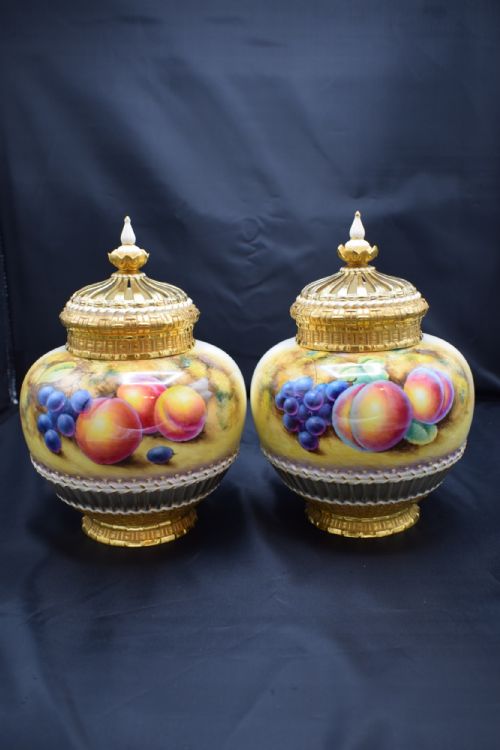
Vintage Royal Worcester Jar
These vintage royal worcester jar pieces bring hand-painted artistry to any room, offering classic ceramic forms that collectors prize.
Vintage Royal Worcester Jar
When you search for a vintage royal worcester jar, you encounter ginger jars, pot pourri vases, and decorative pots produced across several decades of the twentieth century. The selection ranges from early twentieth century Edwardian and Victorian examples up to pieces made in the nineteen-fifties and nineteen-sixties.
The most common forms on this page include covered pot pourri vessels and ginger jars featuring traditional English porcelain bodies. These items often showcase distinct regional and factory characteristics established by English pottery traditions.
How They Were Made
These pieces are constructed from fine bone china and standard porcelain, shaped into traditional urn and jar silhouettes. Makers utilised skilled potting techniques to form the bodies before applying detailed structural elements like crown tops and fitted covers.
Surface decoration relies on hand-painting combined with enamel work, further enhanced by gold leaf, gilt, and gilding accents. Artisans painted fruit and floral subjects directly onto the ceramic body before firing and gilding.
Vintage Royal Worcester Jar Retail Price Guide 2026
Typical asking prices for vintage royal worcester jar among the pieces listed under this phrase on Sellingantiques today, from the lower quarter to the upper quarter. They describe what is for sale here now, not the wider market.
Materials documented across the inventory include fine bone china, gold leaf, enamel, and various applications of gilt decoration.
What Varies in Quality
The distinction between standard examples and superior pieces rests largely on the complexity and authorship of the hand-painted decoration. Items signed by recognised decorators command greater attention due to the individual skill involved in painting detailed fruit and floral scenes.
Another factor is the richness of the gilding and the preservation of the gold leaf and enamel details across the porcelain surface. The precision of the moulding on items like crown top pot pourri jars also defines the upper tiers of production.
Royal Worcester·John Smith·Freeman·Stinton·Kitty Blake·Ayrton
The Vintage Royal Worcester Jar Glossary
- Pot Pourri Jar
- A vessel with a pierced or perforated cover designed to hold scented dried plant material for room fragrance. These pieces often feature inner lids beneath the main decorative cover.
- Bone China
- A type of soft-paste porcelain incorporating animal bone ash, resulting in a strong, milky-white body that accepts fine overglaze painting. It forms the basis of many traditional English decorative wares.
- Gilding
- The application of gold leaf or powdered gold mixture to ceramic surfaces to highlight rims, handles, and painted panels. This technique adds reflective contrast to the painted scenes.
- Enamel
- Opaque glass-based pigment applied to fired porcelain and fixed through a subsequent low-temperature firing. It provides vibrant, durable colour to floral and fruit motifs.
Vintage Royal Worcester Jar: Frequently Asked Questions
What is a vintage royal worcester jar used for?
These vessels were originally designed to hold scented dried petals or ginger, serving both a functional and aromatic purpose in the home. Today, they function primarily as decorative mantel or table pieces that display traditional painting.
Collectors often place them in cabinets or on display surfaces where their hand-painted fruit and floral motifs can be viewed closely without handling.
How do I identify the period of these jars?
Dating relies on factory marks stamped to the underside of the porcelain, alongside the painting style and specific decorator signatures recorded on the surface. Edwardian and Victorian pieces often display distinct ivory or blush grounds compared to later mid-century items.
Examining the complexity of the gilding and the style of the script used for signatures helps narrow down the decade of manufacture.
How should I clean a painted porcelain jar?
Dusting gently with a soft, dry brush is the safest method to remove everyday particles without disturbing delicate enamel or gilt surfaces. Avoid using abrasive cloths, chemical cleaners, or immersion in water, which can damage overglaze painting and gold leaf.
If deeper cleaning is necessary, consult a professional conservator to prevent accidental loss of hand-painted details.
Are pot pourri jars different from ginger jars?
Pot pourri jars feature pierced or slotted covers that allow scented materials inside to release their fragrance into the room. Ginger jars typically possess solid, airtight lids intended originally for storing spices or preserves.
Both forms share similar ceramic bodies and hand-painted decorative schemes on this page.