


Vintage Rosewood Chiffonier
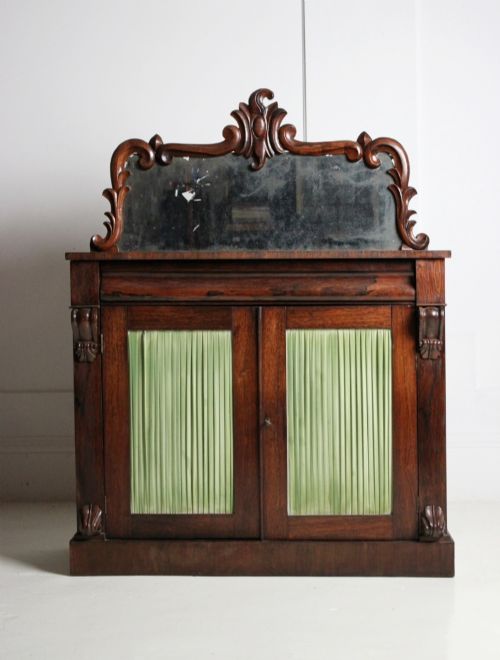
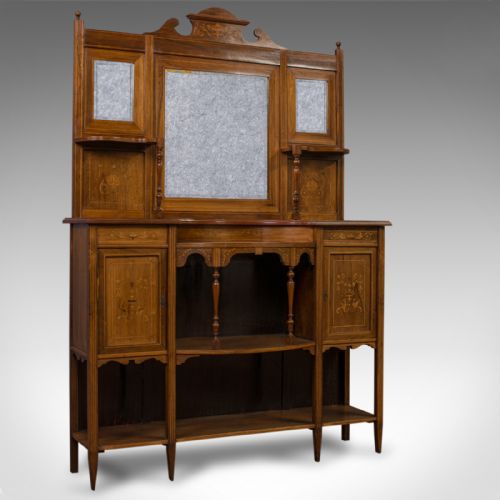
A vintage rosewood chiffonier brings rich timber grain and enclosed shelving to a room, offering both display space and concealed storage.
Vintage Rosewood Chiffonier
When you search for a vintage rosewood chiffonier, you enter a field defined largely by Regency craftsmanship alongside later Victorian and Edwardian interpretations. These low standing side cabinets typically combine open or enclosed lower shelving with a raised superstructure or flat top surface.
The pieces you meet most often on this page span the Regency period through the nineteenth century, often appearing under related headings such as side cabinets or sideboards. Many examples incorporate boxwood or brass inlay, glass doors, and fitted internal drawers.
Originating as practical dining room or parlour furniture, these cabinets serve equally well in modern interiors for holding books, glassware, or decorative objects. The forms range from compact single-door cupboards to substantial four-door variations and matched pairs.
How They Were Made
Cabinet makers utilised dense rosewood timber, frequently applied as fine veneer over secondary woods to showcase dramatic grain patterns. Alternative exotic hardwoods such as palisander and gonçalo-alvez also appear among the listed pieces.
Decorative detailing relies on precision craftsmanship, including contrasting satinwood or boxwood inlay and intricate brass stringing. Mirrored glass panels and fabric-backed door inserts further distinguish the construction of these refined side cabinets.
Certain cabinets even arrive with secret secretaire drawers designed to keep your private correspondence safely hidden away from curious dinner guests.
What Varies in Quality
The standard of a vintage rosewood chiffonier depends heavily on the precision of its timber selection and the complexity of its secondary veneers. Pieces that maintain continuous grain matching across doors and drawer fronts represent superior joinery.
The refinement of the decorative elements, from finely cast brass inlay to delicate boxwood stringing, separates standard production from exceptional examples. Structural integrity in the enclosing doors and the original condition of the internal shelving also determine the grade of the piece.
The Vintage Rosewood Chiffonier Glossary
- Chiffonier
- A low standing cabinet equipped with shelves and cupboards, developed during the Regency period for dining rooms and parlours. It provides both surface display and secure enclosed storage.
- Veneer
- A thin layer of valuable rosewood timber applied to a stable secondary wood foundation. This technique allowed cabinet makers to utilise striking grain figures without relying entirely on solid scarce timber.
- Palisander
- A dense, dark timber often grouped with rosewood varieties, valued for its rich colour and heavy weight. It appears frequently in nineteenth-century cabinet construction.
- Gonçalo-Alvez
- A decorative exotic hardwood known for its distinctive contrasting striped grain patterns. Regency craftsmen utilised this timber for high-status side cabinets.
- Stringing
- Narrow inlay work of contrasting lighter wood or brass used to outline panels, drawers, and borders. It defines the geometric elegance typical of Regency and Victorian case furniture.
Vintage Rosewood Chiffonier: Frequently Asked Questions
What is a chiffonier?
A chiffonier is a low cabinet designed for storage and display, usually featuring enclosed lower cupboards and sometimes a raised upper shelf tier.
Originating in the early nineteenth century, these pieces functioned primarily in dining rooms and living spaces to hold table linen, silver, or books.
How do I date a chiffonier?
Dating relies on observing structural proportions, timber choice, and decorative idioms like brass inlay or boxwood stringing.
Regency examples often display cleaner architectural lines and exotic timbers, while later Victorian and Edwardian pieces incorporate heavier mouldings or revival styling.
Where should I place a chiffonier?
These cabinets suit dining rooms, hallways, or living areas where surface space and low-profile storage are required.
Their shallow depth allows them to sit comfortably against walls without dominating smaller room proportions.
What is simulated rosewood?
Simulated rosewood refers to a secondary timber, such as beech, painted or stained to imitate the dark grain and warm tone of genuine rosewood.
Cabinet makers employed this method to achieve a high-status appearance at a more accessible production cost.