

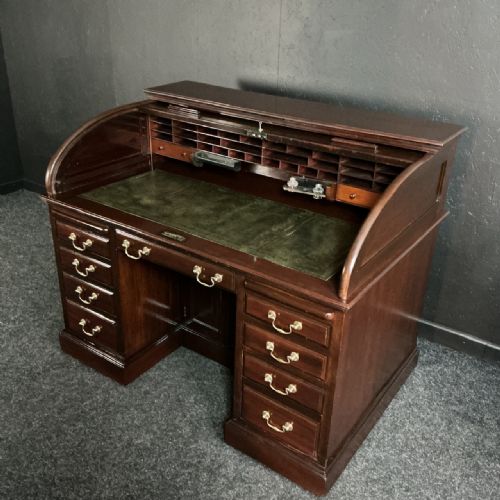


Vintage Rolltop Desk
A vintage rolltop desk is a practical working station housing a slatted tambour or rigid cylinder to conceal your papers.
Vintage Rolltop Desk
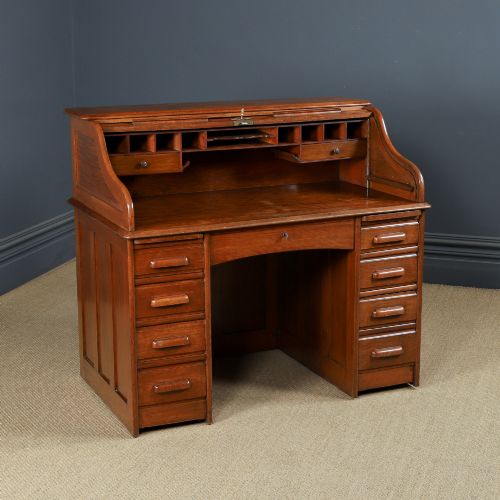
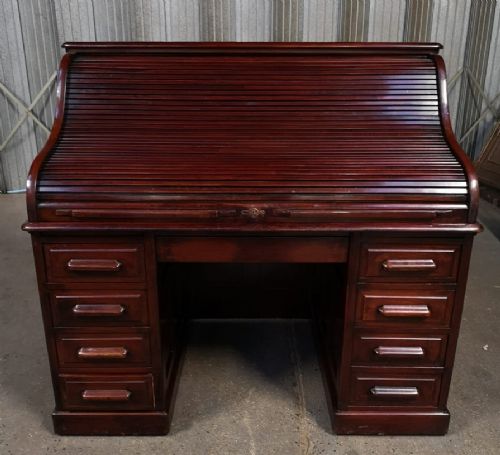
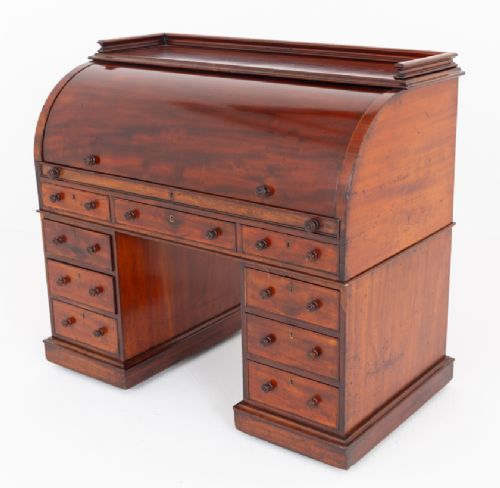
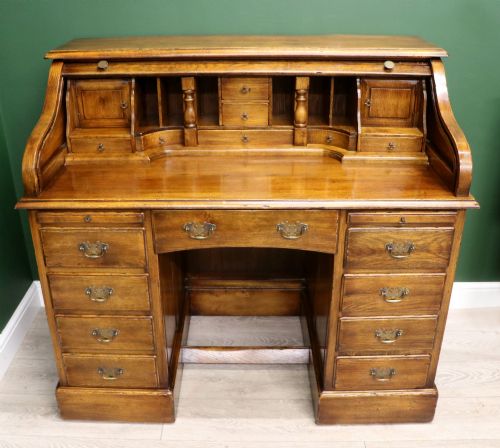
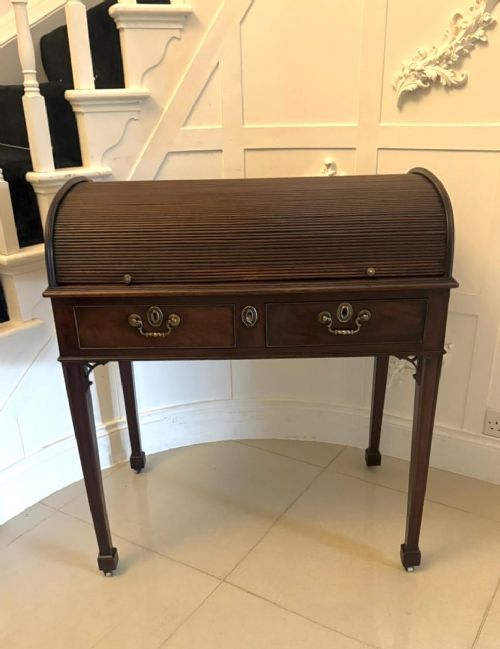
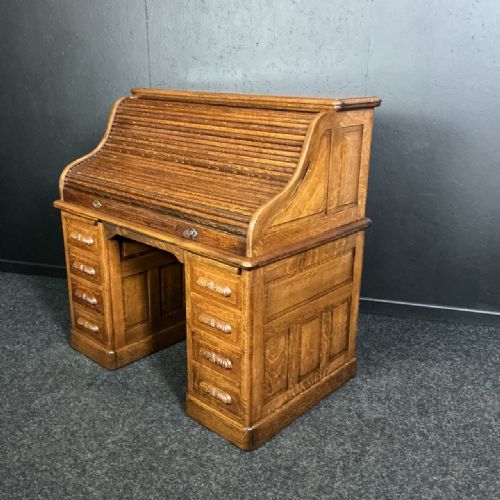
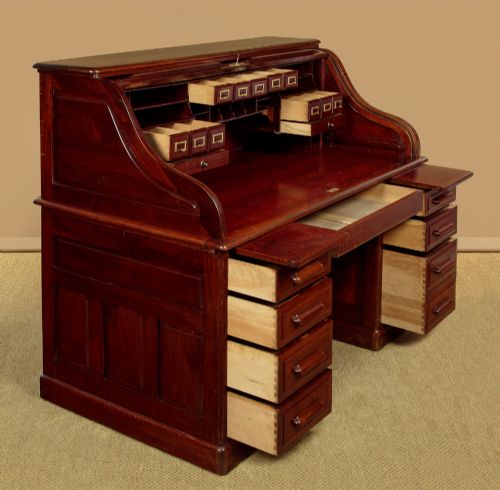
When you search for a vintage rolltop desk, you encounter robust pedestal forms alongside refined cylinder bureaus dating from the nineteenth and early twentieth centuries.
The Edwardian and Victorian eras dominate the selection, offering substantial oak and mahogany workstations designed for home offices or studies.
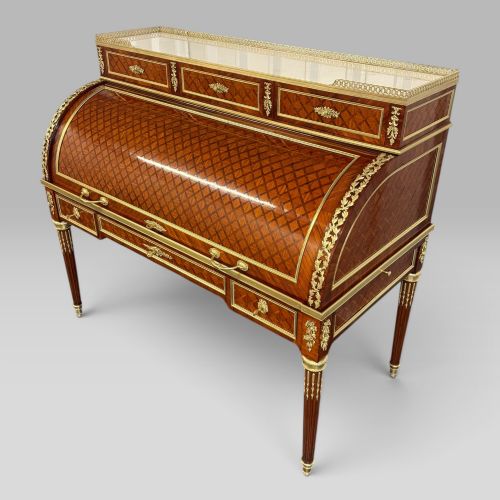
You also discover occasional Continental examples featuring parquetry, ormolu mounts, and classical revival styles like Louis XVI and Sheraton.
Materials and construction methods
Cabinetmakers constructed these pieces primarily in solid oak and mahogany, often incorporating walnut, satinwood, and canvas-backed tambour slats for the flexible roll shutters.
Fine brass hardware, leather writing inserts, and intricate marquetry or parquetry inlay distinguish the more decorative cylinder desks from utilitarian office models.
Vintage Rolltop Desk Retail Price Guide 2026
Typical asking prices for vintage rolltop desk among the pieces listed under this phrase on Sellingantiques today, from the lower quarter to the upper quarter. They describe what is for sale here now, not the wider market.
Desk drawers occasionally hide secret compartments designed for private correspondence.
Distinctions in quality and execution
The smoothness of the tambour or cylinder mechanism gliding within its tracks separates standard office furniture from finer domestic cabinetry.
Subtleties in timber selection, such as figured mahogany or quarter-sawn oak, alongside detailed inlay work and original brass fittings, define the upper tier of the range.
Maples of London and Paris
The Vintage Rolltop Desk Glossary
- Tambour
- A sliding shutter formed of narrow vertical strips of wood glued to a canvas or fabric backing so it bends around a curve.
- Cylinder desk
- A writing desk featuring a quarter-circle solid or panelled wooden lid that rolls back to reveal the writing surface and pigeonholes.
- Pedestal desk
- A heavy double-sided form where the desktop rests upon two banks of small drawers instead of simple legs.
- Marquetry
- Decorative patterns formed by fitting together small pieces of tinted wood veneer onto a solid carcass.
- Parquetry
- A geometric mosaic of wood pieces used for floors and cabinet surfaces, particularly popular in French revival pieces.
Vintage Rolltop Desk: Frequently Asked Questions
How do I maintain the wooden roll shutter?
Keep the tambour tracks clean and lightly waxed so the wooden slats glide smoothly without catching on the canvas backing.
Avoid placing these desks in areas with extreme temperature fluctuations to prevent the wood from warping.
What is the difference between a rolltop and a cylinder desk?
A rolltop desk uses a flexible slatted tambour shutter that follows a track around the back of the desk.
A cylinder desk employs a rigid, curved single-piece wooden lid that slides into the body of the desk.
Were these desks made for offices or homes?
Many oak pedestal versions were built for bustling commercial offices, featuring deep drawers and built-in filing compartments.
Mahogany and walnut cylinder versions served private home studies and libraries as refined writing cabinets.
How do I identify an Edwardian piece?
Edwardian desks often feature lighter oak or inlaid mahogany timbers with simpler neoclassical revival motifs reflecting the early twentieth century.
They frequently incorporate specialised compartments for contemporary writing materials and early office equipment.