



Vintage Rolltop Bureau
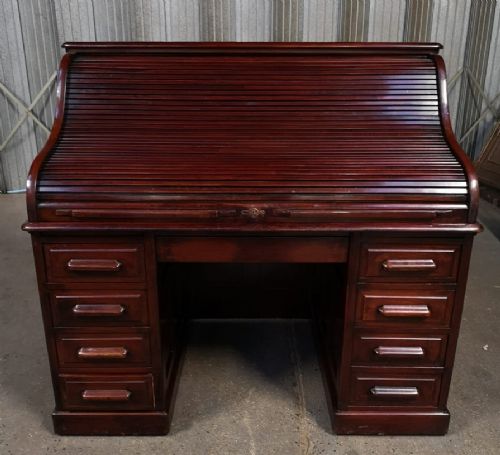
A vintage rolltop bureau is a clever writing desk with a slatted or cylindrical cover that conceals your papers.
Vintage Rolltop Bureau
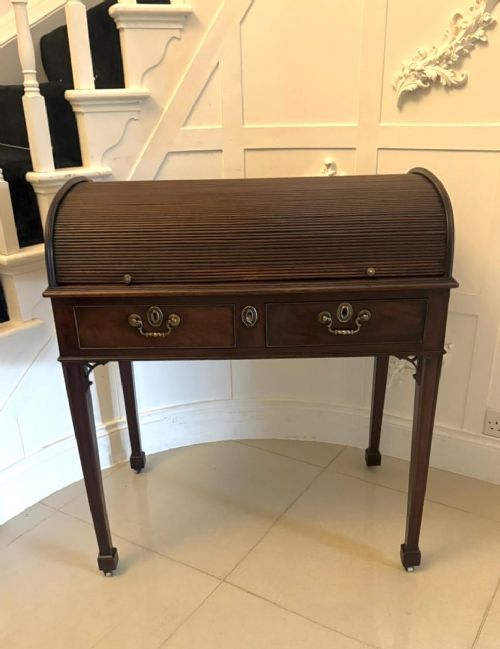
When you search for a vintage rolltop bureau, you encounter a practical writing desk designed to hide clutter at a moment's notice. The tambour or cylinder mechanism rolls down to secure the writing surface and pigeonholes.
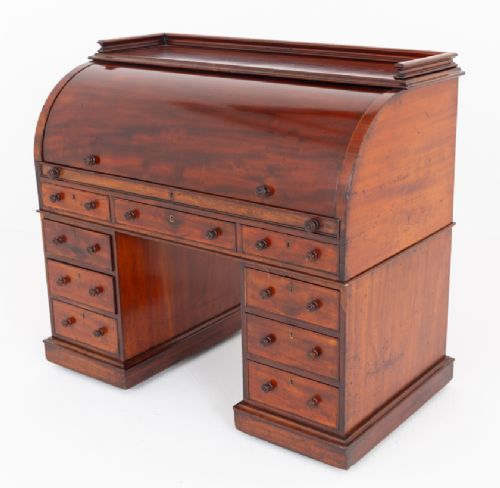
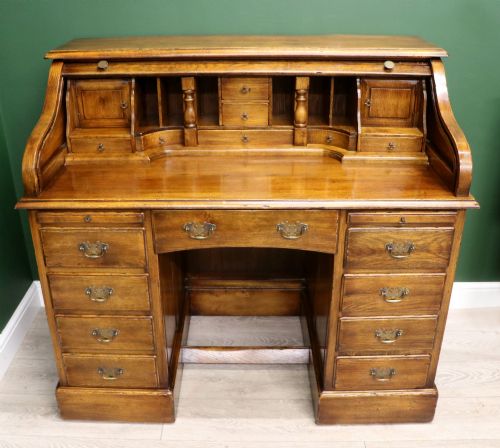
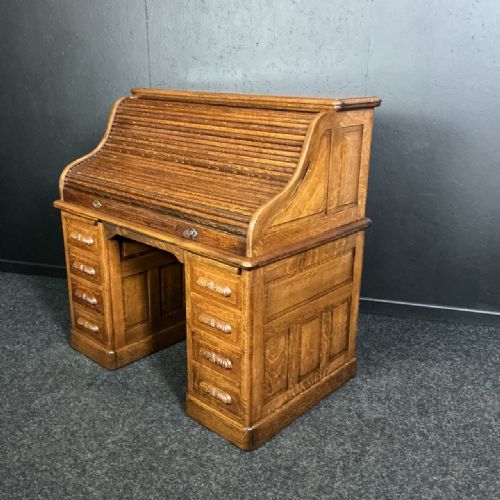
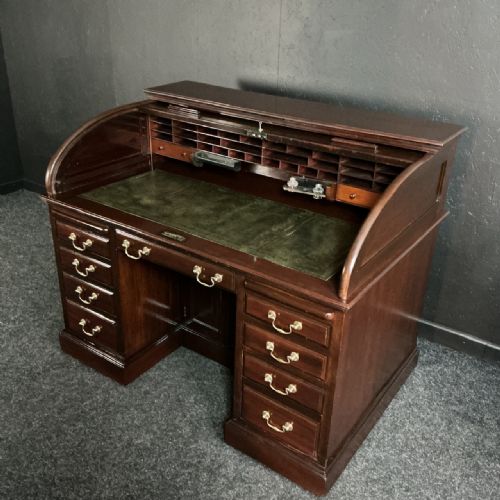
The pieces appearing on this page span the Victorian and Edwardian eras through to the early twentieth century. Oak and mahogany dominate the selection, often appearing in pedestal formats with multiple drawers.
You will also find taller bureau bookcase variations that combine enclosed shelving with a pull-out writing slide. These items served busy studies and home offices across Britain and the continent.
Materials and construction
Cabinet makers utilised solid timbers and veneers of mahogany, oak, walnut, and satinwood to build these desks. Brass handles and glass doors frequently accent the primary woods.
The characteristic roll top relies on individual wooden slats glued to a canvas backing or a solid curved cylinder. This flexible tambour track slides smoothly within routed grooves along the desk sides.
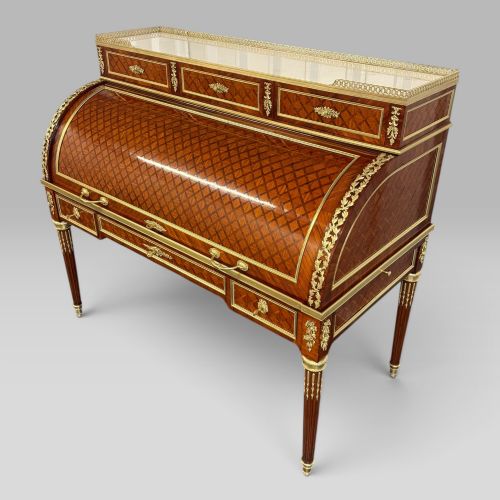
Interior fittings include leather writing inserts, small drawers, and pigeonholes constructed with traditional dovetail joints. Inlaid marquetry and parquetry occasionally decorate the exterior surfaces.
Listings feature periods ranging from Georgian and Victorian to Edwardian and the nineteen-thirties.
Assessing quality
Quality rests in the precision of the tambour mechanism and how smoothly the slats glide along their tracks. Superior examples exhibit tight joinery and carefully matched wood grain across the curved front.
The choice of secondary timbers inside the drawers and the presence of original brass hardware indicate the standard of production. Finer versions incorporate detailed marquetry inlay or fitted walnut interiors.
Maples of London and Paris
The Vintage Rolltop Bureau Glossary
- Tambour
- A flexible shutter made from narrow strips of wood glued to canvas, allowing the desk top to curve around a track.
- Cylinder desk
- A writing table featuring a solid quarter-circle wooden lid that rotates backwards to open the desk.
- Pedestal desk
- A heavy table supported by two banks of small drawers rather than simple legs.
- Marquetry
- Decorative woodwork where pieces of various coloured veneers are fitted together to form patterns.
- Pigeonhole
- A small compartment built into the upper interior of a desk for sorting letters and papers.
Vintage Rolltop Bureau: Frequently Asked Questions
How do I open a stuck roll top?
Check the wooden tracks on either side of the cylinder for dust or misaligned slats that might jam the mechanism. Gently guide the tambour along its groove without forcing the handle.
If the lock engages automatically, ensure the key is turned fully before attempting to roll the cover upwards.
What is the difference between a cylinder desk and a roll top?
A cylinder desk uses a solid, curved piece of wood that rotates on a pivot to reveal the writing surface. This design typically represents earlier or more formal cabinet making.
A roll top utilises many narrow wooden slats attached to a flexible backing fabric, allowing the cover to bend around a tighter radius.
Where were these desks originally used?
These pieces functioned as private writing desks in Victorian and Edwardian studies, libraries, and home offices. The lockable top allowed owners to secure confidential documents and correspondence away from prying eyes.
Larger pedestal versions often served professionals and businessmen managing extensive paperwork.
How do I care for the leather writing surface?
Keep the leather insert clean by dusting it regularly with a dry cloth and avoiding excessive moisture. Occasional treatment with a specialist leather conditioner prevents the surface from drying out and cracking.
Protect the material from direct sunlight to preserve its colour and texture over time.