


Vintage Roll Front Cabinet
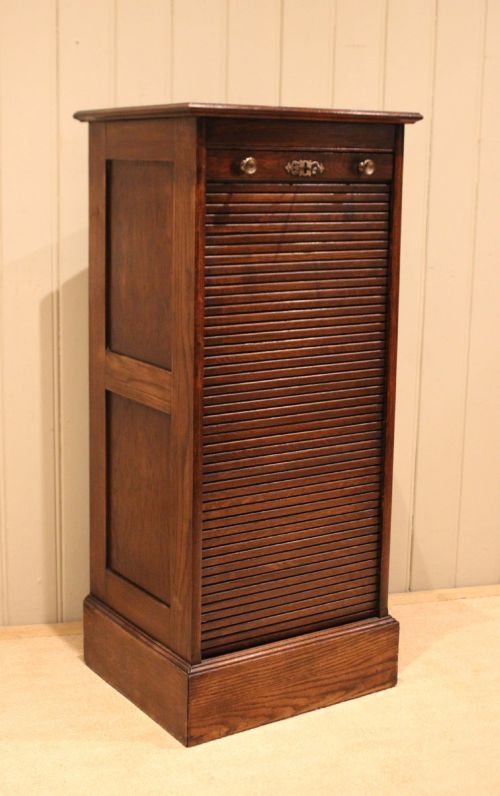
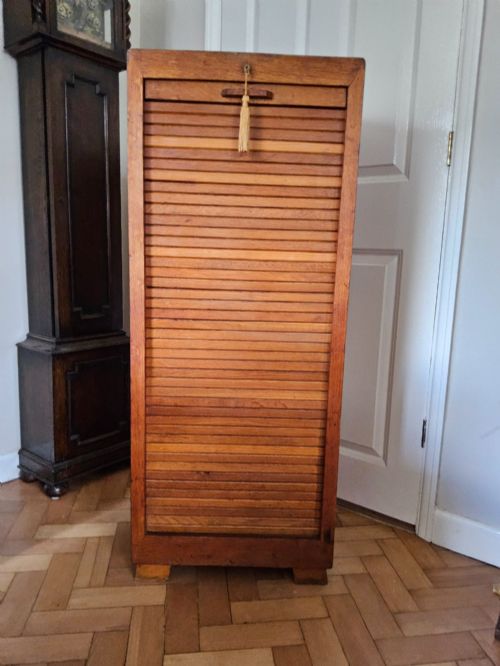
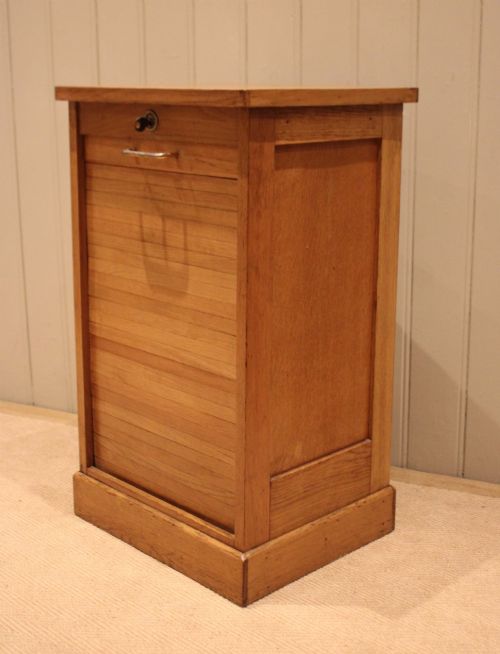
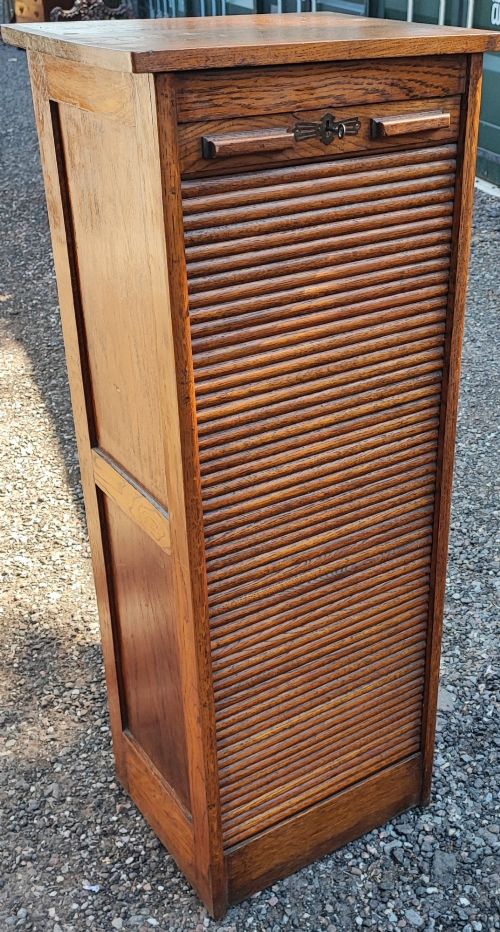
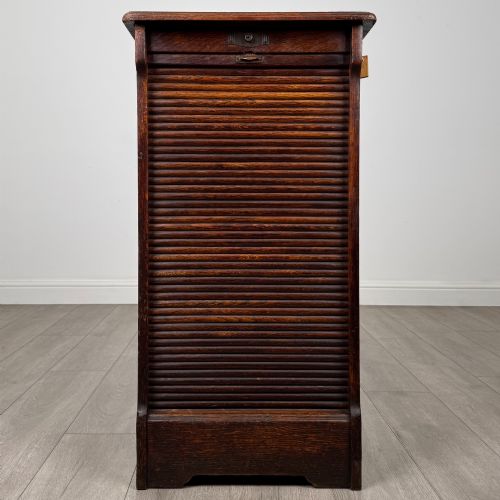
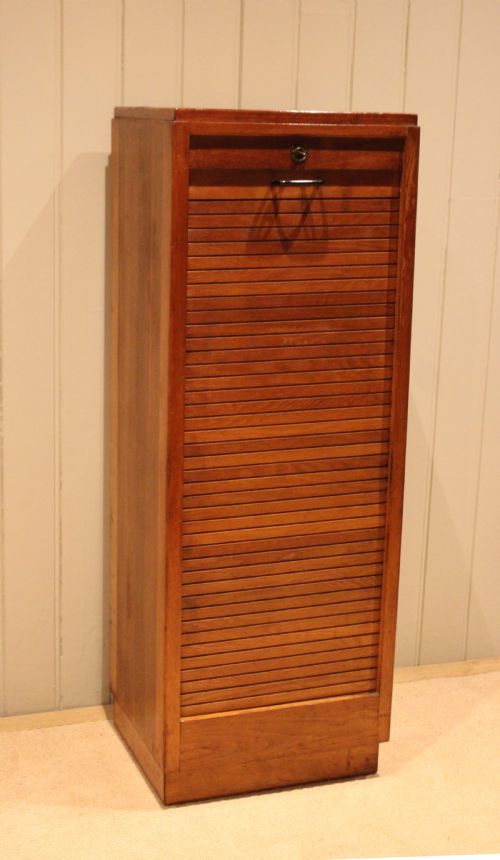
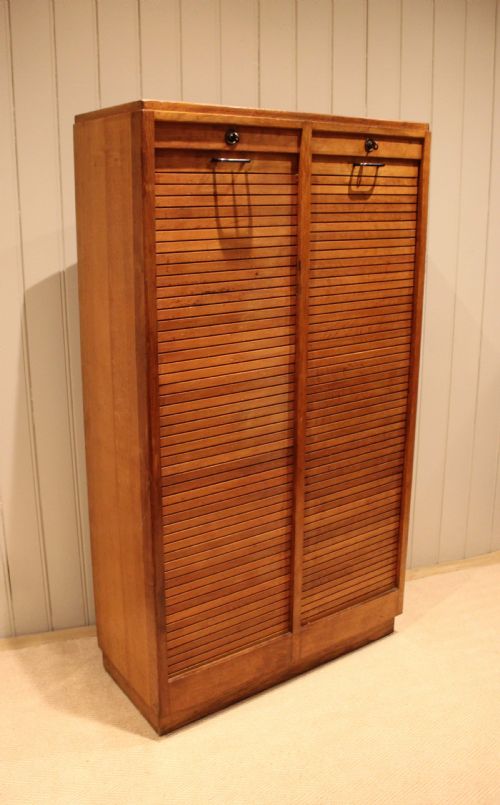
A vintage roll front cabinet offers clever slatted storage, and you will find sturdy oak examples from the Edwardian era and the nineteen-thirties.
Vintage Roll Front Cabinet
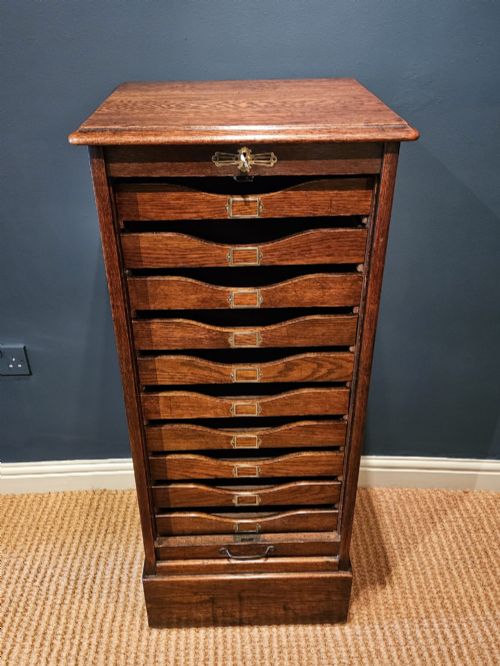
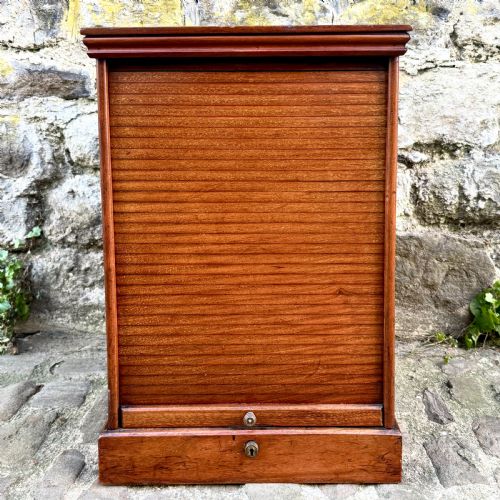
A vintage roll front cabinet centres on the flexible tambour door system, which slides smoothly along tracks to conceal the interior shelving or drawers. These pieces served primarily as office furniture, filing systems, and specialised stationery or cigar storage during the nineteenth and twentieth centuries.
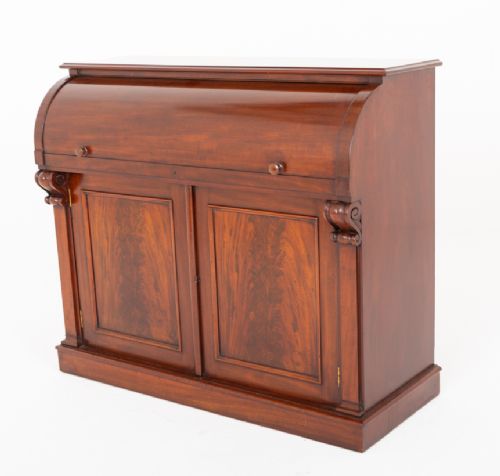
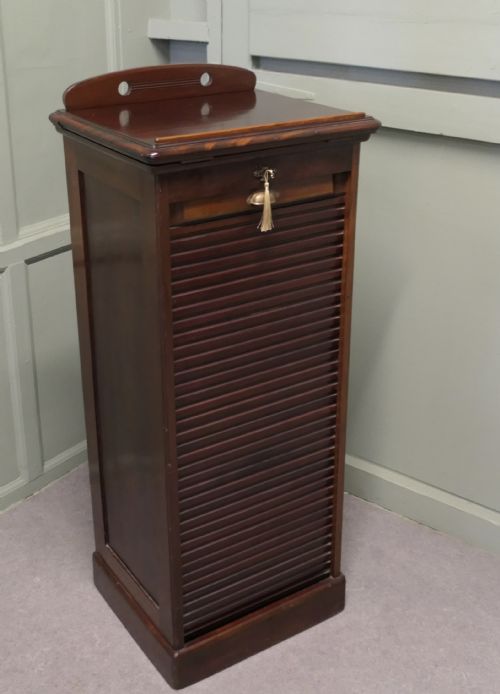
You are most likely to meet oak and mahogany versions dating from the Victorian and Edwardian periods up to nineteen-forties office designs. The selection ranges from small desktop stationery boxes to substantial single and double tambour filing cabinets and cylinder desks.
Materials and construction
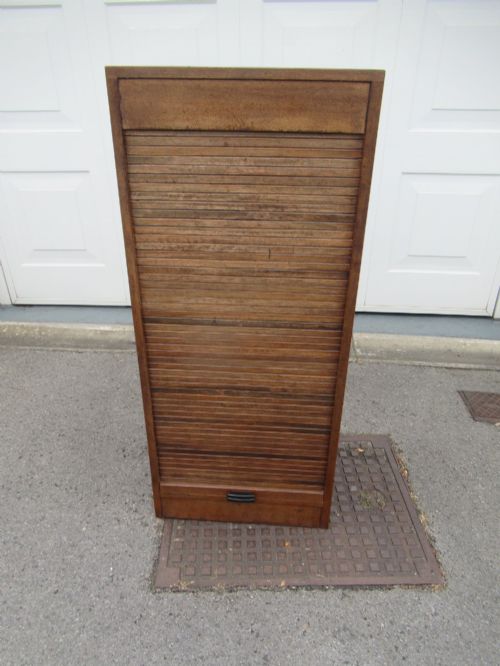
Cabinet makers relied heavily on solid oak and mahogany, alongside occasional rosewood, pine, and brass hardware. The defining technical achievement is the tambour shutter, formed from narrow vertical wooden strips glued to a flexible canvas or fabric backing to allow the curtain to bend around tight corners.
Frames utilise traditional joinery techniques to house the internal tracking channels precisely, ensuring the slatted roll front operates without binding. Finishes lean toward polished timber grains that highlight the natural figure of golden or dark oak and rich mahogany.
Listings feature oak, mahogany, rosewood, and pine pieces spanning the Victorian, Edwardian, and nineteen-thirties periods.
Distinctions in quality
Quality reveals itself in the smoothness of the tambour action and the precision of the slatted tracks. Superior pieces maintain alignment without sticking, whereas lesser examples suffer from warped slats or worn canvas backings that cause the roll front to jam.
Timbers and secondary woods also divide the range, with dense oak and figured mahogany representing better cabinet work than utility pine or metal variations. Interior configuration, such as original pigeonholes and fitted filing dividers, adds substantial merit.
The Vintage Roll Front Cabinet Glossary
- Tambour
- A flexible door or shutter made of narrow wooden slats attached to canvas, designed to slide horizontally or vertically around a curved track. It allows access to cabinet interiors without requiring clearance for hinged doors.
- Cylinder desk
- A writing desk featuring a curving, solid wooden cylinder that rolls back into the body of the desk to reveal the writing surface and pigeonholes. Unlike slatted tambour fronts, this cylinder is typically a single curved piece.
- Stationery cabinet
- A small desktop or tabletop cabinet partitioned for paper, envelopes, and writing implements, often enclosed by a roll front or folding doors. These domestic pieces date frequently to the Victorian and Edwardian eras.
- Pedestal filing cabinet
- A vertically oriented office cabinet designed to house files or documents, frequently fitted with a tambour shutter. They appear in oak and mahogany across late nineteenth and early twentieth century listings.
Vintage Roll Front Cabinet: Frequently Asked Questions
How do tambour doors work?
Tambour doors are constructed from many thin wooden slats glued side by side onto a strong canvas or fabric backing. This flexible membrane runs within grooved tracks cut into the cabinet frame, allowing the entire front to roll smoothly around a tight internal corner.
Over time, dust or slackness in the fabric can cause resistance. Regular use and proper alignment keep the slats moving freely along their tracks.
Where were these cabinets used?
These cabinets were designed primarily for professional offices, solicitors' chambers, and counting houses to secure files, stationery, and ledgers efficiently. Smaller versions also found a place in Victorian and Edwardian domestic studies and libraries.
Today, they adapt well to modern home offices or living spaces as compact storage units that hide clutter behind traditional wooden slats.
What is the difference between oak and mahogany versions?
Oak cabinets, particularly golden and dark varieties from the Edwardian period and nineteen-thirties, lean toward a robust commercial aesthetic. They suit utilitarian and office environments with their prominent grain patterns and sturdy build.
Mahogany versions often present a more formal appearance, frequently appearing in cylinder desks and finer bureau bookcases from the Victorian era. They emphasise rich dark tones and refined cabinet work.
How do I care for the roll front?
Keep the internal wooden tracks clean and free from dust build-up, as debris can cause the canvas-backed slats to catch. Avoid harsh liquid polishes inside the tracks, opting instead for a gentle dry cloth to maintain the sliding action.
Maintain stable humidity in the room to prevent the wooden slats from swelling or warping, which ensures the tambour curtain continues to roll smoothly.