


Vintage Revolving Table
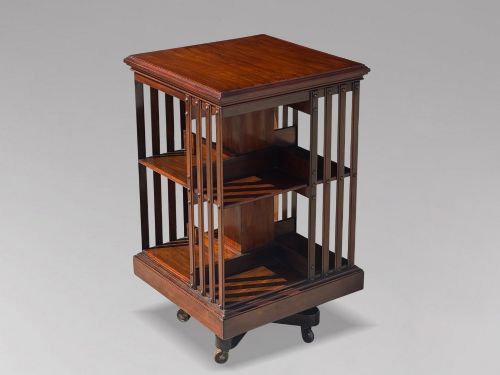
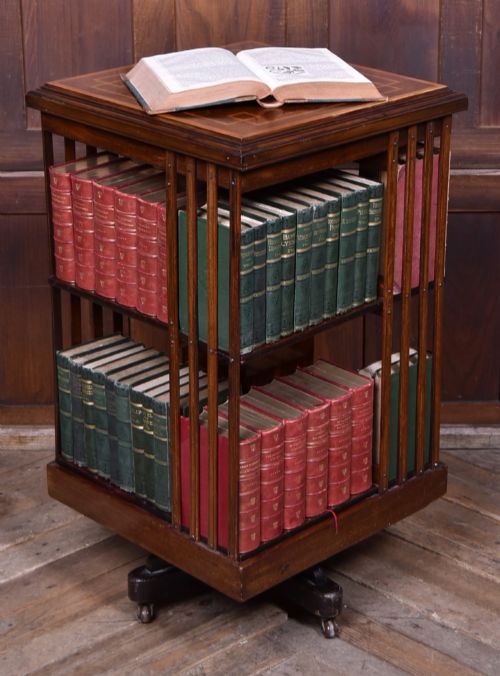
A vintage revolving table brings rotational utility and timber warmth to a room, turning smoothly on a concealed mechanism.
Vintage Revolving Table
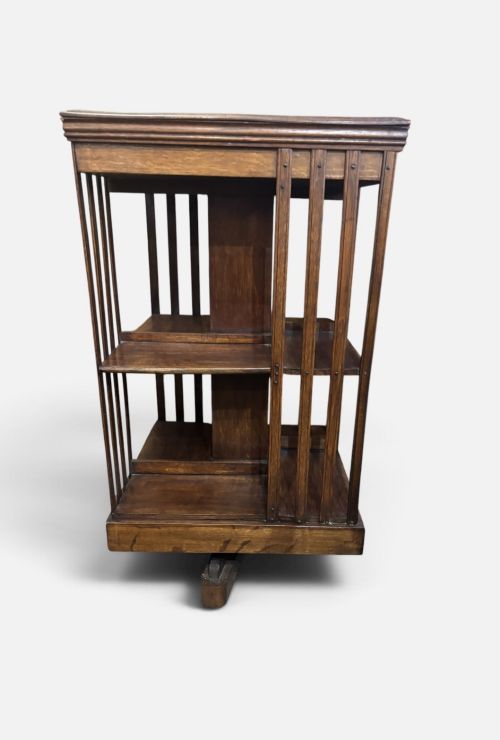
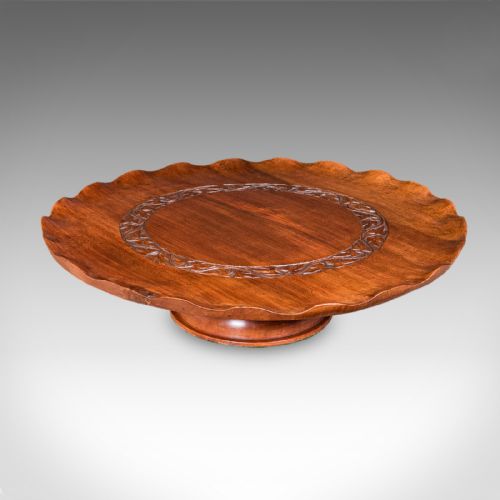
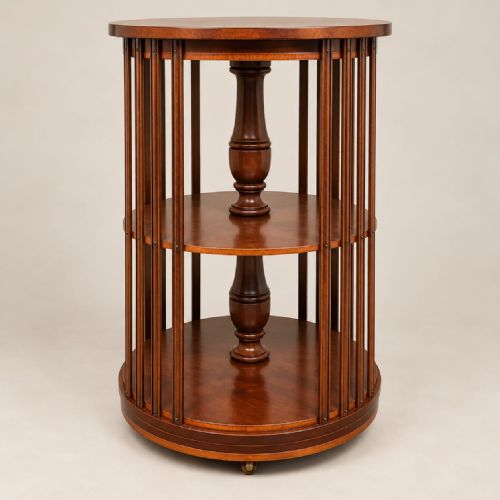
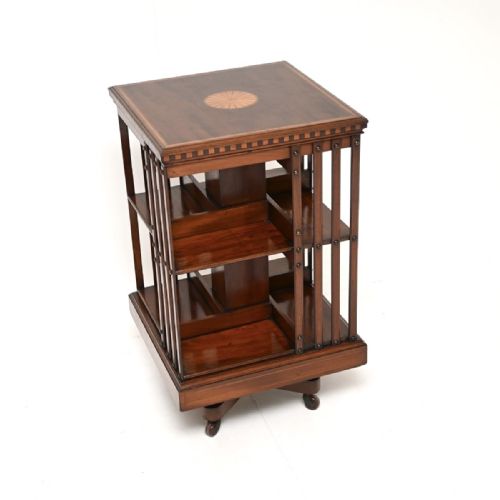
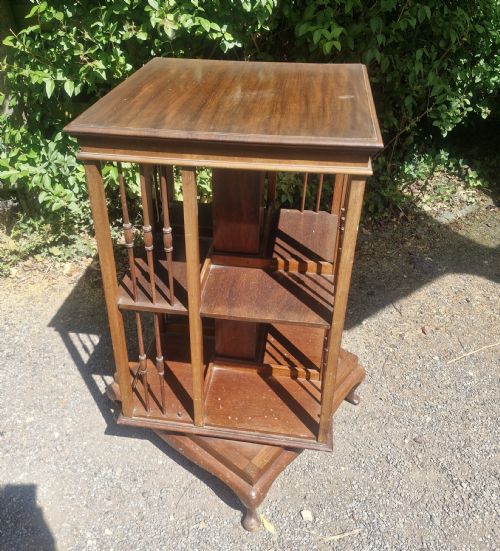
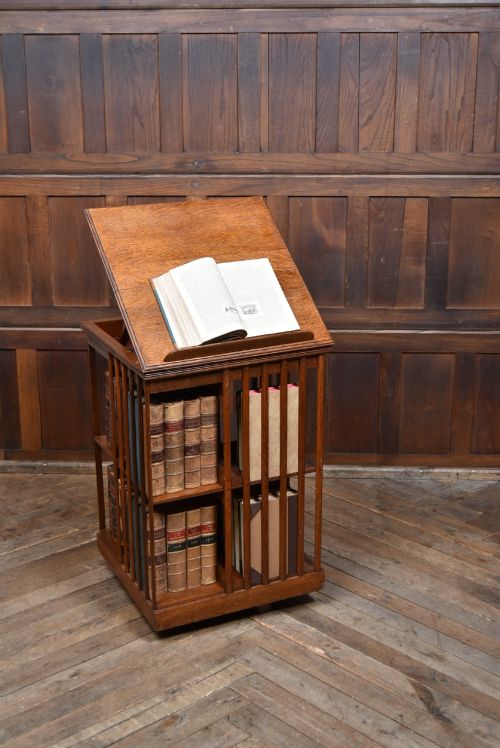
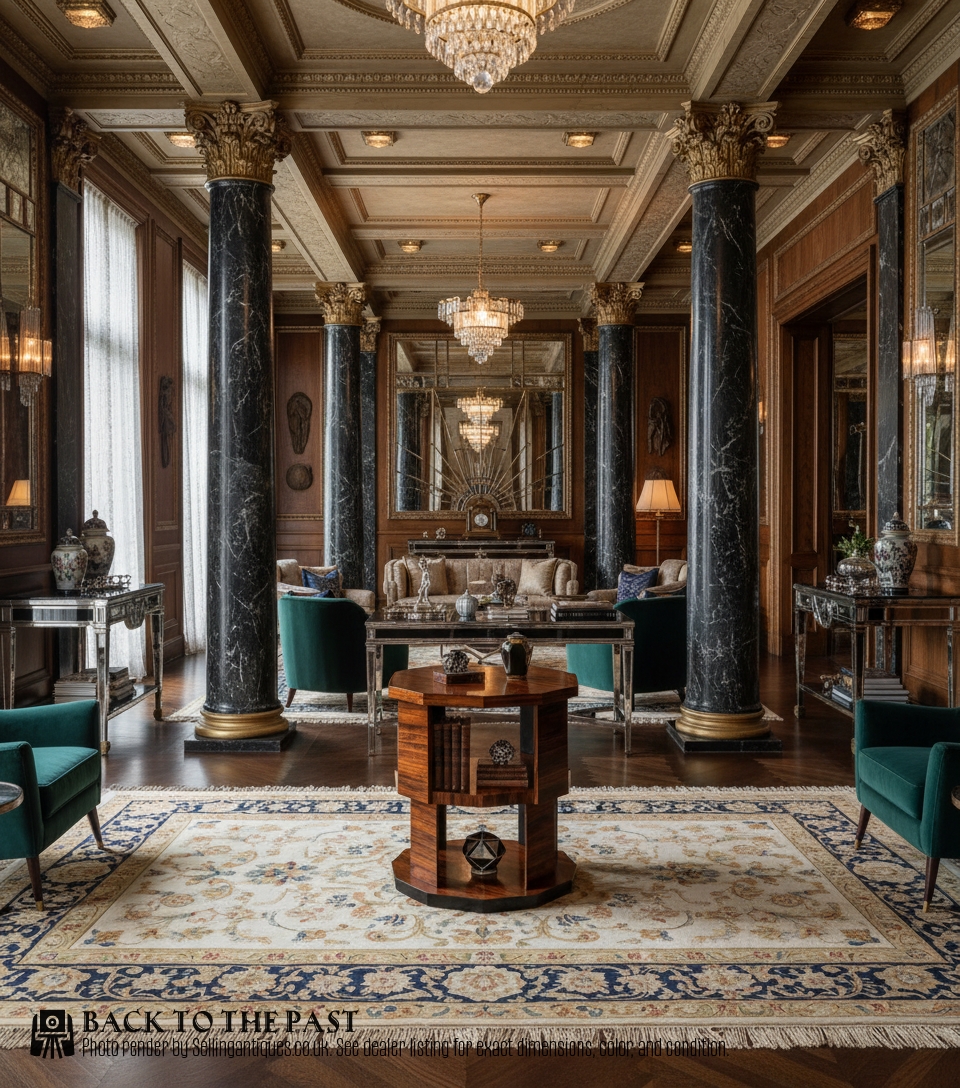
A vintage revolving table encompasses multi-tiered revolving bookcases, rotating lazy susans, and circular drum tables designed to turn on central axes. These pieces emerge predominantly from the Victorian and Edwardian eras, alongside later Art Deco and 1930s interpretations.
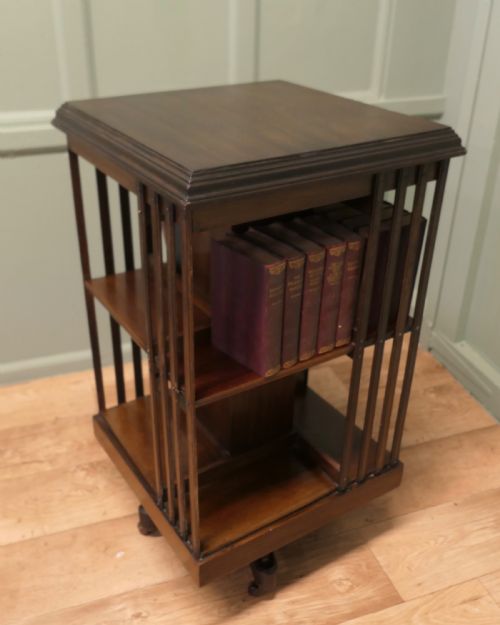
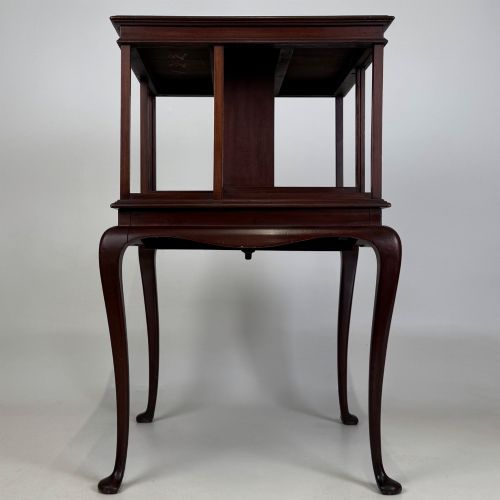
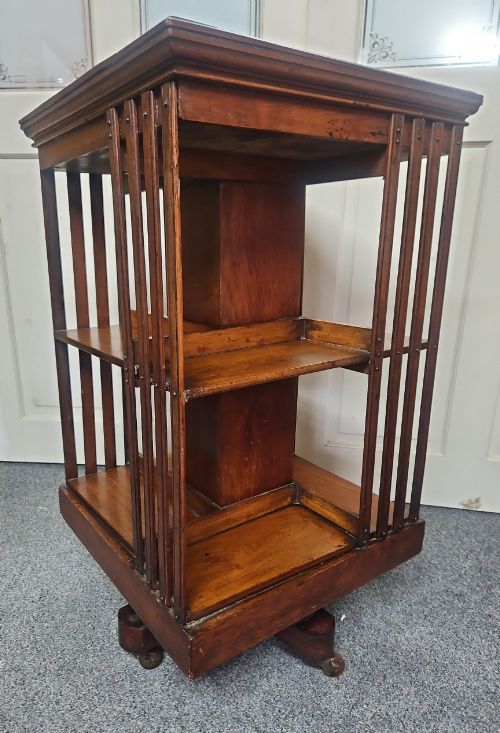
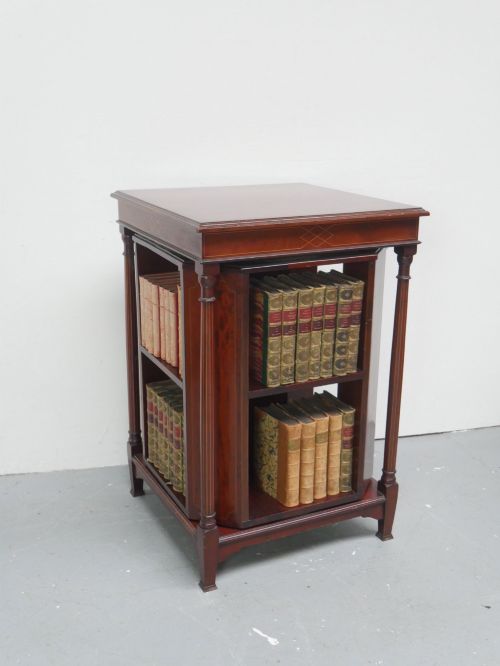
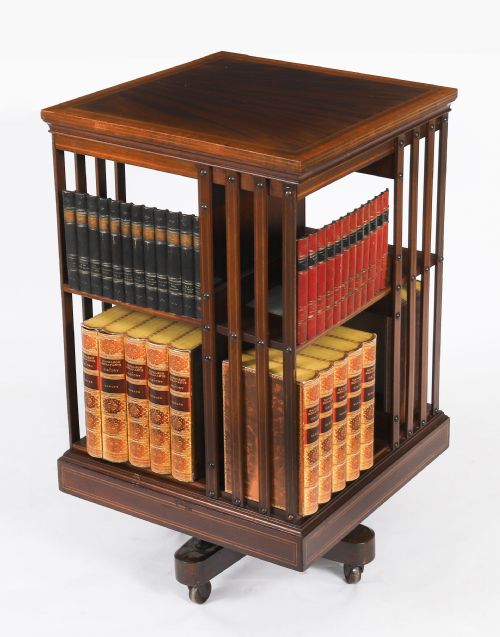
The most common incarnation on this page is the Edwardian mahogany revolving bookcase, usually constructed with slatted sides and a square top designed to sit beside an armchair or desk.
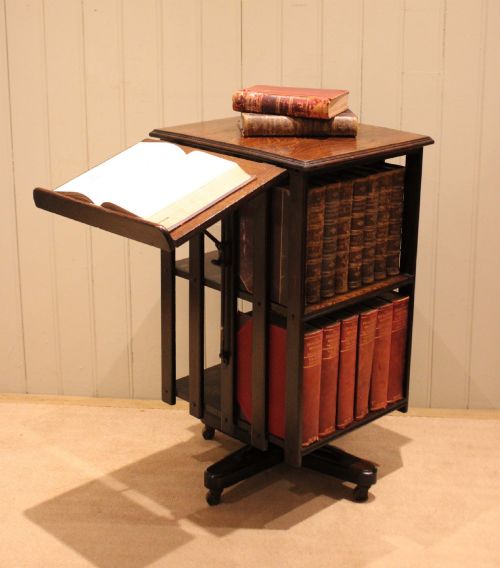
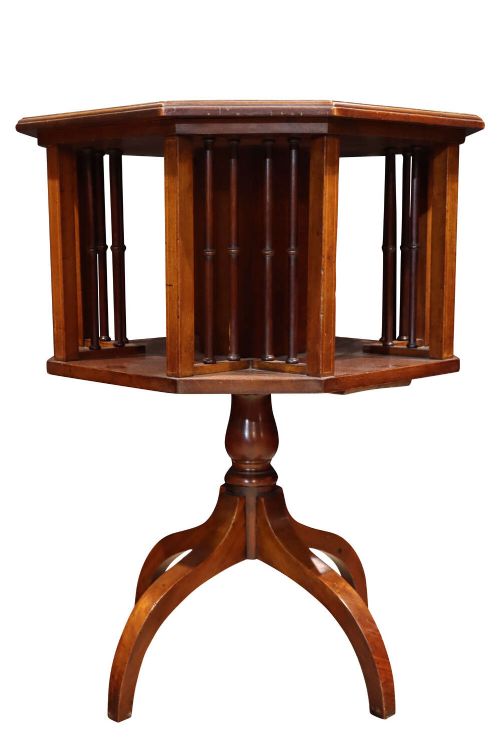
Other forms include oak library drum tables, walnut book tables, and table-top revolving bookstands that bring rotational movement to smaller surfaces.
Materials and construction
Makers relied heavily on dense hardwoods like mahogany and oak, often enhancing surfaces with satinwood, burr root maple, walnut, and decorative brass or wood inlay.
The internal turning mechanism typically combines iron and brass components to ensure a balanced, frictionless rotation capable of supporting heavy volumes and dishware.
Structural framing frequently incorporates slatted vertical dividers for book compartments or solid circular tabletops supported by central pedestals and splayed legs.
Vintage Revolving Table Retail Price Guide 2026
Typical asking prices for vintage revolving table among the pieces listed under this phrase on Sellingantiques today, from the lower quarter to the upper quarter. They describe what is for sale here now, not the wider market.
Early dining tables required lazy susans to keep sauces moving before polite conversation could completely stall.
Assessing quality
Quality rests upon the stability and smoothness of the internal swivel action, distinguishing pieces that turn silently and evenly from those that wobble or bind.
Craftsmanship shows in the crispness of timber inlay, the depth of figuring in flame mahogany or walnut veneers, and the sturdiness of the underlying joinery.
Heals
The Vintage Revolving Table Glossary
- Revolving bookcase
- A freestanding or table-top tier of shelves designed to rotate on a central vertical pivot. This allows easy access to books from a stationary seating position.
- Drum table
- A circular library table with a deep top skirt often containing drawers, mounted on a central pillar. These tables occasionally incorporate rotating mechanisms.
- Lazy Susan
- A revolving tray placed on a table or counter to assist in moving food or items easily between diners. Examples in the evidence include oak and carved rotating versions.
- Satinwood
- A durable, yellowish timber prized for its lustrous grain and used extensively for contrasting stringing and inlay. It adds brightness to dark mahogany furniture.
- Flame mahogany
- A veneer cut from the branch junction of a mahogany tree, yielding a distinctive ripple pattern resembling flickering flames. Cabinet makers used this to elevate the visual impact of top surfaces.
Vintage Revolving Table: Frequently Asked Questions
Where should I place a revolving bookcase?
These pieces suit positions beside armchairs, desks, or sofas where immediate access to multiple volumes is useful. Their ability to turn means they function well in tight corners or narrow spaces.
Ensure there is sufficient clearance on all sides for the tiers to rotate freely without striking adjacent walls or furniture.
How do I maintain the rotating mechanism?
Keep the internal pivot clean and periodically check the central spindle or ball bearings for smooth movement. Avoid applying heavy industrial lubricants that might attract dust and gum up the pivot.
A light application of appropriate oil to metal contact points usually preserves the ease of rotation.
Can these tables hold heavy books?
Solid mahogany and oak versions are structurally robust and designed to bear the weight of standard library volumes. Distributing heavier books evenly across the lower tiers helps maintain stability during rotation.
Avoid overloading single compartments, which can strain the vertical slats and the central pivot.
How do I distinguish Edwardian from Victorian examples?
Victorian pieces often display heavier carved details, darker finishes, and robust proportions. Edwardian items frequently introduce lighter timbers, satinwood banding, and more restrained inlay.
Examining the secondary woods and construction joints helps clarify the manufacturing period.