



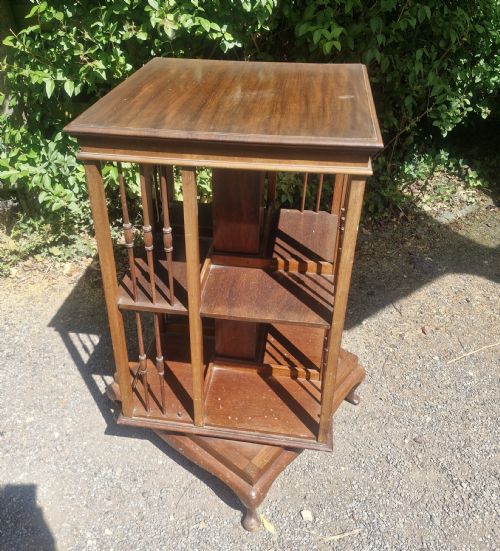

Vintage Revolving Bookcase
A vintage revolving bookcase turns a dense collection of volumes into an accessible, rotating desktop or floor-standing library.
Vintage Revolving Bookcase
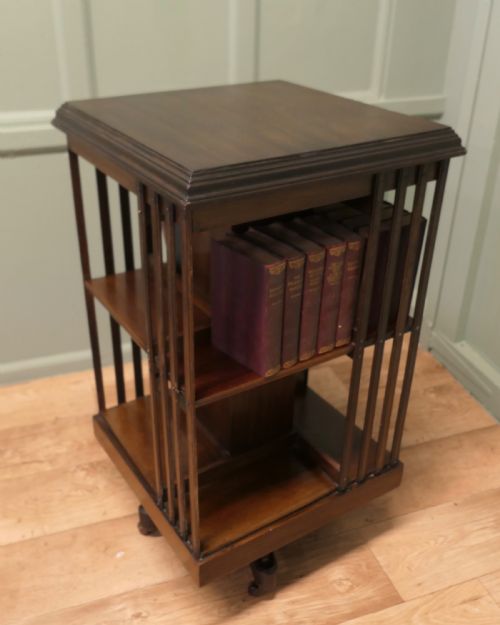
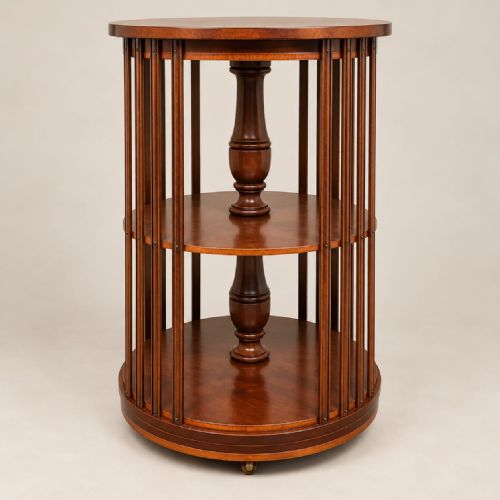
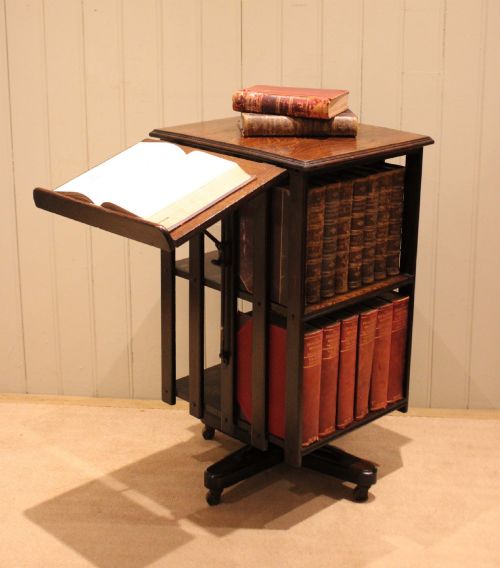
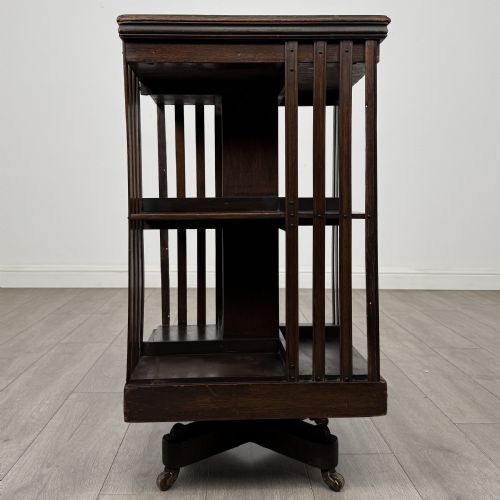
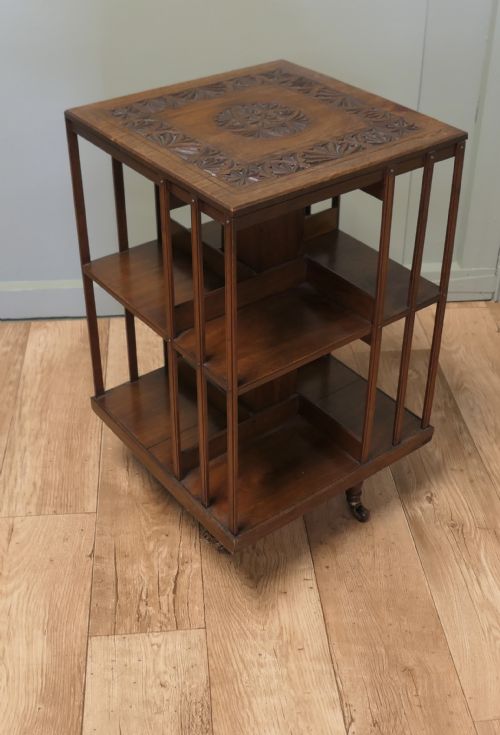
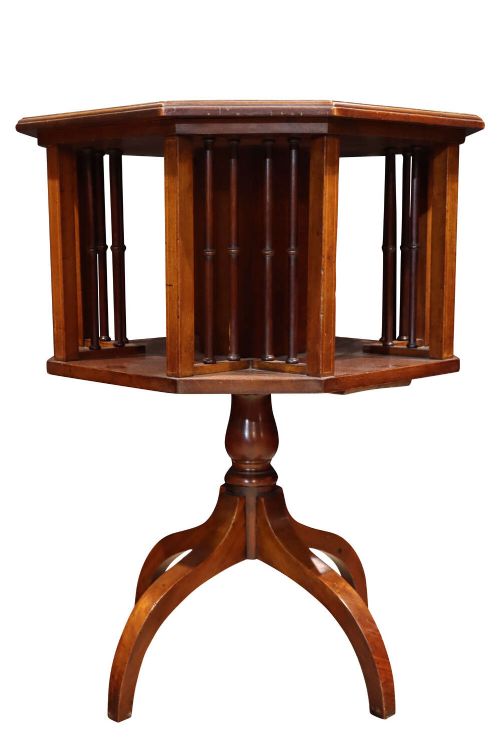
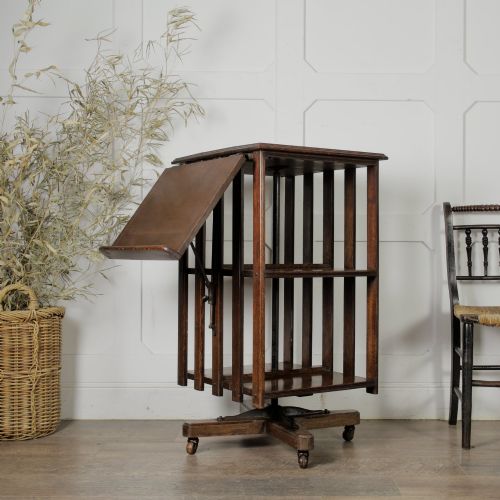
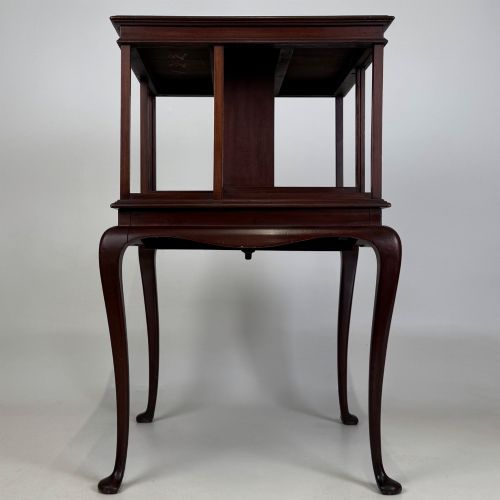
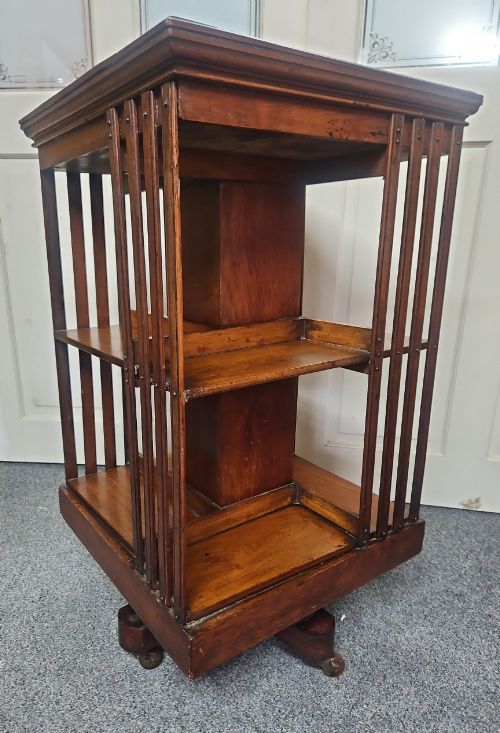
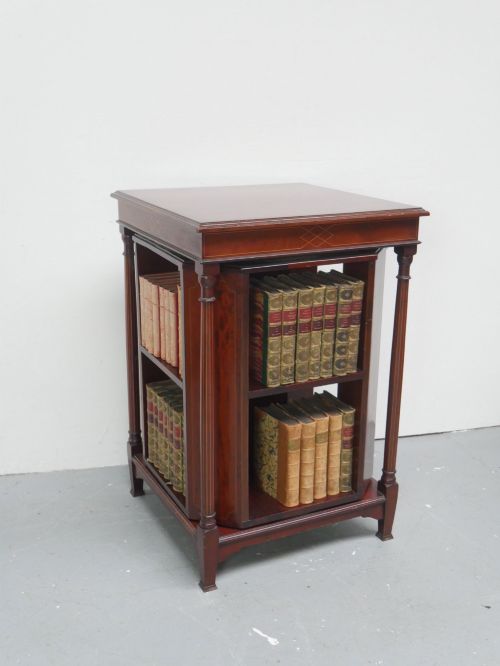
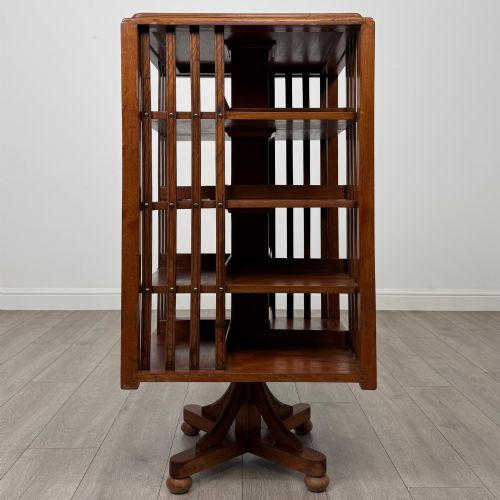
A vintage revolving bookcase functions as a rotating storage stand designed to hold reference volumes and novels within arm's reach. Buyers seeking a vintage revolving bookcase will encounter various forms, ranging from compact desktop bookstands to substantial floor-standing units.
The selections span distinct historical periods, with Edwardian and Victorian pieces dominating the available stock. Makers produced these items in standard multi-tier bookcase formats, occasional tables, and library tables, utilising domestic and imported timbers.
Floor-standing editions often feature multiple open tiers supported by internal revolving mechanisms. Desktop variants provide similar rotating utility on a smaller scale, fitting neatly onto a desk or side table.
What varies in quality
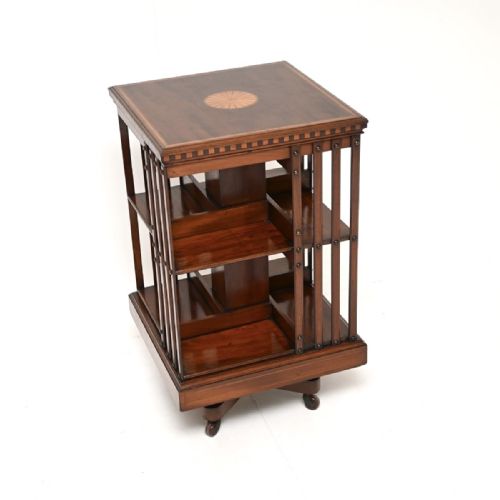
The refinement of the timber selection and inlay work sets apart the finer examples from standard production. Flame mahogany and intricate satinwood stringing indicate a higher grade of cabinet making.
Smoothness of rotation depends entirely on the condition and precision of the concealed metal or cast iron bearing mechanism. Solid timber construction yields a more robust piece than simpler veneered alternatives.
Vintage Revolving Bookcase Retail Price Guide 2026
Typical asking prices for vintage revolving bookcase among the pieces listed under this phrase on Sellingantiques today, from the lower quarter to the upper quarter. They describe what is for sale here now, not the wider market.
Heals
The Vintage Revolving Bookcase Glossary
- Edwardian
- Pertaining to the reign of King Edward VII, spanning the early years of the twentieth century. Furniture from this period often exhibits lighter proportions and refined inlay.
- Flame Mahogany
- A wood figure featuring a distinctive flame-like pattern derived from cutting through the branch junction of the mahogany tree. Cabinet makers reserved this timber for prominent surfaces.
- Inlay
- A decorative technique where contrasting materials such as satinwood are inserted into recesses within the primary timber surface. This creates geometric or botanical patterns along the edges.
- Revolving Mechanism
- The internal pivot and ball-bearing system that allows the tiers to turn in a complete circle. This hardware is typically concealed between the base and the lowest shelf.
- Satinwood
- A durable, lustrous timber with a golden yellow sheen used extensively for banding and decorative details on Edwardian cabinetry.
Vintage Revolving Bookcase: Frequently Asked Questions
How do revolving bookcases work?
These bookcases rotate on a concealed internal bearing mechanism housed within the base. This allows users to access all sides of the library unit from a single seated position.
Weight distribution matters for smooth turning. Placing heavier volumes on the lower tiers keeps the rotating centre of gravity stable.
Where do I put a revolving bookcase?
Floor-standing models suit corners, studies, or beside an armchair where books require frequent access. Desktop versions sit comfortably upon larger tables or desks.
Ensure adequate clearance around the entire circumference so the tiers rotate freely without striking walls or surrounding furniture.
How do I identify an Edwardian bookcase?
Edwardian pieces date from the early twentieth century and frequently showcase lighter timbers like inlaid mahogany and satinwood. The proportions tend to be more delicate than heavy Victorian equivalents.
Stylistic influences from the Sheraton revival appear often in these Edwardian examples, featuring symmetrical stringing and refined classical motifs.
What is the difference between oak and mahogany editions?
Oak revolving bookcases provide a heavier, more rustic aesthetic with prominent grain patterns. Makers built these for durability in libraries and studies.
Mahogany editions offer a richer reddish-brown tone and frequently incorporate fine decorative inlay. These tended to furnish formal drawing rooms and sitting areas.