



Vintage Red Turkmen Textile
Vintage red turkmen textile pieces bring nomadic tribal weaving traditions into modern interiors through rich wool saddle covers, ceremonial hangings, and storage bags.
Vintage Red Turkmen Textile
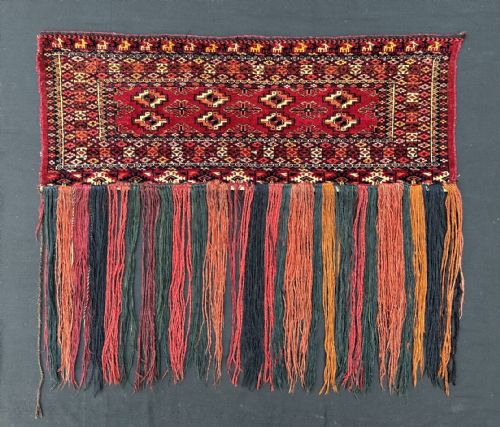
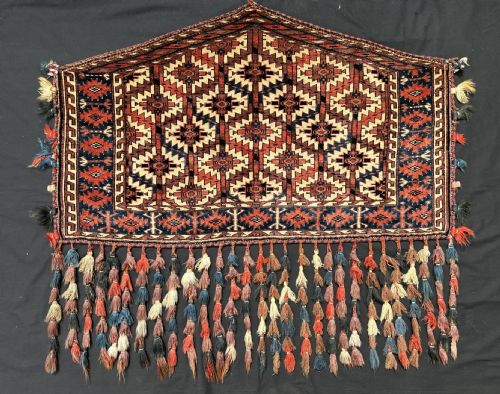
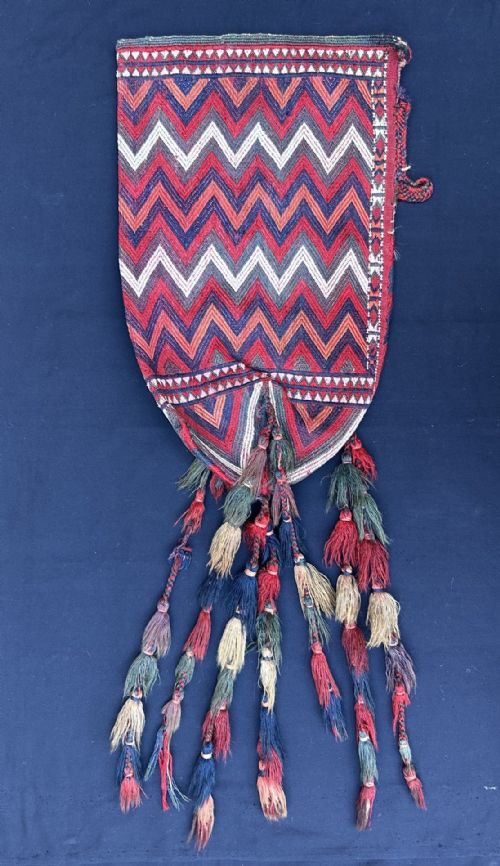
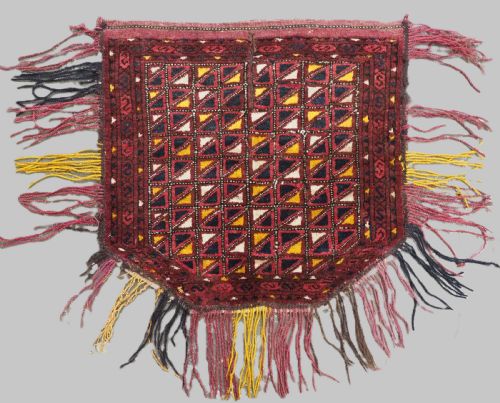
A vintage red turkmen textile encompasses woven and embroidered tribal items originating from Central Asian regions such as the Trans-Caspian steppes and the Merv oasis. Buyers encounter utilitarian and ceremonial forms including torbas, chuvals, asmalyks, and tent bands produced across the nineteenth and early twentieth centuries.
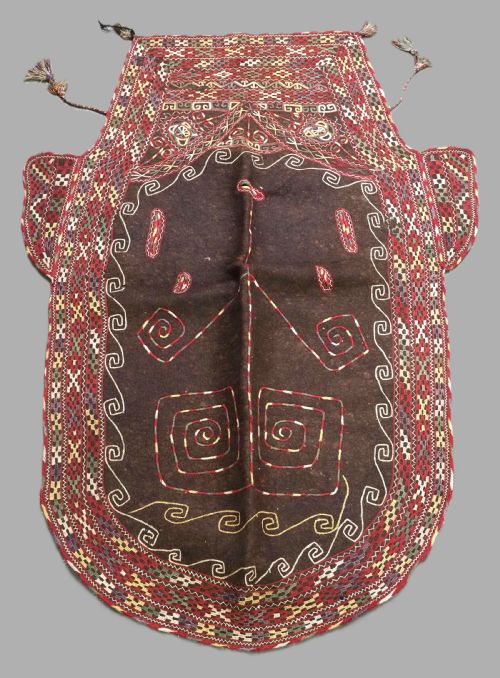
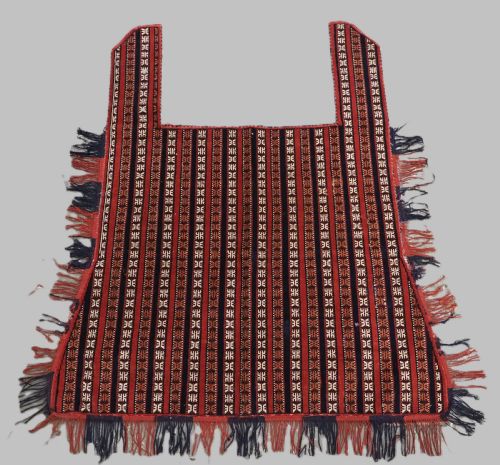
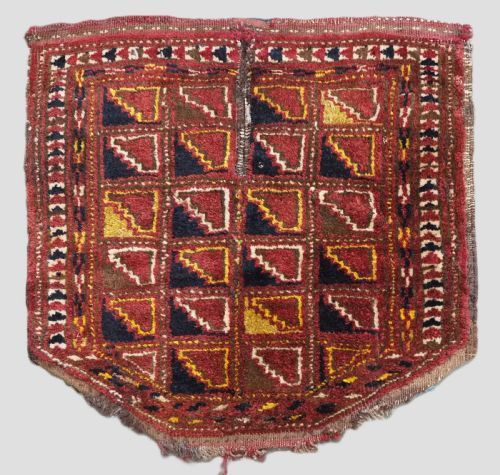
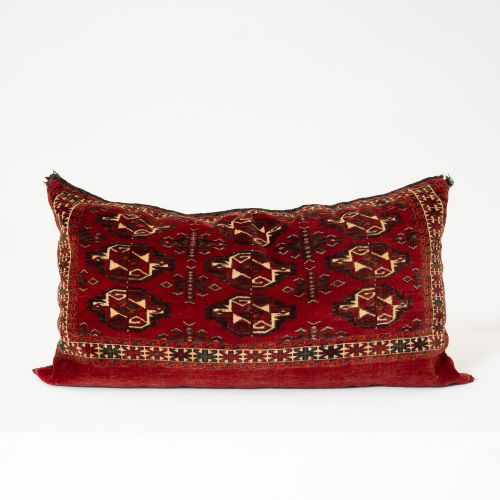
The selection on this page centres on tribal trappings and domestic objects created by specific groups like the Yomut, Tekke, and Ersari tribes. These items manifest as wall hangings, cushion faces, horse covers, and storage bags bearing traditional tribal motifs.
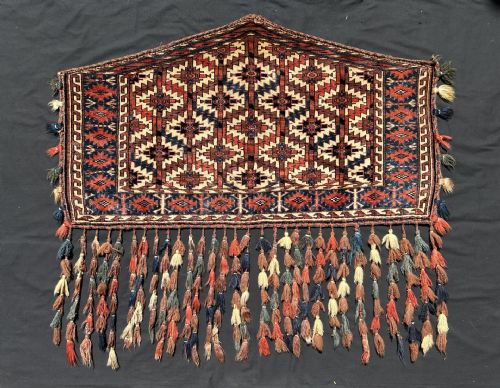
Makers produced these textiles for practical domestic storage or ceremonial transport during nomadic migrations and weddings. Surviving examples reflect the material culture of Central Asian pastoralists through specialised forms like asmalyks and kaplys.
What Varies in Quality
The density and tightness of the weave dictate the structural integrity of pile items, where a higher knot count yields a firmer and more durable fabric. Finer executions display precise geometric symmetry within repetitive guls and secondary motifs.
Completeness alters the character of individual pieces, as surviving items retaining original wool backs, tassels, and hanging loops offer a more unified historical record. The clarity of natural dye saturation and the complexity of tribal patterns further distinguish standard utility items from master ceremonial trappings.
Listings span production dates from the mid-nineteenth century through the early twentieth century, utilising wool, cotton, and natural dyes.
The Vintage Red Turkmen Textile Glossary
- Torba
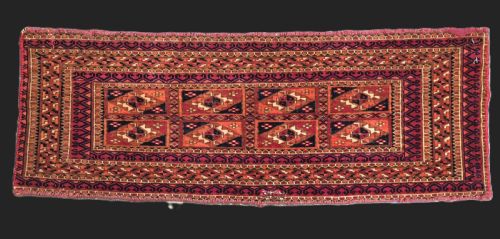
- A small horizontal storage bag utilised within nomadic tents for household possessions. These face panels feature rows of primary guls.
- Chuval
- A large tent bag traditionally used for bedding and clothing storage. They often display multiple guls arranged in structured rows.
- Asmalyk
- A pentagonal or polygonal trapping mounted on wedding camels during ceremonial processions. Yomut examples are particularly sought after by textile enthusiasts.
- Gul
- A repeating medallion motif symbolising specific tribal clans and lineages. These primary design elements anchor the visual geometry of Turkmen weaving.
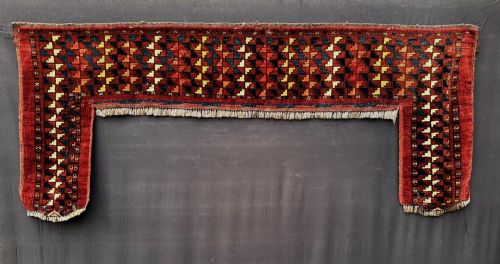
- Engsi
- A rug functioning as a tent door hanging rather than a floor covering. They characteristically feature a quartered design layout.
Vintage Red Turkmen Textile: Frequently Asked Questions
What is a vintage red turkmen textile used for?
Nomadic groups utilised these woven items for household storage, tent decoration, and ceremonial wedding processions. Families kept bedding in large chuvals and smaller items in torbas.
Today, collectors mount these flatweaves and pile pieces on walls as decorative art or display them as table covers and cushion faces.
How do I identify a Yomut piece?
Yomut weavings often display distinctive hooked guls, diagonal elements, and banded flatweave designs. Their asmalyks and spindle bags utilise specific structural geometries tied to Trans-Caspian traditions.
Examining the border ornaments and secondary motifs helps separate Yomut work from Tekke or Ersari alternatives.
How should I care for a textile?
Protect antique wool and cotton pieces from direct sunlight to prevent natural dye fading. Gentle vacuuming through a mesh screen removes surface dust without disturbing fragile pile or embroidery.
Mounting wall hangings on a supportive sleeve distributes weight evenly across the structure, preserving the integrity of the fabric.