



Vintage Red Brooch
A vintage red brooch brings together rich crimson tones and period metalwork, offering a striking focal point for a lapel or scarf.
Vintage Red Brooch
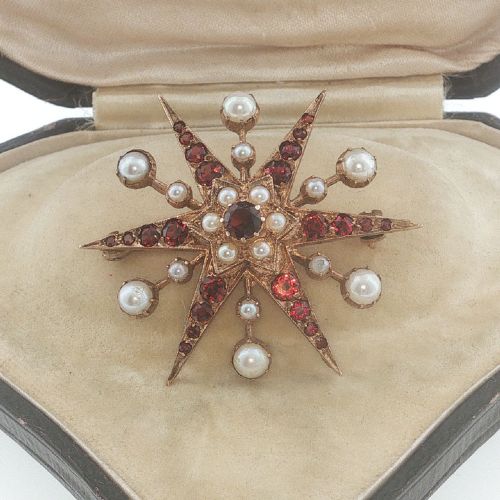
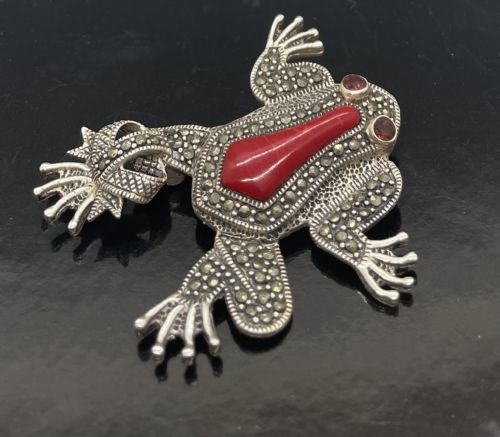
A vintage red brooch encompasses pieces created across the Victorian, Edwardian, Art Deco, and mid-century eras, featuring stones and enamel in distinct scarlet shades. When you search for a vintage red brooch, you encounter everything from delicate gold starbursts to bold Scandinavian silver enamel work.
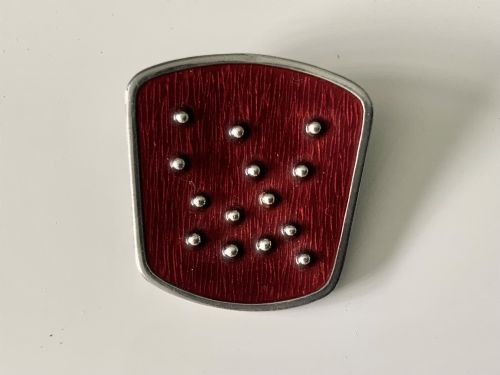
The materials span precious gemstones like ruby and garnet alongside vibrant red enamel and coloured paste set in silver or gold. Mid-century Norwegian designs frequently utilise guilloche enamel on silver, while earlier Victorian and Edwardian examples lean towards gold mounts set with garnets or rubies.
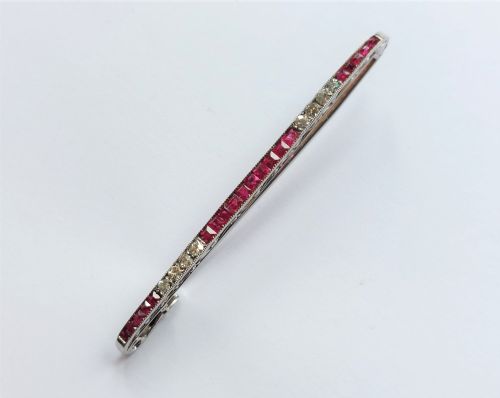
Forms vary significantly, ranging from naturalistic butterfly and leaf motifs to geometric Art Deco bars and crescent shapes. Pieces from the 1950s and 1960s often showcase clean modernist lines, contrasting sharply with the ornate detailing of the late nineteenth century.
Materials and construction methods
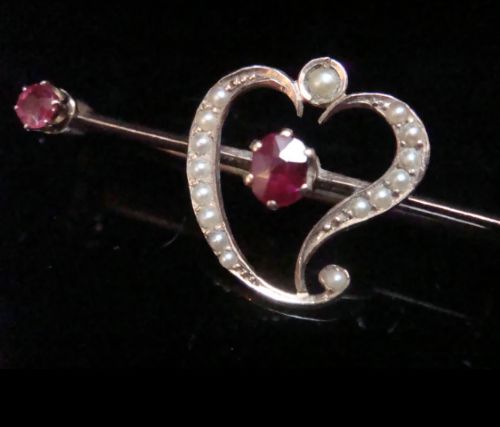
Goldsmiths and silversmiths utilised traditional casting, hand-fabrication, and stone-setting techniques to construct these pins. Yellow gold, rose gold, and sterling silver served as the primary foundations for mounting rubies, garnets, diamonds, and seed pearls.
Enamelling techniques required skilled artisans to fuse glass powders onto silver or gilt surfaces under high heat, particularly evident in Scandinavian leaf and butterfly designs. Paste stones and synthetic rubies were also expertly cut and foiled or open-backed to maximise their brilliance within silver-plated or gold-mounted frames.
Listings feature items spanning the Victorian era through the mid-twentieth century, constructed in gold, silver, and platinum.
Assessing craftsmanship and condition
Quality rests upon the precision of the stone-setting and the integrity of the metalwork, whether cast or hand-wrought. Finer items display secure claw or flush settings where gemstones sit flush without excess solder visible on the reverse.
In enamelled pieces, the standard is judged by the smoothness of the glass surface and the absence of chipping or hairline fractures across the colour field. Superior gold and silver pieces maintain crisp hallmarks, sharp chasing, and fully operational pin stems and safety catches.
Aksel Holmsen·David Andersen·Hroar Prydz·Ivar T Holth
The Vintage Red Brooch Glossary
- Guilloche
- A decorative technique involving intricate, machine-turned geometric patterns engraved beneath a transparent layer of enamel. This method was widely favoured by mid-century Scandinavian makers.
- Almandine garnet
- A deep red variety of garnet frequently utilised in Victorian jewellery. These stones often appear in flat-cut settings characteristic of nineteenth-century production.
- Silver gilt
- Sterling silver that has been coated with a thin layer of gold. This finish provides the warm tone of gold while utilising a silver base.
- Starburst brooch
- A celestial jewellery design featuring rays emanating outwards from a central cluster. These pieces were popular during both the Victorian and mid-century periods.
Vintage Red Brooch: Frequently Asked Questions
How do I date a vintage red brooch?
Dating relies on combining the evidence of metal hallmarks, fastener types, and prevailing design styles. Victorian and Edwardian pieces typically feature closed-back settings or high-carat gold, whereas mid-century examples often display maker marks and bright silver enamel.
Examining the pin mechanism provides further clues. Safety catches and tubular hinges generally point towards the twentieth century, while older C-clasps indicate Victorian or earlier origins.
Are ruby and garnet brooches different?
Rubies are corundum stones valued for their vibrant pinkish-red hue and extreme hardness, frequently paired with diamonds in Edwardian and Art Deco mounts. Garnets are softer silicate minerals displaying deeper, brownish-red tones common in Victorian jewellery.
While both appear in red brooches, garnets are often foil-backed or cut flat in older pieces, whereas rubies command higher settings that allow light to pass through the pavilion.
How should I wear an enamel brooch?
Enamel pieces require careful placement to avoid impact against hard surfaces or other jewellery. Securing them to heavy fabrics like wool coats or stoles distributes the weight evenly.
Ensure the safety catch is fully engaged when fastening the pin to delicate textiles. Storing the brooch in a dedicated compartment prevents scratching from adjacent items.
What is Norwegian silver enamel?
Norwegian silver enamel refers to mid-century Scandinavian work featuring vitreous enamel applied over textured or engine-turned sterling silver. Makers like David Andersen and Aksel Holmsen popularised naturalistic motifs such as leaves and butterflies in vivid red.
These pieces are celebrated for their translucent colouration and precise silversmithing. They represent a distinct movement away from traditional gemstone mounting towards modernist design.