

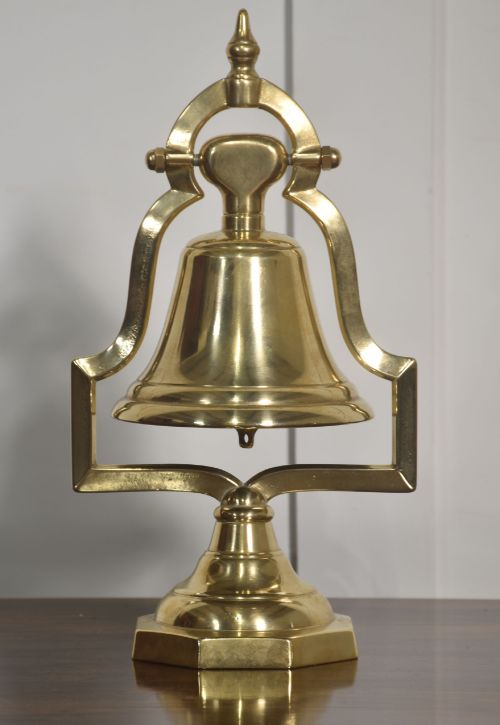
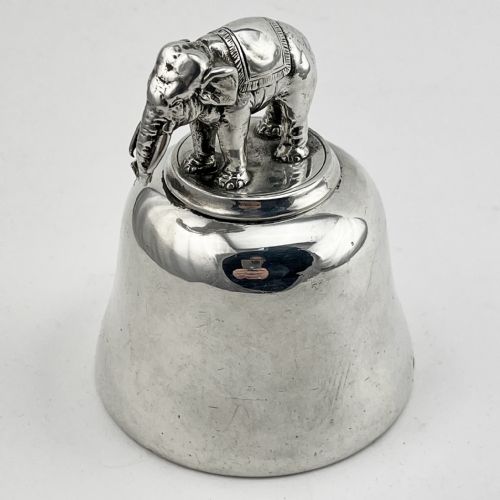


Vintage Reception Bell
A vintage reception bell brings tactile charm to a desk or counter, offering a crisp mechanical ring rooted in past service.
Vintage Reception Bell
A vintage reception bell takes several functional forms across the Victorian and Edwardian periods, appearing primarily as table bells, counter bells, and desk bells designed for service environments.
These pieces emerge from the nineteenth and twentieth centuries, spanning the late Victorian era, Edwardian period, and early twentieth-century revivals.
How they were made
Makers utilised durable metals such as brass, bronze, steel, and cast brass to form the body and dome of each bell, ensuring a clear and resonant tone.
Precious metals appear in sterling silver and silver plate, adding decorative refinement to domestic and commercial desk accessories.
Wooden elements, specifically oak, frequently provide sturdy bases or stands to support the metal bell mechanisms.
Vintage Reception Bell Retail Price Guide 2026
Typical asking prices for vintage reception bell among the pieces listed under this phrase on Sellingantiques today, from the lower quarter to the upper quarter. They describe what is for sale here now, not the wider market.
Materials represented across the selection include sterling silver, silver plate, oak, bronze, steel, and multiple forms of brass.
What varies in quality
The sophistication of the casting and the choice of primary materials distinguish standard utility models from more substantial examples in sterling silver or combined brass and bronze.
Design ornamentation ranges from simple utilitarian polished brass to ornate Art Nouveau motifs and detailed Victorian-style embellishments.
The integration between the bell dome, the striking mechanism, and the fitted stand or wooden base determines the overall integrity of the piece.
The Vintage Reception Bell Glossary
- Counter bell
- A bell designed to sit on a shop or hotel counter for summoning service. These units often feature a plunger or push mechanism mounted on a heavy base.
- Table bell
- A domestic bell placed on a dining or side table, historically used to summon household staff. They frequently incorporate a handle or sit upon an independent stand.
- Sterling silver
- A silver alloy containing ninety-two point five percent silver by mass, used for high-end decorative table bells. This material brings a bright reflective finish to desk accessories.
- Art Nouveau
- A stylistic movement from around nineteen hundred characterised by flowing, organic lines. Pieces from this aesthetic display naturalistic curves on their metalwork.
Vintage Reception Bell: Frequently Asked Questions
What is a vintage reception bell?
A vintage reception bell is a mechanical signalling device used historically in hotels, shops, and large homes to summon attention. They date predominantly from the Victorian and Edwardian eras.
These pieces combine functional metal bell domes with stands made of brass, bronze, silver, or oak, serving both practical and decorative purposes on modern desks.
How do you date a reception bell?
Dating relies on stylistic clues, manufacturing materials, and hallmarks where precious metals are present. Victorian and Edwardian examples often feature specific cast brass ornamentation or oak stands characteristic of the late nineteenth century.
Later pieces from the early twentieth century may show revival styles or distinct mechanical patents that help narrow down their period of manufacture.
Where were these bells used?
These bells were deployed wherever service was required on demand, including hotel reception desks, shop counters, and country house dining rooms. They allowed staff to be summoned promptly without shouting.
In domestic settings, they sat on tables or desks, while commercial versions were weighted heavily to withstand constant public interaction.
How do you maintain a brass bell?
Maintaining a brass bell involves gentle dusting and occasional cleaning with appropriate metal care products if polishing is desired. Many collectors prefer to leave an established patina intact.
Keeping the moving internal striking parts free from dust ensures the bell retains its clear and resonant tone when activated.