


Vintage Racehorse Canvas
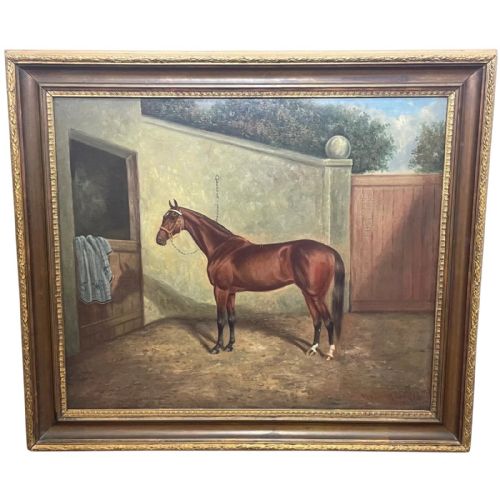
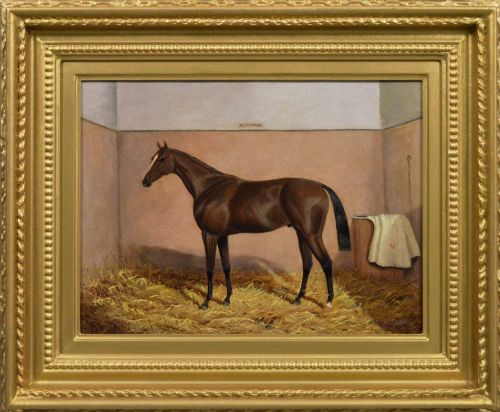
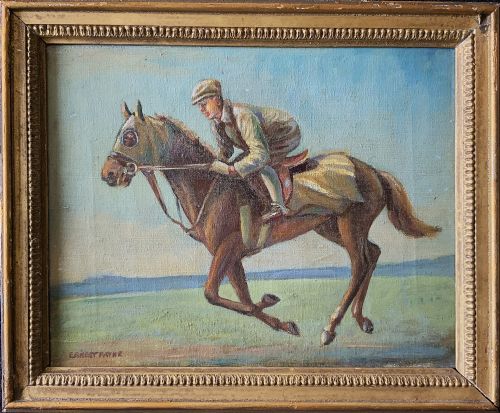
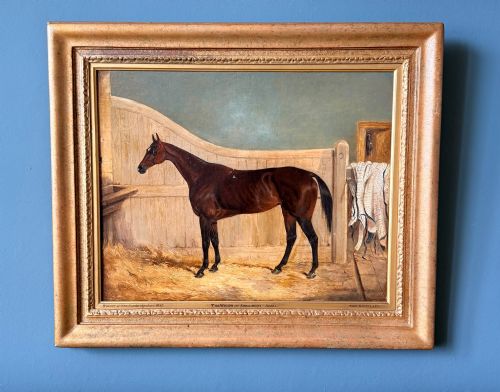
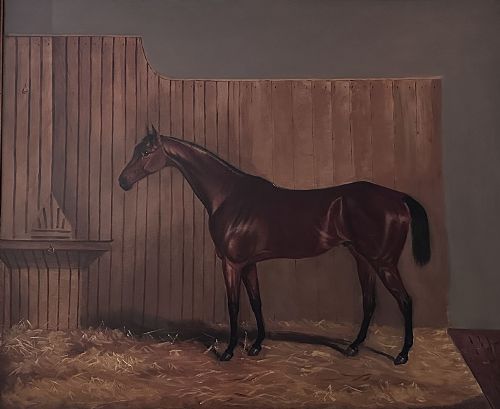
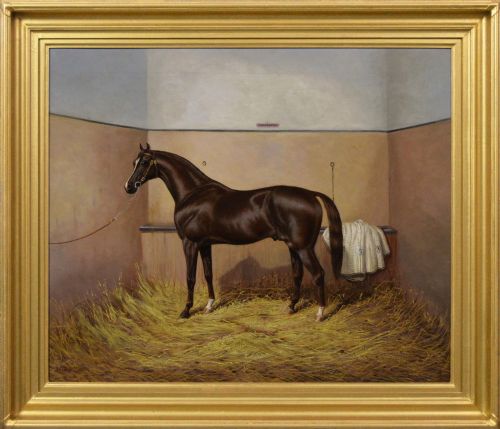
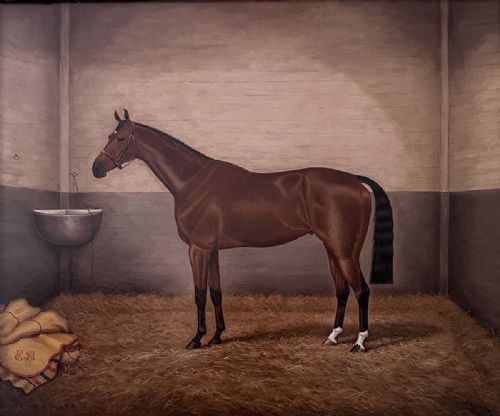
These vintage racehorse canvas works capture elite thoroughbreds and historic jockeys in oil paint.
Vintage Racehorse Canvas
When buyers search for vintage racehorse canvas pieces, they encounter traditional equestrian art depicting notable winners and portraits from the nineteenth and early twentieth centuries. These paintings record famous thoroughbreds such as Spion Kop, Flying Fox, and Persimmon alongside their jockeys.
The selections available here span Victorian and Edwardian periods, featuring British realism and sporting art styles. Works range from focused horse portraits to detailed studies of racers at notable events like the Epsom Derby and Colombo races.
Creators recorded in these listings include named artists such as Albert Clark, Ernest Payne, Thomas Walker Bretland, Alfred Wheeler, Walter Herbert Wheeler, and Frank Giggs. Many canvases preserve the specific colours of notable owners and the names of winning mounts.
Materials and methods
Artisans applied oil paint directly onto stretched canvas surfaces to build depth and texture within each equine portrait. This medium allowed painters to render the muscular form of the horse and the sheen of its coat with precision.
Many works retain their period framing, utilising wood and gesso finished with giltwood details to complement the equestrian subject matter. The combination of oil paint and canvas ensured durability, preserving the pigments across decades of display.
Several canvases faithfully record the specific racing silks and colours worn by historical owners like Lord Glanely and King Edward VII.
Judging quality in equestrian art
The distinction between standard works and superior pieces lies in the accuracy of the anatomical depiction and the handling of the horse's musculature and expression. Master artists captured the tension and presence of the thoroughbred far beyond a simple record of the animal.
Provenance and documentation elevate certain canvases, particularly those identifying specific historical winners, jockeys, and owners such as King Edward VII or Lord Glanely. The skill of the brushwork in rendering the jockey's silk colours and the surrounding landscape further separates fine examples from ordinary studies.
Frederick Albert Clark·Thomas Walker Bretland·Ernest Payne·Alfred Wheeler·Walter Herbert Wheeler·Frank Giggs
The Vintage Racehorse Canvas Glossary
- Canvas
- A heavy woven fabric used as a surface for oil painting. It provides the tensile strength needed for large stretched artworks.
- Giltwood
- Wood carved and covered with a thin layer of gold leaf or gold paint. This finish frequently appears on period frames surrounding sporting art.
- Gesso
- A plaster-like mixture applied to wood frames to create a smooth surface for gilding. It allows for intricate moulded decorative details.
- Equestrian Realism
- An artistic style focused on the accurate representation of horses. Practitioners emphasise correct anatomy and lifelike movement.
- Victorian Sporting Art
- A genre dedicated to depicting animals, racing, and field sports during the nineteenth century. These works often record specific horses and historical sporting events.
Vintage Racehorse Canvas: Frequently Asked Questions
What periods do these paintings date from?
The works span the nineteenth century through the early twentieth century, encompassing Victorian and Edwardian eras. Pieces reflect the active periods of British sporting art production.
Dating relies on artist lifespans, recorded race victories, and stylistic indicators typical of traditional equestrian portraiture.
How were these canvas paintings displayed originally?
These paintings were typically housed in substantial wood and gesso frames, often finished with giltwood to highlight the artwork within domestic or club interiors.
Owners displayed them to celebrate racing triumphs, notable thoroughbreds, and connections to prominent racing figures and owners.
Are specific jockeys and horses named in the art?
Many listings identify celebrated racehorses, winning courses, and specific jockeys such as Jack Watts or Fred Archer. Artist signatures and inscriptions on the canvas often record these details.
This documentation links individual paintings to specific historical events, such as the Epsom Derby or the Colombo Races.
How do I care for a vintage oil painting on canvas?
Protect the canvas from direct sunlight and stable environmental humidity to prevent cracking in the oil paint and warping of the stretcher bars. Avoid touching the painted surface directly.
Dust the canvas and its period frame gently with a soft, dry brush, leaving professional cleaning or restoration to qualified conservators.