
Vintage Purple Stone Jewellery
Vintage purple stone jewellery comprises amethyst, paste, and Blue John set in gold, silver, and platinum across multiple eras.
Vintage Purple Stone Jewellery
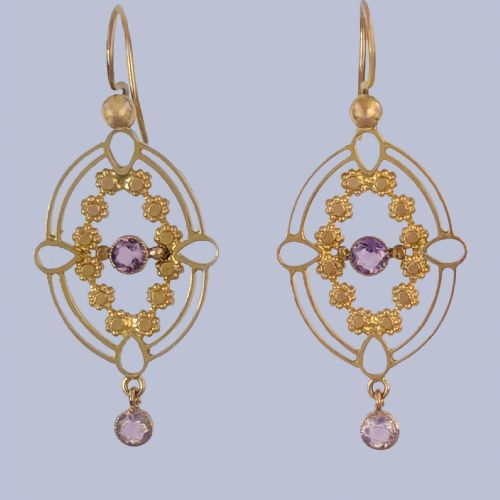
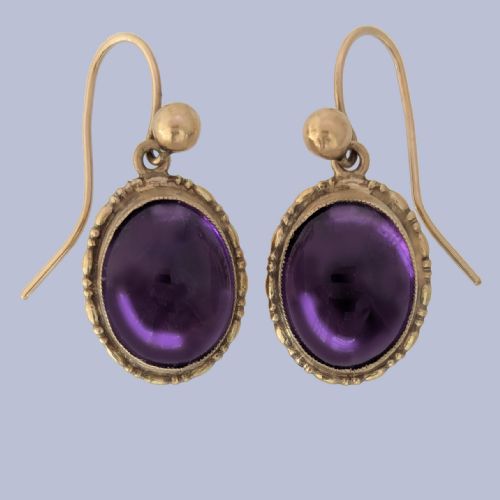
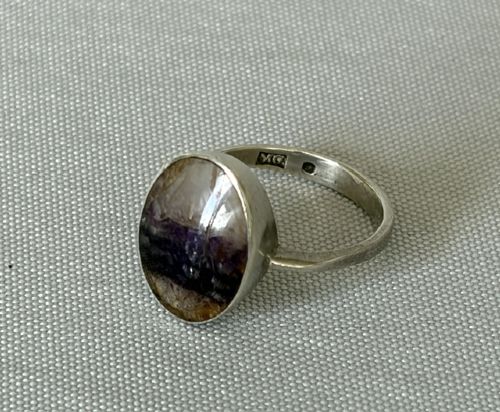
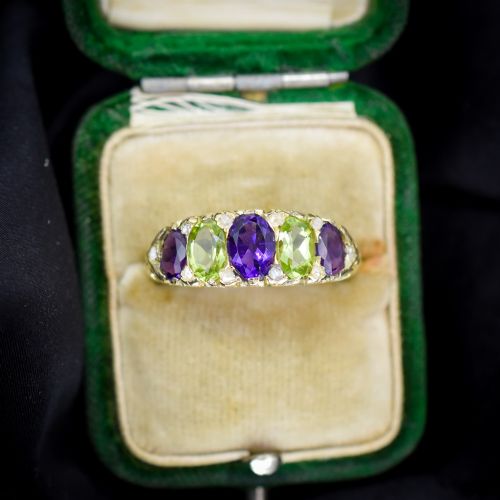
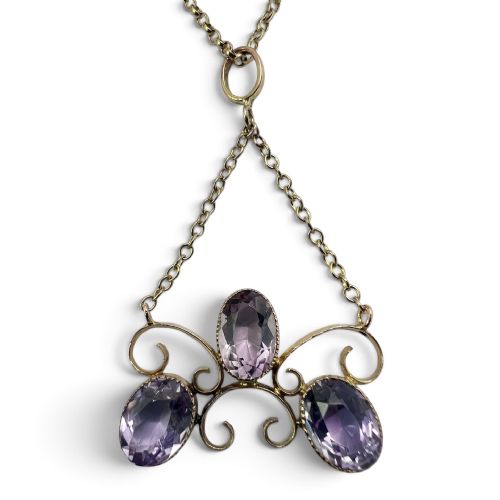
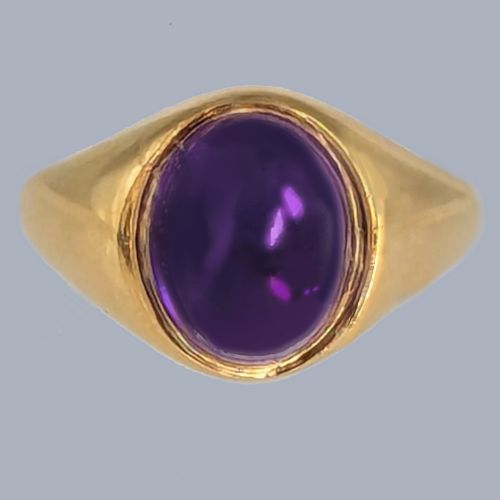
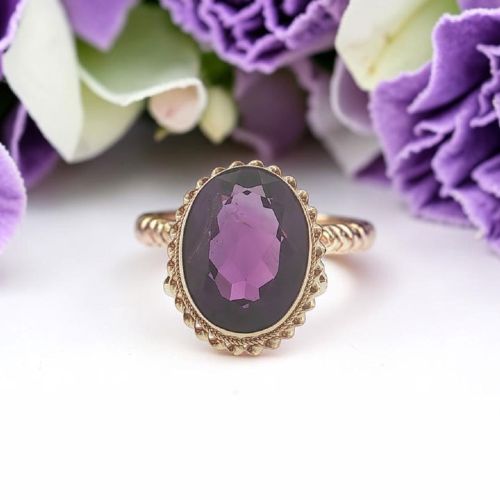
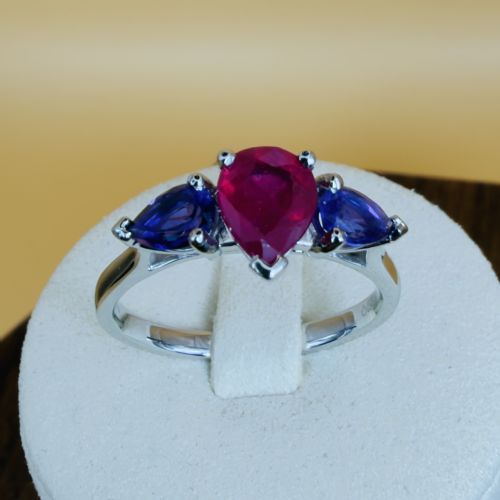
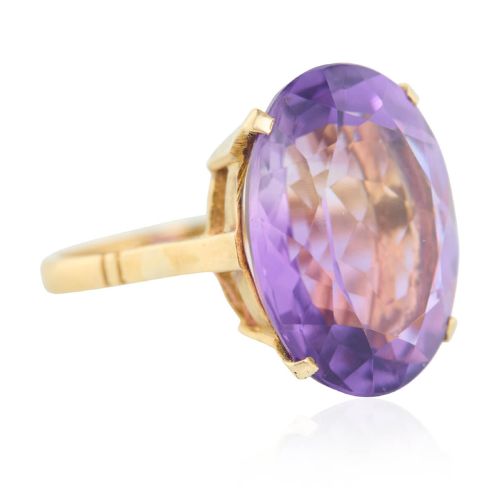
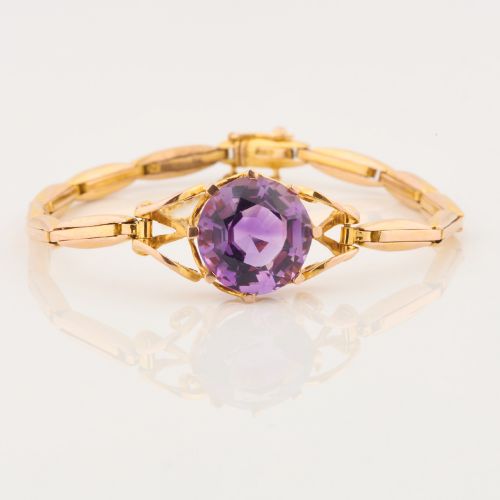
Vintage purple stone jewellery encompasses rings, pendants, earrings, brooches, and bracelets gathered from Victorian, Edwardian, and mid-century periods. When searching for vintage purple stone jewellery, buyers encounter diverse forms ranging from delicate lavalier necklaces to substantial cocktail rings. The selection relies heavily on amethyst as the primary purple gem, alongside purple paste and Blue John.
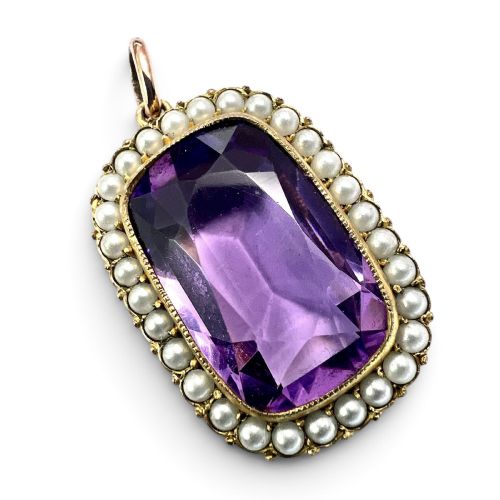
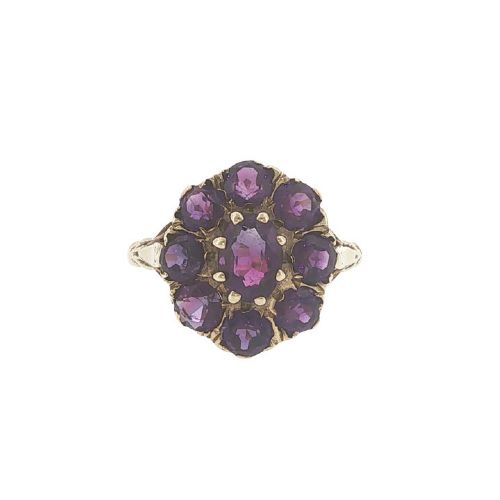
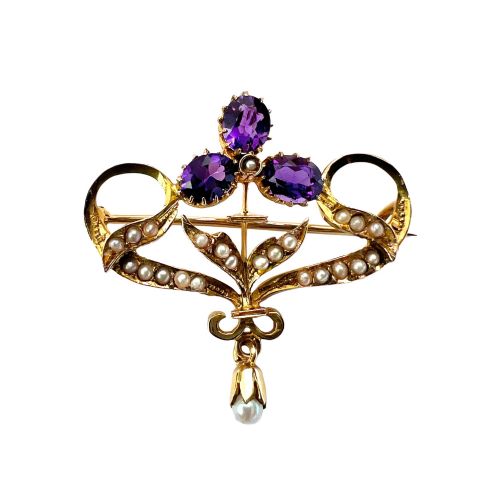
Edwardian and Victorian specimens frequently combine amethyst with seed pearls in yellow gold settings. Mid-century examples lean towards heavier cocktail rings and cluster designs in various gold purities. These pieces reflect shifting tastes across the nineteenth and twentieth centuries while maintaining a focus on violet and purple hues.
How they were made
Goldsmiths utilised 9ct, 14ct, 15ct, and 18ct gold, alongside silver and platinum, to mount stones using claw, bezel, and halo configurations. Seed pearls are frequently strung or pegged around central purple stones in Edwardian pendants and rings.
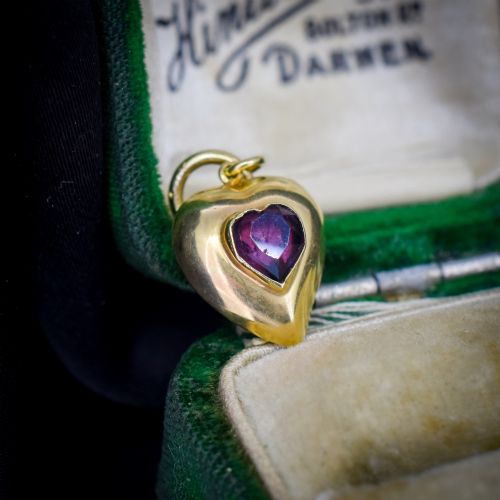
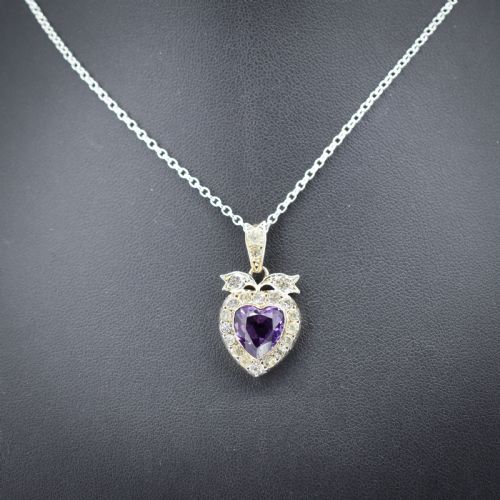
Lapidaries shaped the purple minerals into step cuts, round cuts, oval cuts, heart cuts, pear cuts, and cabochons. Paste glass was also moulded to imitate genuine gemstones in heart pendants and dress pieces.
What varies in quality
The choice of metal purity and stone saturation distinguishes different tiers of manufacture. Heavier gold weights and well-matched diamond accents elevate the construction standard of rings and brooches.
Design complexity also sets examples apart, shifting from simple solitaire settings to intricate Art Nouveau wirework and multi-stone cluster arrangements.
S. Blanckensee & Son
The Vintage Purple Stone Jewellery Glossary
- Amethyst
- A purple variety of quartz utilised extensively across Victorian and twentieth-century rings and pendants. Its colour saturation dictates much of the visual appeal in these pieces.
- Paste
- Hand-cut glass used as an affordable substitute for genuine gemstones in historical jewellery. It often appears in heart-shaped pendants and decorative charms.
- Seed Pearl
- Tiny natural or cultured pearls deployed in concentric halos around central stones during the Edwardian era. They lend a delicate textural contrast to polished purple gems.
- Lavalier
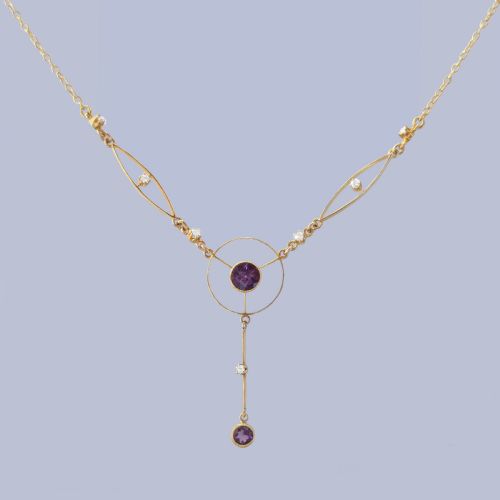
- A pendant necklace featuring a suspended drop stone, popular during the Edwardian and Art Nouveau periods. These assemblies frequently incorporate pearls and diamonds.
Vintage Purple Stone Jewellery: Frequently Asked Questions
What periods do these purple pieces span?
The available selection reaches from nineteenth-century Victorian and Georgian examples through Edwardian and Art Nouveau designs into mid-century twentieth-century creations.
These eras bring distinct aesthetic shifts, moving from delicate seed pearl clusters to bold cocktail rings and heavy gold mountings.
What metals are typically used?
Goldsmiths worked primarily in 9ct, 14ct, 15ct, and 18ct yellow gold, alongside silver, white gold, and platinum.
Metal choice often reflects the period of origin, with higher carat golds appearing more frequently in older Victorian and Edwardian items.
Are all the purple stones amethysts?
While amethyst dominates the selection as the main purple gemstone, other materials such as purple paste and Blue John fluorite also appear.
Paste offers a historical glass alternative, whereas Blue John provides banded purple and yellow natural mineral patterns.
How do I care for my jewellery?
Gentle cleaning with warm soapy water and a soft brush maintains the polish of gold and silver mountings without harming softer stones.
Storage in individual soft pouches prevents scratching between delicate seed pearls, paste, and harder quartz varieties.