



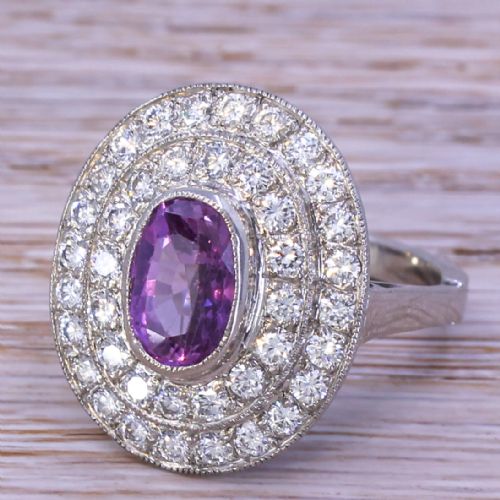


Purple Cluster Cocktail Ring
A purple cluster cocktail ring delivers unmistakable colour and presence, drawing the eye with bold central stones framed by sparkling accents.
Purple Cluster Cocktail Ring
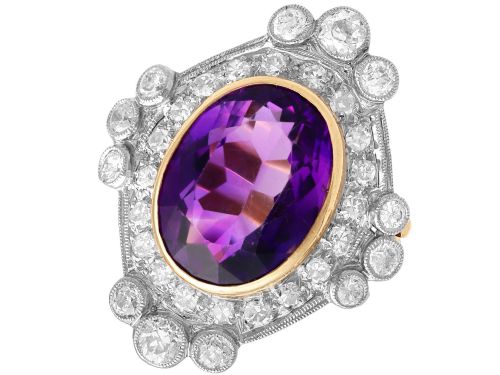
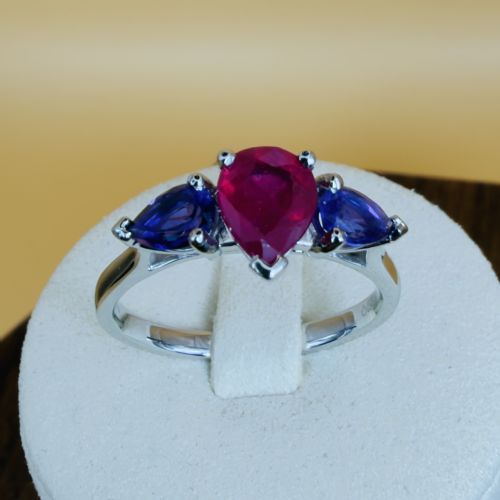
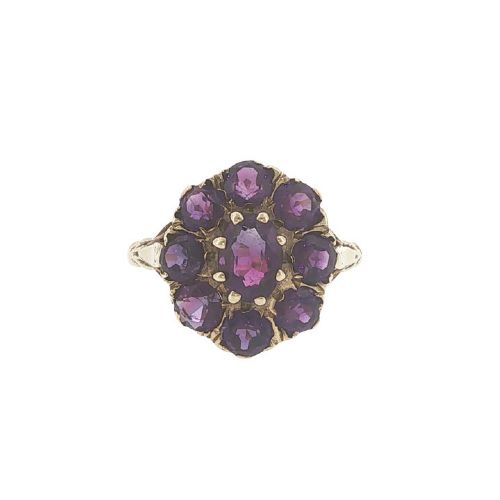
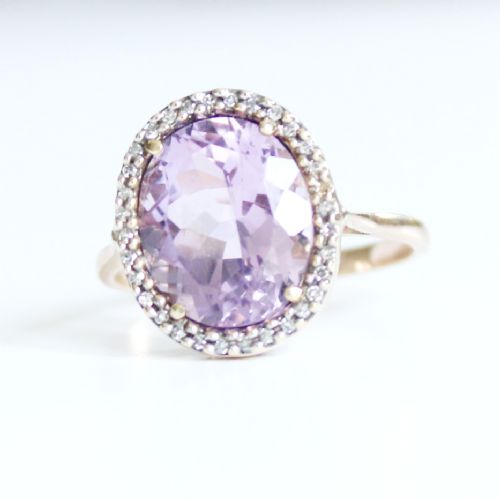
A purple cluster cocktail ring is a statement piece of jewellery designed to command attention at social gatherings. These rings typically feature a prominent central purple stone, such as amethyst or purple sapphire, surrounded by a border of smaller gems like diamonds or pearls.
The selections available span multiple eras, including Victorian, Edwardian, 1930s, and later 20th-century examples. Buyers frequently encounter both traditional floral cluster formations and geometric halo designs set across various gold and platinum mountings.
Materials and construction methods
Goldsmiths and platinum smiths constructed these mounts using precious metals including 9ct gold, 18ct white gold, rose gold, and platinum. Certain pieces incorporate traditional silver-topped gold techniques alongside stamped precious metal hallmarks.
Settings rely on precision claw work or bezel surrounds to secure the primary purple gemstones, whether they are natural amethysts, sapphires, or paste alternatives, alongside pavé or collet-set diamonds and pearls.
Secret cocktail rings once stored tiny compartments for poison, though today they securely store nothing more than pure decorative brilliance.
Distinctions in quality and execution
The calibre of the central purple gemstone dictates much of the visual impact, with depth of colour and stone weight defining the piece. Heavier carat weights in amethysts or sapphires paired with substantial diamond accents separate more ambitious designs from simpler iterations.
The integrity of the metalwork, whether delicate Edwardian milgrain detailing or robust mid-century platinum casting, governs how well the cluster arrangement holds its structural rhythm over decades of wear.
The Purple Cluster Cocktail Ring Glossary
- Cluster ring
- A ring design where a central stone is surrounded by a closely set group of smaller gems. This layout maximises overall sparkle and visual volume on the hand.
- Halo ring
- A style featuring a central gemstone encircled by a concentric ring of smaller pavé-set stones. It enhances the perceived size and brilliance of the primary gem.
- Paste
- Hand-cut and polished lead glass used historically as a brilliant gemstone substitute. It offers significant refractive qualities in antique costume and cocktail jewellery.
- Milgrain
- A decorative jewellery technique creating a raised border of tiny metal beads along the edges of a setting. This method adds a refined, textural finish typical of Edwardian and Art Deco work.
- Emerald cut
- A rectangular or square step-cut gemstone shape with cropped corners. This cut emphasises clarity and depth of colour over high fire.
Purple Cluster Cocktail Ring: Frequently Asked Questions
What defines a cocktail ring?
A cocktail ring is an intentionally oversized piece of jewellery created to draw attention during evening social events. These rings prioritize bold visual impact through large central stones and ornamental settings.
Historically associated with the prohibition era and mid-century gatherings, they remain popular for their unapologetic scale and decorative flair.
How do I care for my ring?
Proper maintenance involves gentle cleaning using warm soapy water and a soft brush to remove everyday oils from beneath the cluster setting. Avoid harsh chemical dips, particularly if the piece contains softer organic gems like pearls.
Store the ring separately in a lined box to prevent hard stones like diamonds from scratching the central amethyst or softer mountings.
Can I wear these daily?
Daily wear is entirely possible depending on the specific metal durability and stone hardness. Amethyst rates reasonably well on the Mohs scale, though high-set clusters require care against accidental knocks.
Checking the security of the claws periodically with a professional jeweller ensures the smaller surrounding stones remain firmly in place.
How are different eras identified?
Era identification relies on a combination of metal hallmarks, gemstone cuts, and overall manufacturing style. Edwardian pieces often display intricate platinum work and pearls, while 1930s examples lean towards bold geometric framing.
Victorian pieces frequently utilise rose gold and deep amethyst tones, whereas later 20th-century items showcase distinct heavy casting and contemporary profiles.