
Vintage Purple Pendant
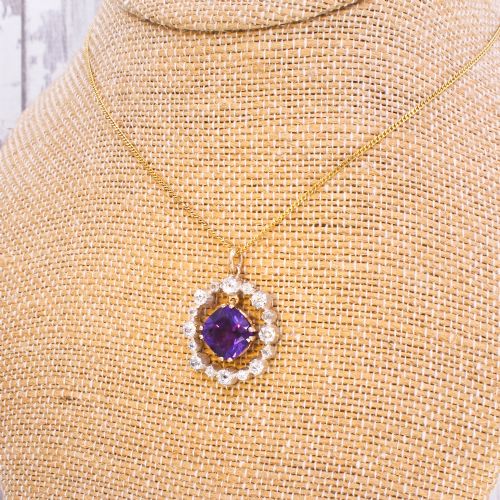
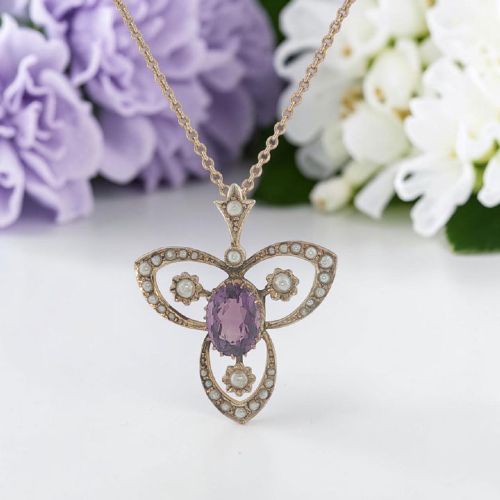
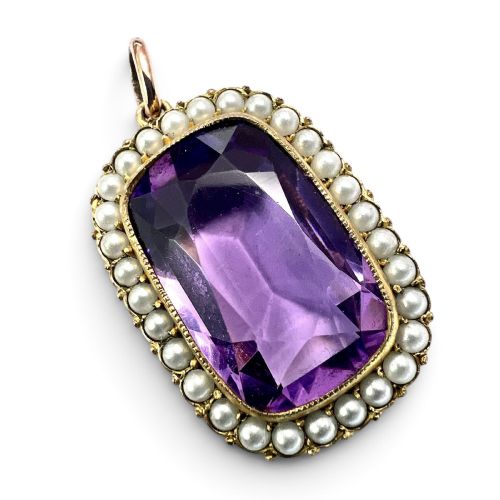
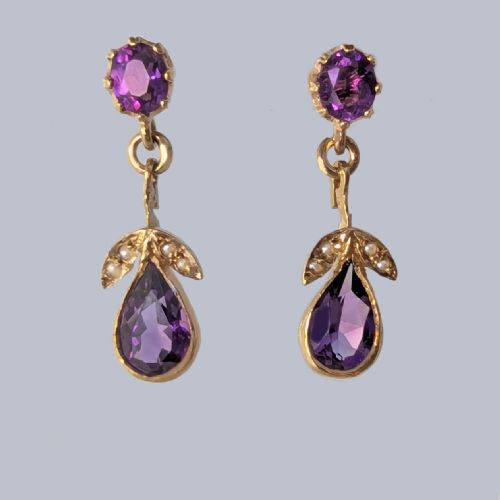
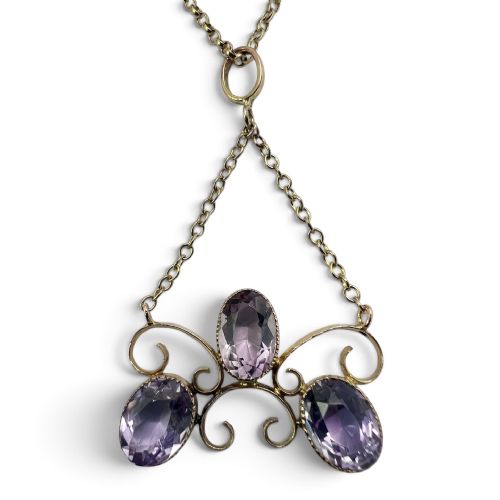
A vintage purple pendant brings together rich amethyst stones and delicate gold settings, offering a touch of period elegance to a collection.
Vintage Purple Pendant
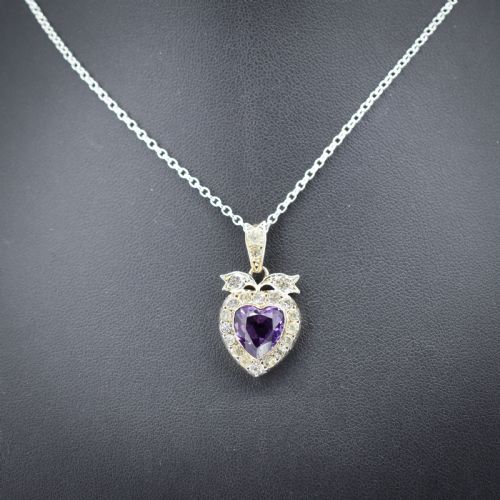
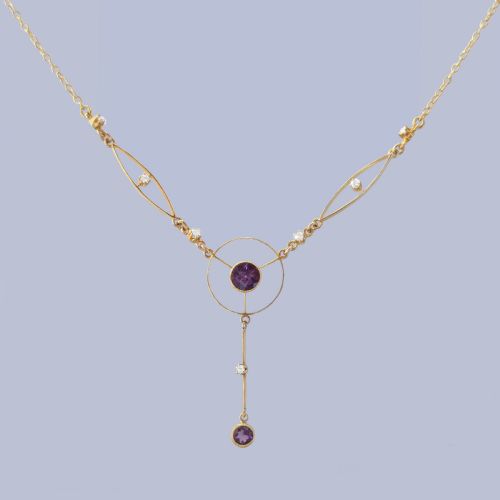
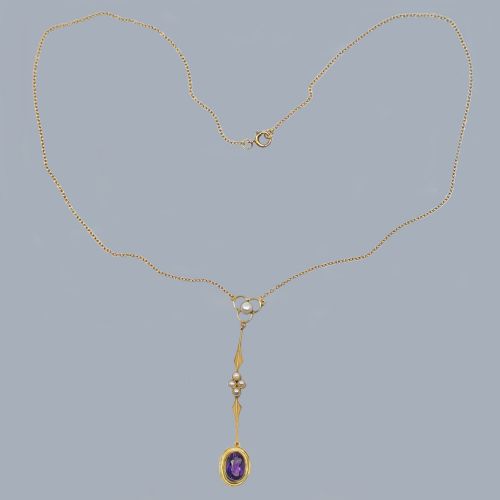
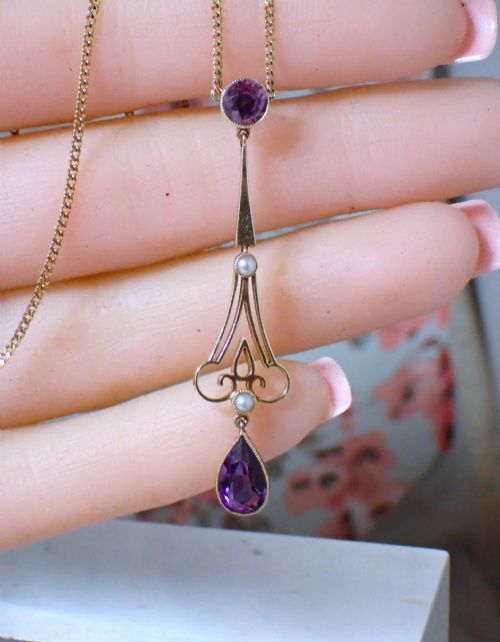
The most common examples on this page are Edwardian lavalier necklaces and drop pendants, frequently combining nine-carat or fifteen-carat gold with purple quartz. Art Nouveau and Art Deco motifs also appear, reflecting the design shifts of the early twentieth century.
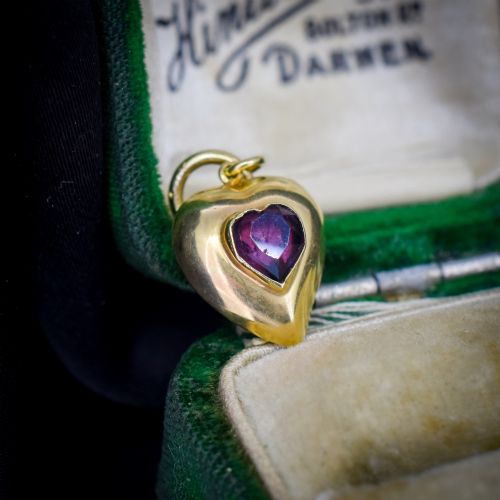
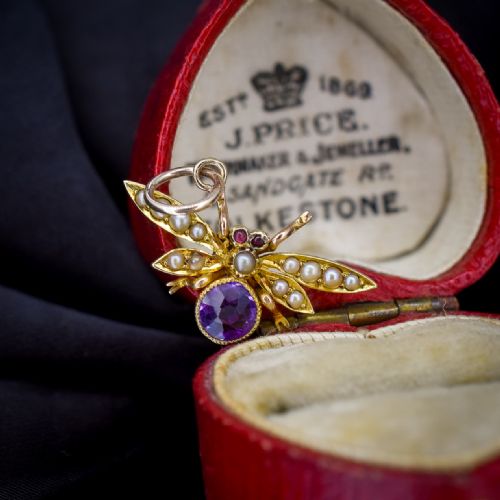
Buyers will encounter various formats, including heart charms, insect motifs, and circular drop clusters. Each style captures the distinct aesthetic preferences of its decade of origin.
Materials and construction methods
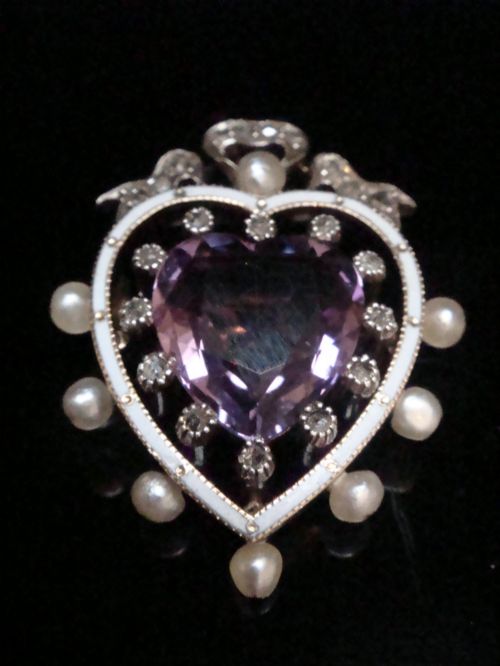
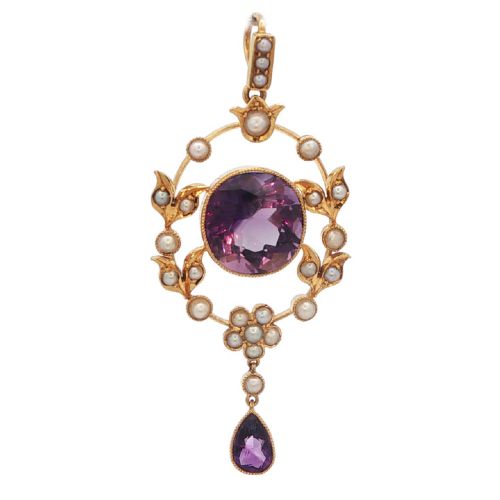
Craftsmen utilised high-grade yellow gold, white gold, and sterling silver to house faceted amethysts and paste stones. Seed pearls were frequently strung or threaded into clusters around the central purple gemstone.
Open-back settings allowed maximum light to pass through the amethyst, enhancing its natural purple hue. Fine wirework and granulation defined the delicate floral and geometric frames typical of the period.
An enamelled cicada and a delicate fly charm bring unexpected winged insects into the collection of purple pendants.
Evaluating the craftsmanship
Quality rests in the depth of colour and clarity of the amethyst, alongside the precision of the metalwork. Hand-wrought gold settings with securely seated stones represent superior workshop output.
The integrity of secondary elements, such as intact seed pearls and original chains, distinguishes better-preserved examples. Subtlety in proportion and balanced design separate standard production pieces from finer items.
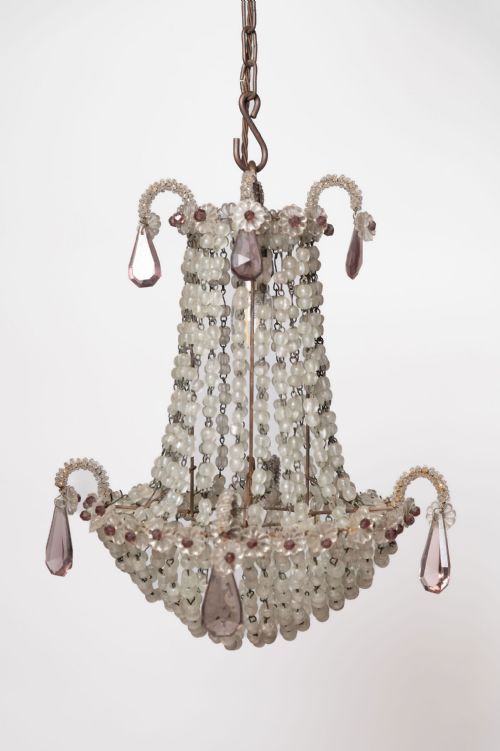
Gabriel Argy Rousseau·S Blanckensee And Son
The Vintage Purple Pendant Glossary
- Amethyst
- A purple variety of quartz used extensively as a gemstone in antique jewellery. Its colour ranges from pale lilac to deep violet.
- Lavalier
- A necklace featuring a pendant that drops below the main chain line, often with dangling stones. This style gained popularity during the Edwardian period.
- Paste
- Hand-cut and polished lead glass used as a substitute for precious gemstones. Antique paste stones exhibit considerable brilliance and depth.
- Guilloche
- A decorative technique where a precise pattern is mechanically engraved into a metal surface. Enamel is frequently applied over this engraving.
- Seed pearl
- A very small, naturally formed pearl used as an accent in clusters and floral motifs. They are typical of Victorian and Edwardian jewellery.
Vintage Purple Pendant: Frequently Asked Questions
How do I care for a vintage purple pendant?
Clean amethysts gently using warm soapy water and a soft brush, avoiding harsh chemical dips or ultrasonic cleaners. Store the piece separately in a lined box to protect the gold and softer pearls from scratching.
Inspect the settings periodically to ensure the purple stones remain secure in their claws. Professional checks help maintain the integrity of delicate Edwardian and Victorian mountings.
Are these pendants suitable for daily wear?
Many of these pieces were constructed with delicate gold chains and seed pearls that require mindful handling. Occasional wear preserves the structural integrity of antique settings and fragile mounted stones.
Robust gold designs from the Victorian and Edwardian periods withstand regular use better than intricate lavaliers. Removing the jewellery before sleeping or physical activity prevents unnecessary strain on the metal.
What periods do these purple pendants represent?
The selections span from the nineteenth century through the Edwardian, Art Nouveau, and Art Deco eras, extending into mid-century modern designs. Each era brings distinct metalworking techniques and stylistic traits to the jewellery.
Early twentieth-century pieces frequently showcase organic curves, whilst later decades favour geometric lines. Hallmarks and stylistic markers help establish the specific decade of manufacture.
How can I tell amethysts from purple paste?
Natural amethysts feel cool to the touch and may display natural inclusions visible under magnification. Paste stones can sometimes show tiny air bubbles trapped within the glass material.
Testing with a gemstone loupe reveals the sharp facet junctions characteristic of genuine quartz. Faceted paste often exhibits softer edges due to the moulding and polishing process.