

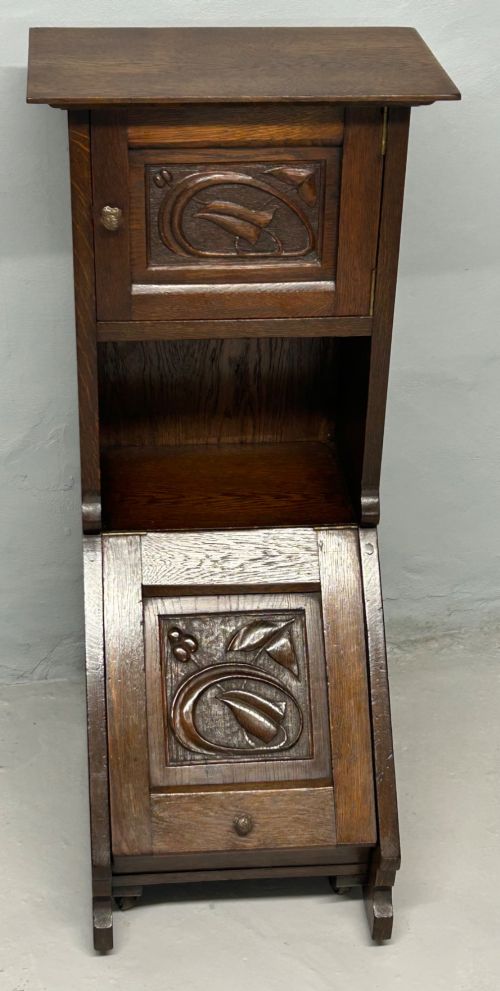


Vintage Purdonium Cabinet
A vintage purdonium cabinet keeps fuel neatly beside the hearth, offering a practical solution for solid fuel storage with refined period character.
Vintage Purdonium Cabinet
A vintage purdonium cabinet is a dedicated fireside storage piece designed to hold household coal out of sight near the fireplace. These items appear in various forms on this page, including coal boxes, purdoniums, fireside cabinets, scuttles, and coal depots.
Most examples found here date from the Victorian and Edwardian eras, stretching from the late 19th century up to 1900. Buyers encounter traditional formats that integrate a sloping front drop-down bin or a side-mounted shovel compartment within a wooden housing.
Origins represented in the stock span English craftsmanship alongside continental decorative revivals such as Louis XV and Rococo styles. These pieces combine domestic utility with the formal joinery standards of late nineteenth-century interior design.
How they were made
Makers constructed the primary carcase of these cabinets using solid or veneered hardwoods, predominantly selecting oak, mahogany, and figured pollard oak. These timbers provided the structural durability required for heavy daily loading with coal.
Metalwork played a defining role in both function and decoration, utilising cast brass handles, hinges, and ormolu mounts to accent the timber framework. Some pieces feature delicate boxwood inlay or marquetry work set directly into the wooden panels.
Vintage Purdonium Cabinet Retail Price Guide 2026
Typical asking prices for vintage purdonium cabinet among the pieces listed under this phrase on Sellingantiques today, from the lower quarter to the upper quarter. They describe what is for sale here now, not the wider market.
Every time you open a coal depot, you participate in the grand Victorian ritual of keeping your anthracite politely out of sight.
What varies in quality
The standard of timber selection and decorative embellishment marks the distinction between standard utilitarian boxes and finer reception room cabinets. Richly figured pollard oak and intricate marquetry indicate a higher tier of workmanship intended for prominent domestic spaces.
The robustness of the internal metal liner and the precision of the drop-down mechanism dictate overall structural integrity. Superior examples display substantial brass mounts and seamless joins that withstand frequent handling.
The Vintage Purdonium Cabinet Glossary
- Purdonium
- A specialised cabinet or box designed specifically for storing coal by the fireside. It typically incorporates a hinged or sliding door mechanism to conceal the fuel.
- Pollard oak
- Timber taken from the trunk of an oak tree that has been pollarded, producing a highly gnarled and richly mottled grain pattern. Cabinet makers valued this wood for decorative veneering.
- Ormolu
- Gilt bronze applied as a decorative mount to furniture and cabinetwork. This technique adds metallic contrast and ornamental detail to the wooden surfaces.
- Marquetry
- The art of applying small pieces of veneer to a structure to form decorative patterns and pictures. It appears on panelled cabinet fronts to elevate the visual design.
- Boxwood inlay
- Contrasting pale timber inserted into recesses cut into a darker wood background. This technique creates crisp linear borders and geometric patterns.
Vintage Purdonium Cabinet: Frequently Asked Questions
What is a purdonium cabinet?
A purdonium is a specialised piece of furniture designed to store household coal near a fireplace. It keeps fuel neatly contained and hidden within a decorative wooden housing.
These cabinets typically feature a drop-down front or a built-in compartment for a coal shovel. They function as both practical domestic utilities and decorative fireside accessories.
How do I date a purdonium?
Dating relies on examining the prevailing styles, timber choices, and construction methods visible in the piece. Pieces from this selection primarily date from the Victorian and Edwardian periods.
Earlier Victorian models often feature heavier carved mahogany and rich ormolu mounts, while later Edwardian examples frequently showcase lighter oak constructions with delicate inlay work.
Where should I place a purdonium?
These cabinets suit placement directly beside a fireplace or stove in a living room, study, or dining room. Their traditional dimensions allow them to sit flush against a wall or hearth.
While originally built for solid fuel, modern owners often repurpose them to store fireside accessories, blankets, or general living room items.
Are purdoniums made of solid wood?
Most examples utilise a combination of solid timber construction for structural frames alongside decorative wood veneers for the panels. Woods such as oak, mahogany, and pollard oak are standard.
Finer decorative elements like boxwood inlay and cast brass mounts are then applied to enhance the exterior appearance of the cabinet.