




Vintage Postal Scale
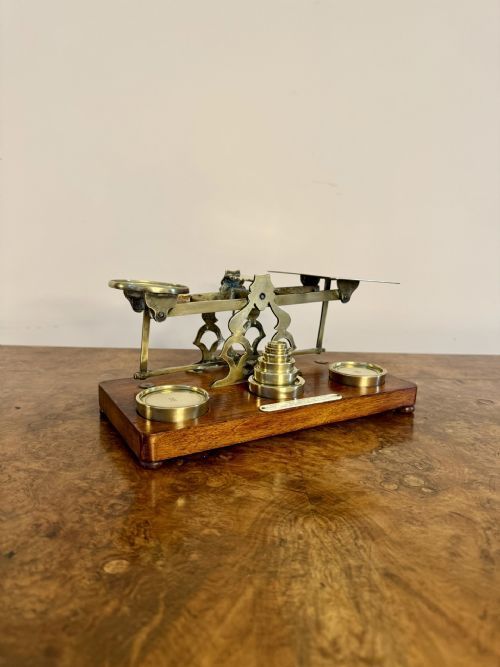
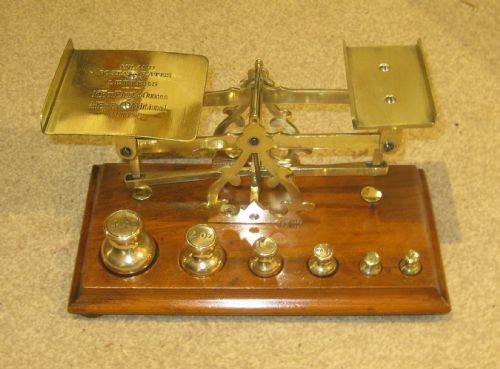
These vintage postal scale examples combine solid brass mechanisms with timber bases, offering both decorative presence and practical utility for the desk.
Vintage Postal Scale
A vintage postal scale represents a practical desk accessory designed to weigh letters and parcels accurately, appearing primarily across Victorian and Edwardian periods. Collectors encounter diverse forms ranging from simple brass lever balances mounted on wooden boards to elaborate boxed sets complete with matched weights.
The materials span brass, mahogany, oak, walnut, hardwood, marble, and malachite, reflecting the high standards of nineteenth and early twentieth-century desk ornamentation. The specific variant most commonly met on this page is the brass beam balance mounted upon a rectangular wooden plinth, often retaining its original stamped brass weights.
How they were made
Maker workshops constructed the primary balance mechanisms from cast and polished brass, utilising pivoting lever arms designed to swing true upon knife-edge fulcrums. These metal components were paired with timber baseboards shaped from mahogany, oak, or walnut, sometimes enhanced with decorative stone insets like malachite or marble.
Maker signatures and locations were frequently engraved directly onto the brass scale plates or cast into the metal bodies, documenting the work of prominent London and regional firms. Fitted compartments within the wooden plinths or matching recesses on the surface held the corresponding sets of graduated brass weights.
Vintage Postal Scale Retail Price Guide 2026
Typical asking prices for vintage postal scale among the pieces listed under this phrase on Sellingantiques today, from the lower quarter to the upper quarter. They describe what is for sale here now, not the wider market.
Listings feature brass, mahogany, oak, walnut, marble, and malachite across Victorian and Edwardian periods.
What varies in quality
Quality rests upon the heft of the brass components and the selection of timber for the base, with denser hardwoods and substantial cast brass elements marking superior production. The inclusion of the original matching set of weights significantly elevates the integrity of any piece.
Maker attribution elevates certain examples, particularly those bearing stamps from recognised makers in London or Birmingham. Finer execution shows in crisp engraving, well-fitted weight compartments, and decorative flourishes such as marble or malachite mounts.
S Mordan London·S Mordan Co London·Ratcliff Birmingham
The Vintage Postal Scale Glossary
- Brass
- A copper and zinc alloy used extensively for the balance beams, pans, and weights of postal scales. It polishes to a bright golden finish and provides the necessary durability for repeated weighing.
- Mahogany
- A dense, reddish-brown tropical hardwood favored for the bases of Victorian desk accessories. Its stability and fine grain made it ideal for mounting delicate brass mechanisms.
- Edwardian
- Pertaining to the reign of King Edward VII, spanning the early years of the twentieth century. Pieces from this period often exhibit refined proportions and clean lines.
- Victorian
- Relating to the reign of Queen Victoria, covering the nineteenth century. Items from this era show considerable variety, from utilitarian brass designs to ornate combinations of timber and stone.
Vintage Postal Scale: Frequently Asked Questions
How do vintage postal scales work?
These balances operate on a simple lever principle where an item placed on one platform is measured against calibrated weights placed on the other. The pivoting brass beam levels out when the weight on both sides achieves equilibrium.
Most surviving examples retain their original graduated brass weights, which nest together or sit neatly in dedicated recesses carved into the wooden base.
What woods were used for bases?
Cabinetmakers utilised dense timbers such as mahogany, oak, and walnut to form the stable plinths that support the brass weighing mechanisms. These woods were selected for their durability and handsome grain patterns.
Some unusual examples incorporate decorative mineral inserts like marble or malachite into the wooden platform to add colour and weight.
How do I date a postal scale?
Dating relies on stylistic clues, construction methods, and any maker marks stamped into the brass work. Victorian pieces tend to be heavier and more ornate, whilst Edwardian versions often display lighter, cleaner proportions.
Stamped inscriptions naming London or Birmingham firms provide a reliable point of reference when tracing the origin of a particular mechanism.
Are these scales still accurate today?
While these devices were calibrated for historical postal rates using specific weight systems, many mechanical balances still move freely and show good relative accuracy. They function primarily as decorative desk pieces rather than precise modern instruments.
Routine dusting and gentle cleaning of the brass knife-edges help maintain the smooth swinging action of the balance beam.