




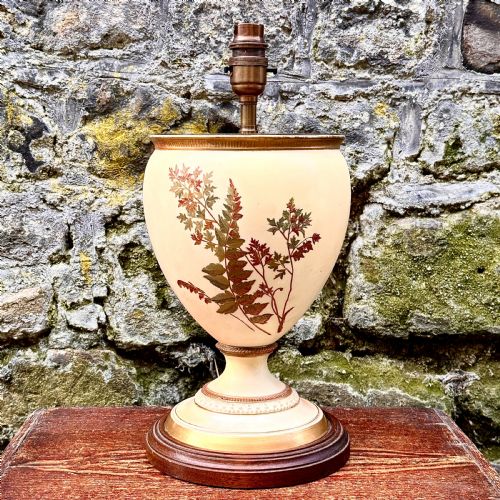
Vintage Porcelain Lamps
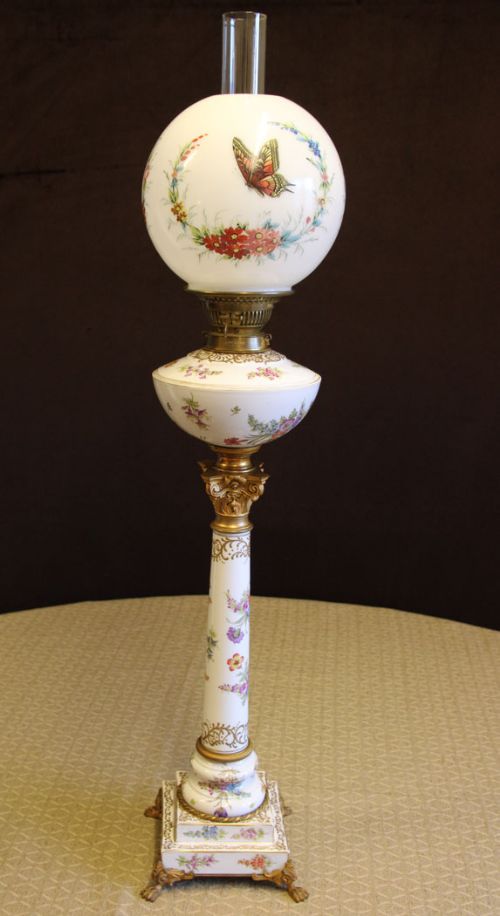
These vintage porcelain lamps bring character and rich colour to a room, ranging from converted vases to Victorian oil lights.
Vintage Porcelain Lamps
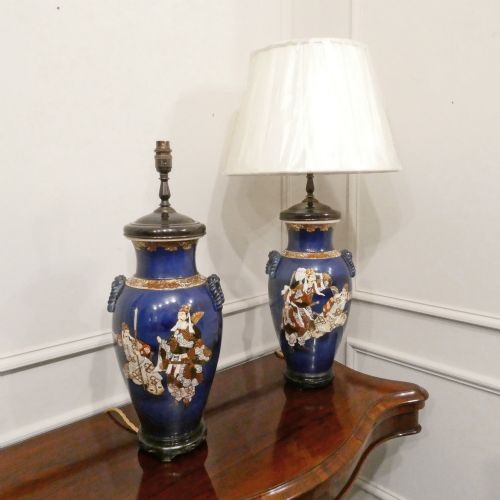
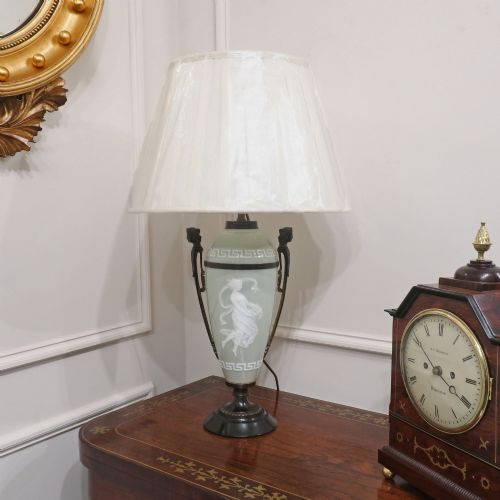
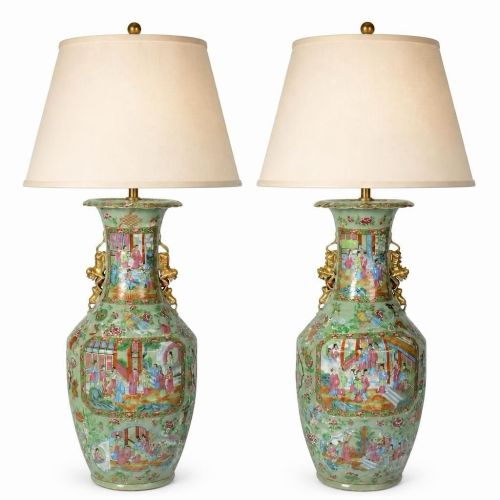
Vintage porcelain lamps encompass table lamps, oil lamps, and chandeliers created across the nineteenth and twentieth centuries. Buyers seeking vintage porcelain lamps encounter forms that span Victorian figural designs, French Neoclassical styles, and Japanese Satsuma vases.
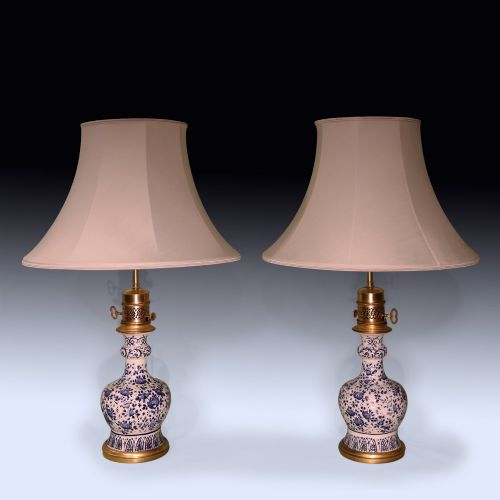
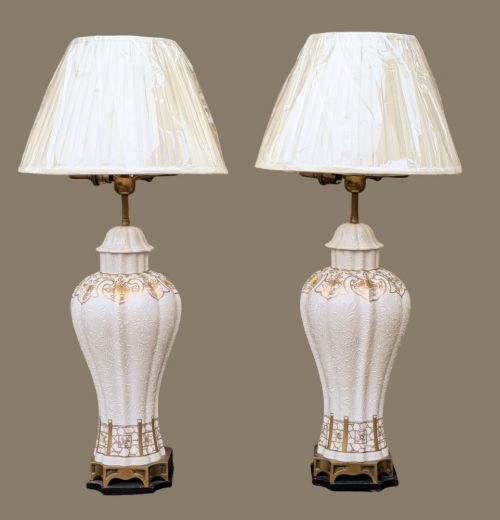
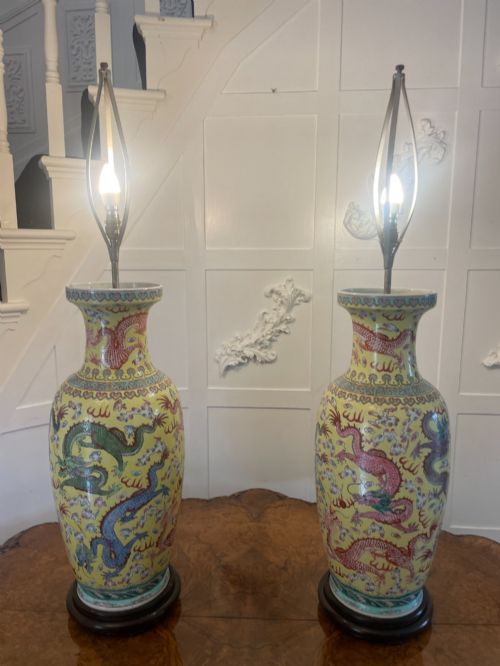
Many examples originate from earlier periods, including eighteenth-century Delft vessels and late seventeenth-century Japanese vases subsequently adapted for electrical lighting. The selection frequently includes pairs of matching jars and vases mounted on metal bases.
Makers and factories from Germany, France, and Britain appear alongside Asian export wares transformed into domestic light fittings. The resulting objects combine traditional ceramic bodies with period brass, bronze, and gilt mounts.
How they were made
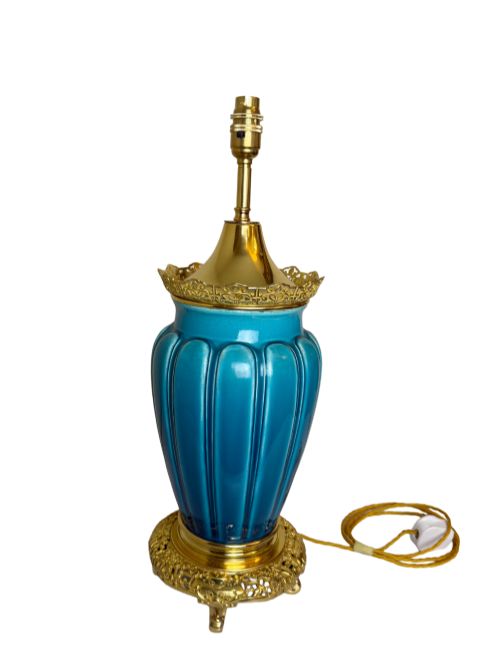
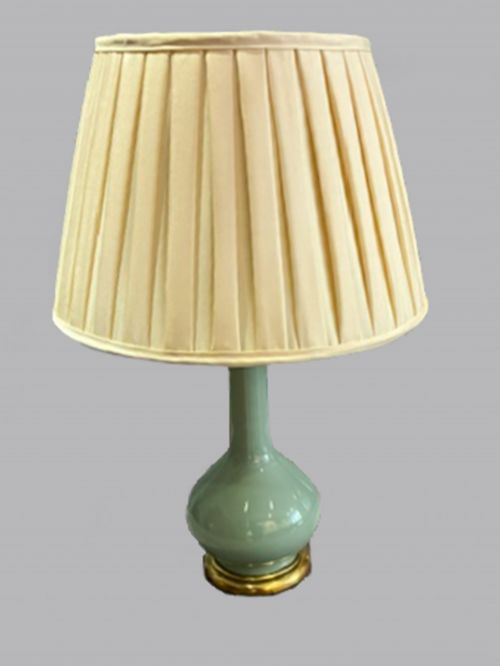
Construction relies heavily on porcelain and ceramic bodies paired with metal mounts in brass, gilt bronze, and ormolu. Artisans often mounted antique vases and jars onto heavy metal bases to ensure stability when fitted for electricity or oil.
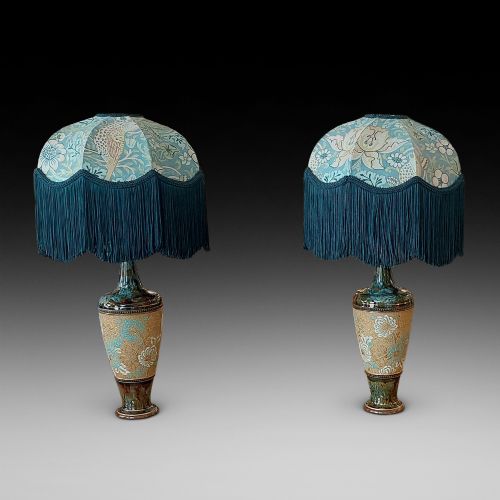
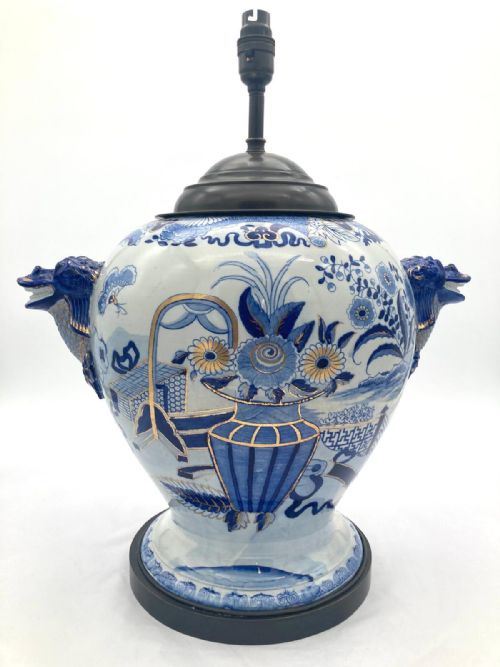
Surface decoration incorporates hand-painted motifs, crackle glazes, pate-sur-pate relief work, and blue and white underglaze painting. Many pieces integrate fabric shades or toleware components to complete the lighting fixture.
Vintage Porcelain Lamps Retail Price Guide 2026
Typical asking prices for vintage porcelain lamps among the pieces listed under this phrase on Sellingantiques today, from the lower quarter to the upper quarter. They describe what is for sale here now, not the wider market.
Listings feature ceramics spanning the eighteenth, nineteenth, and twentieth centuries, incorporating both European factories and Asian export wares.
What varies in quality
Quality rests on the crispness of the porcelain modelling and the finesse of the hand-painted details. Superior pieces display finely rendered figures, precise gilding, and well-executed patination on the metal mounts.
The integration of the conversion matters greatly, separating professional adaptations from rudimentary alterations. Matching pairs and items retaining original ormolu mounts hold higher distinction among collectors.
Sitzendorf·Royal Worcester·Karl Ens·Anton Buschelberger·Argilor Paris·Hicks and Meigh
The Vintage Porcelain Lamps Glossary
- Pate-sur-pate
- A ceramic decoration technique where liquid clay is applied in successive layers to create a low relief cameo effect. This method requires considerable skill from the ceramicist to build up translucent details.
- Ormolu
- Gilt bronze mounts applied to furniture, ceramics, and lighting fixtures during the eighteenth and nineteenth centuries. The process involves treating cast bronze with an amalgam of mercury and gold.
- Satsuma
- Japanese pottery traditionally decorated with fine crackle glazes and elaborate polychrome and gilt enamel designs. These wares were widely exported to Europe during the Meiji period.
- Blanc de Chine
- White porcelain produced in Dehua, China, known for its milky glaze and smooth texture. Figures of lions and deities frequently employ this distinct white body.
- Toleware
- Lacquered or enamelled sheet metal items used for decorative and functional domestic objects. French examples often supply painted shades and structural parts for period lighting.
Vintage Porcelain Lamps: Frequently Asked Questions
How do I date a porcelain lamp?
Dating relies on stylistic markers, factory marks on the base, and the method of conversion from oil or vessel to electricity. Examining the type of metal mounts and the ceramic body helps determine the period.
Many lamps use older ceramic bodies converted at a later date, requiring separate assessment of the vase and the electrical fittings.
Were these lamps originally made as lighting?
Some pieces started life as oil lamps or dedicated lighting fixtures, while a significant portion began as decorative vases or ginger jars. Asian and European vessels were frequently drilled and fitted with metal hardware to serve as lamps.
This practice of conversion bridges antique ceramics with functional interior lighting.
How do I care for a vintage porcelain lamp?
Dust the ceramic body gently with a dry or slightly damp cloth, avoiding harsh chemical cleaners that might damage hand-painted enamel or gilding. Metal mounts require gentle wiping to preserve their natural patination.
Wiring should be checked periodically by a qualified professional to ensure safety, particularly on older conversions.
What is the difference between Satsuma and Chinese export wares?
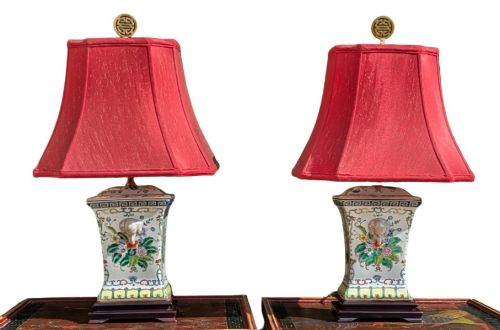
Satsuma wares originate from Japan and typically feature a distinctive ivory-coloured crackle glaze overlaid with detailed polychrome patterns and heavy gold work. Chinese export pieces often utilise blue and white underglaze or Famille Rose enamels on a whiter porcelain body.
Both categories were produced in quantity for the Western decorative market.