

Vintage Polished Brass Candlestick
A vintage polished brass candlestick brings bright, warm metal reflection to a table, and these pieces offer both period utility and decorative presence.
Vintage Polished Brass Candlestick
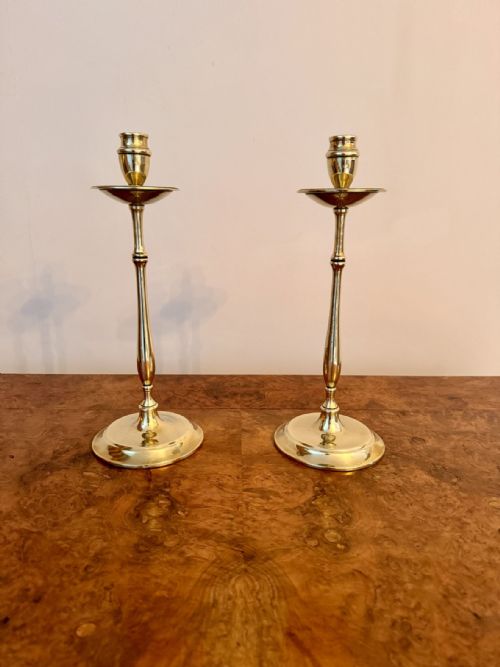
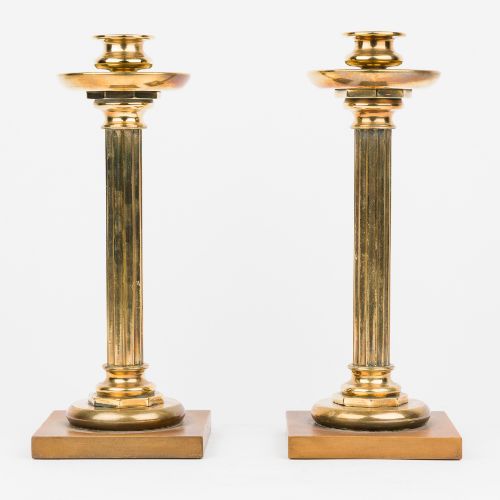
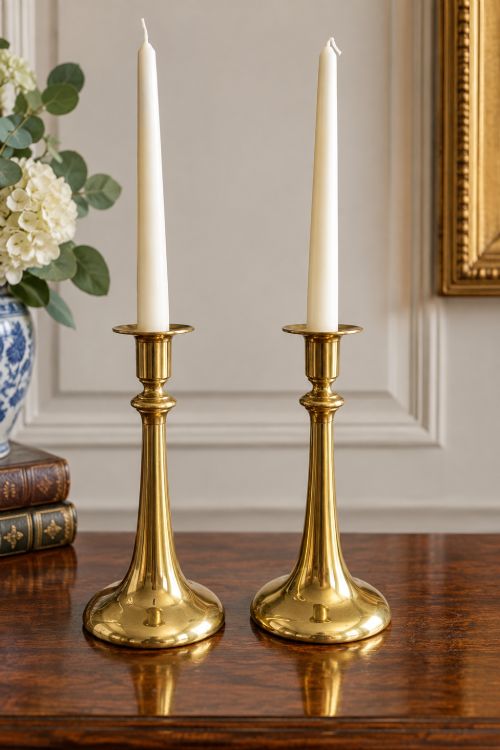
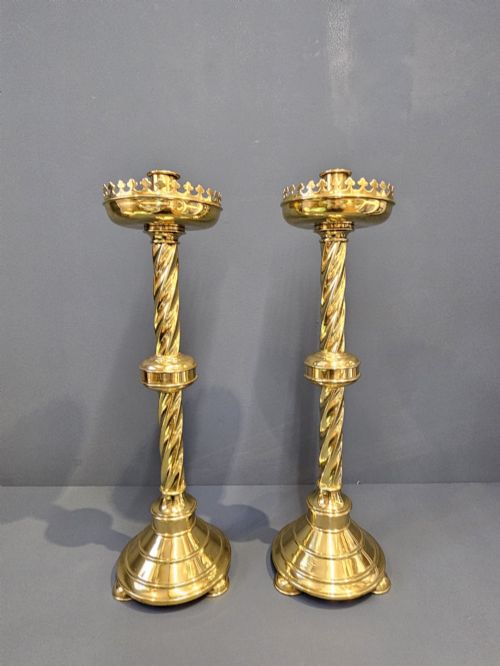
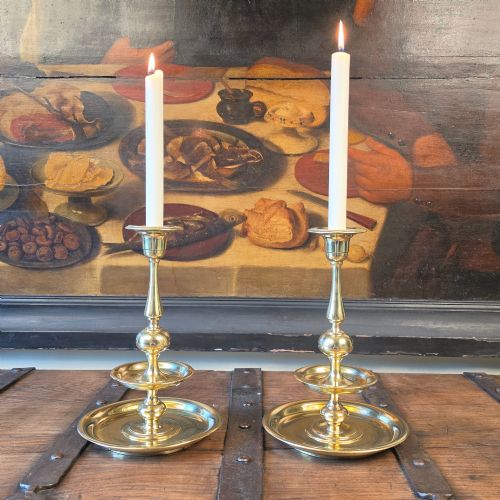
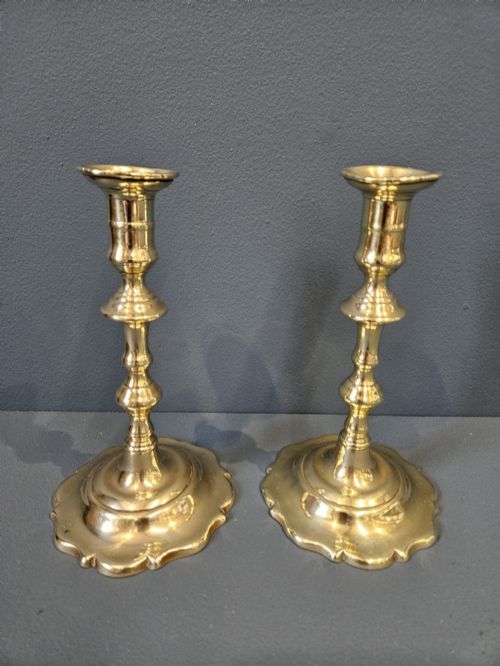
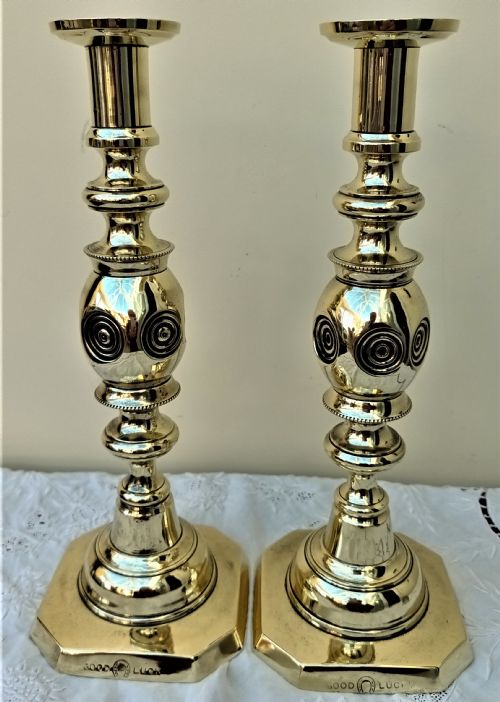
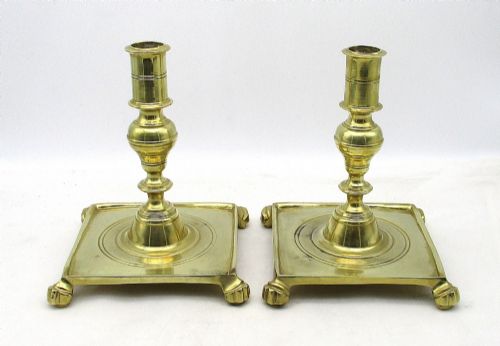
A vintage polished brass candlestick is a domestic lighting piece shaped from copper and zinc alloy, designed to hold wax tapers securely upright. Buyers seeking this phrase encounter items spanning the Georgian, Victorian, and Edwardian eras, alongside Arts and Crafts and Gothic Revival designs.
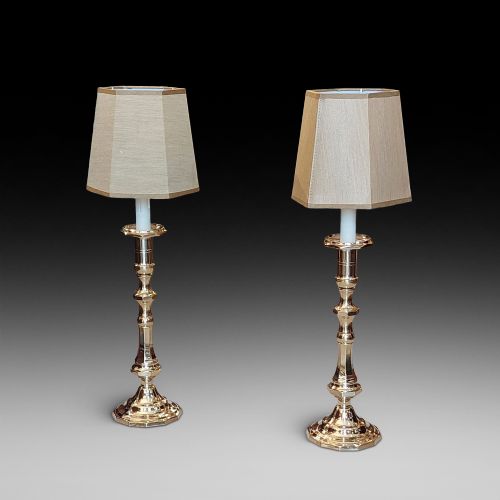
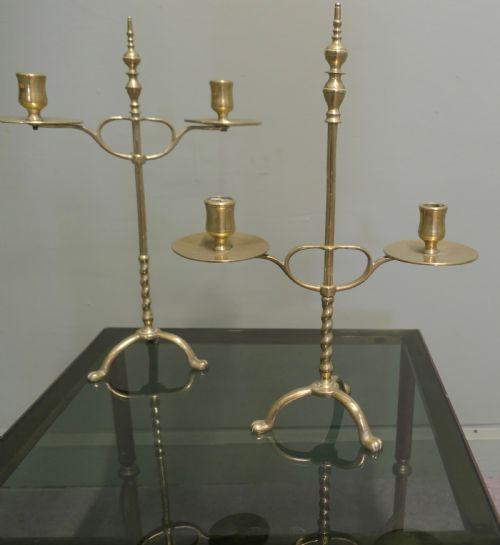
The selections available here range from small chambersticks and twisted stems to tall church candlesticks and heavy ejector models. Pairs predominate, though single table lamps and double arm candleholders also appear across the centuries.
How They Were Made
Maker workshops utilised casting and spinning techniques in brass, often combining bronze, iron, and glass elements to create sturdy shafts and weighted bases. Many period examples show seamed construction where components were joined together before final polishing.
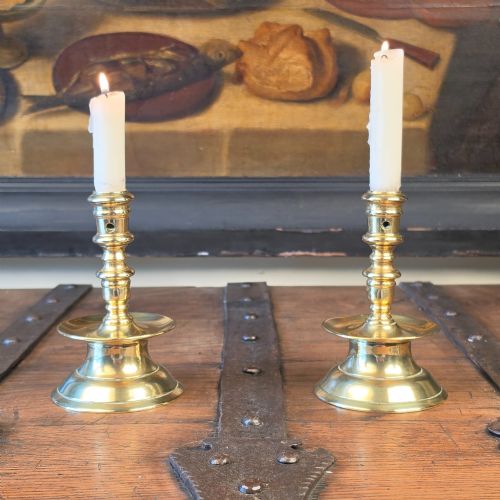
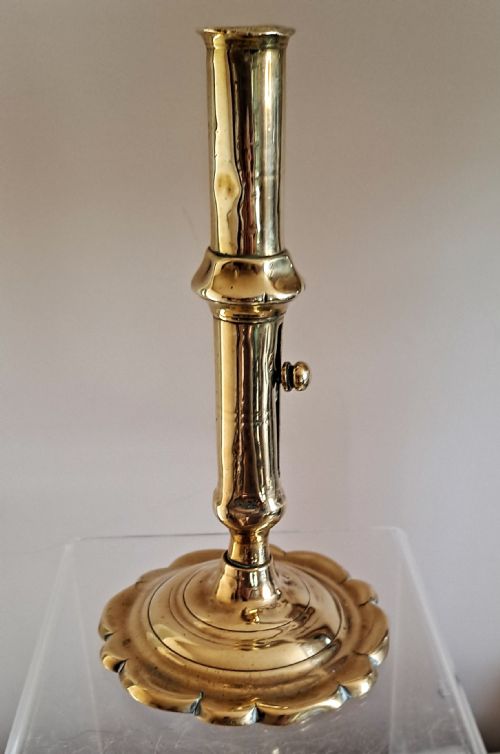
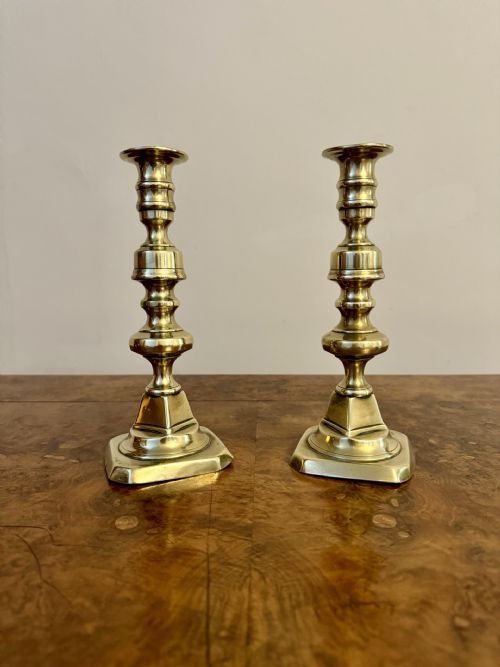
Moulds formed the characteristic petal bases, barley twist stems, and baluster profiles seen across Georgian and Victorian production. Surface finishing involved hand polishing to achieve the bright reflective lustre characteristic of polished brass.
Materials extend beyond standard brass to include bronze, iron, enamel, fabric, glass, and hardwood accents.
What Varies in Quality
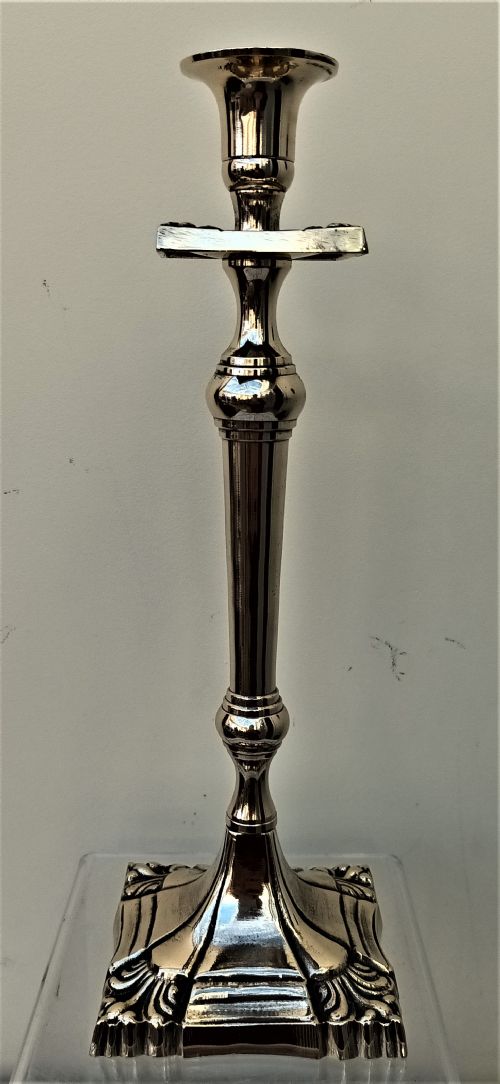
The heft of the metal and the crispness of the casting define the higher tier of these items, as heavier brass provides greater stability at the base. Superior examples exhibit clean junction lines on seamed components and well-defined decorative motifs rather than softened or blurred details.
Proportion and balance separate standard production from finer workshop output, particularly in twisted stems and petal bases where symmetry matters. The integrity of internal mechanisms, such as ejector pushers or adjustable student light fittings, further distinguishes the grade of a piece.
Frederick J Smith And Co·Wm Tonks And Sons
The Vintage Polished Brass Candlestick Glossary
- Ejector candlestick
- A type fitted with an internal sliding stem designed to push out the remaining candle stub. This mechanism made clearing spent wax much simpler.
- Petal base
- A foot shaped like overlapping flower petals, frequently found on Georgian designs. It provided a wide footprint for stability.
- Pricket
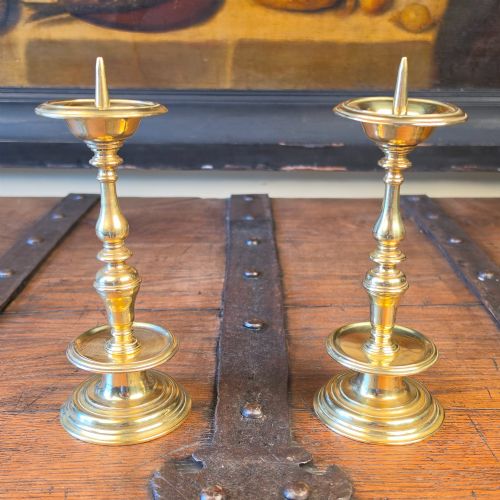
- A sharp metal spike set in the drip pan to impale large candles. These appear primarily on church pieces.
- Chamberstick
- A short candlestick mounted in a shallow tray with a finger ring for carrying around a house at night. They provided portable illumination before electricity.
- Barley twist
- A spiral column carved or cast into the stem. This style catches the light dynamically from multiple angles.
Vintage Polished Brass Candlestick: Frequently Asked Questions
How do I clean polished brass?
Dust the metal gently with a soft cloth to remove everyday particles. Avoid harsh abrasive cleaners that strip the historic surface.
Apply a mild brass cleaner sparingly if polishing is necessary, working carefully around detailed joints and engravings.
What is an ejector mechanism?
An internal rod pushes upward from the base to elevate the remaining candle remnant. This allowed users to remove tight wax stubs without damaging the socket.
Found mostly on 19th-century designs, the small side tab operates the sliding plate inside.
How do I tell Georgian from Victorian?
Georgian items often feature simpler geometric proportions, petal bases, and heavier cast brass construction. Their lines tend to follow restrained neoclassical or early classical forms.
Victorian pieces introduce eclectic revival styles, including Gothic elements, barley twists, and complex chamberstick trays with attached snuffers.
Can I use modern candles in them?
Standard modern tapers often vary in diameter compared to historic sockets. Check the aperture width carefully before inserting any wax.
Use a small piece of paper or a drippy wax base to secure a loose taper safely upright during use.