


Vintage Platform Rocker
These vintage platform rocker pieces offer steady, rhythmic motion and traditional seating, built for comfort and enduring domestic utility.
Vintage Platform Rocker
A vintage platform rocker provides a comfortable seated experience using a stationary base paired with a moving top. These chairs draw heavily on traditional American forms and domestic seating designs.
The selections available range across the 19th Century, 1900, Edwardian period, and 1920. Buyers encounter full-sized armchairs alongside smaller children's rocking chair examples.
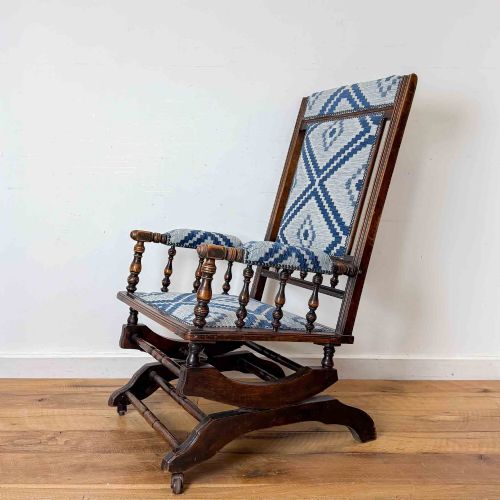
Makers and styles span Victorian and Edwardian aesthetics alongside traditional American influences. Buyers frequently meet pieces featuring upholstered seats and backs.
How they were made
Construction relies primarily on sturdy timbers such as oak, walnut, mahogany, beech, and fruitwood. Metal mechanisms, steel springs, and brass details often support the moving parts beneath the frame.
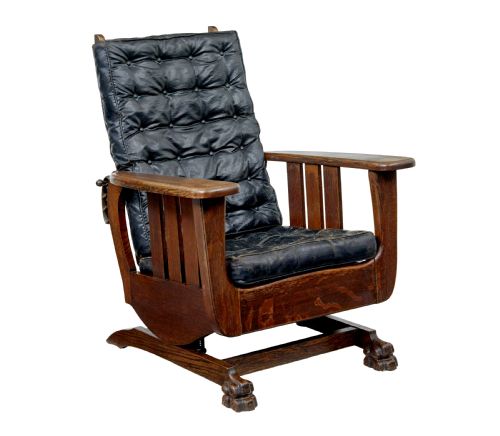
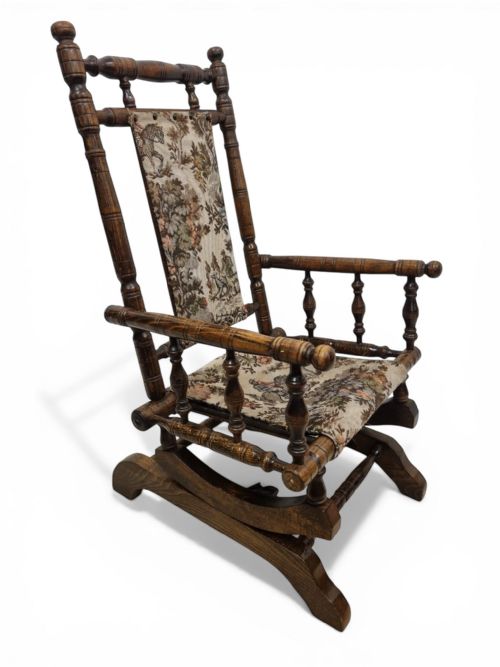
Upholstery techniques utilise fabric, leather, and tapestry finishes. Button-backed padding and moulded wooden panels provide structured support for daily seating.
Materials span steel, brass, leather, fabric, and tapestry alongside solid wood frames.
What varies in quality
Quality depends heavily on the selection of timber and the precision of the joinery in the frame. Dense woods like oak and walnut offer superior structural longevity compared to softer framing elements.
The grade of the upholstery and the complexity of the woodwork dictate the refinement of the piece. Button-backed leather and detailed turned wooden components represent a higher tier of craftsmanship.
Thonet
The Vintage Platform Rocker Glossary
- Platform rocker
- A rocking chair mounted on a stationary base rather than traditional curved runners. This design keeps the chair in one footprint while allowing back-and-forth movement.
- Bentwood
- Wood softened by steam and bent into curved structural forms. Thonet famously utilised this technique for seating.
- Tapestry upholstery
- Heavy decorative woven fabric used to cover chair seats and backs. It introduces pattern and texture to the timber frame.
- Button back
- An upholstery style where buttons are pulled deep into the padding to create a diamond tufted pattern. This secures the filling and adds visual detail.
Vintage Platform Rocker: Frequently Asked Questions
How do these rockers work?
A platform rocker sits on a fixed base rather than rolling on curved wooden runners. Internal springs or linkage arms allow the seat portion to glide smoothly back and forth.
This mechanism keeps the chair from creeping across the floor during use. It provides a steady, controlled motion suited to nurseries and living spaces.
What woods were used?
Frames employ a variety of timbers including oak, walnut, mahogany, beech, and fruitwood. Each wood type provides different weight and grain characteristics.
Darker hardwoods like walnut and mahogany typically indicate finer Edwardian or Victorian production. Beech and oak appear frequently in sturdier everyday seating.
How should I clean the leather?
Leather upholstery requires gentle cleaning with appropriate conditioning products to prevent drying. Avoid harsh chemical cleaners that strip natural oils from the hide.
Regular dusting keeps debris out of the creases and button tufts. Preserving the leather maintains the finish of the Edwardian and Victorian pieces.
Are these chairs suitable for daily use?
Solid timber frames and durable upholstery make many of these chairs robust enough for regular sitting. Checking the internal mechanism ensures smooth motion before daily placement.
Smaller children's versions serve primarily as decorative items or display pieces. Full-sized armchairs function well in studies and living rooms.