
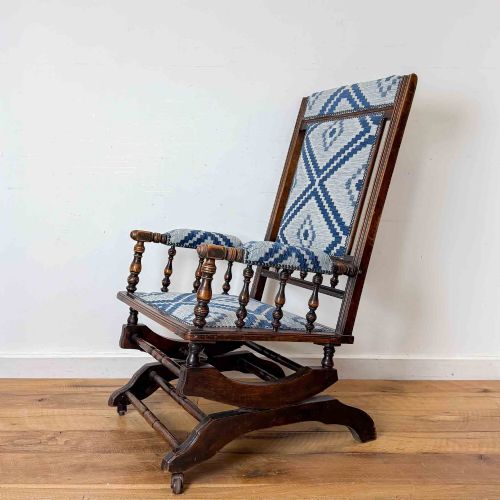


Upholstered Wooden Rocking Chair
An upholstered wooden rocking chair combines timber construction with padded seating, offering a gentle motion suited to traditional interiors.
Upholstered Wooden Rocking Chair
An upholstered wooden rocking chair brings together a timber frame and cushioned supports, designed for rhythmic movement. When searching for an upholstered wooden rocking chair, buyers encounter pieces spanning the nineteenth century up to the nineteen-twenties.
The selection includes Victorian examples alongside Edwardian and traditional American styles. Forms range from low nursing chairs to ebonised bentwood frames and small childs variants.
Makers utilised various hardwoods for these seats, combining exposed woodwork with fabric, velvet, leather, or woven materials. Each piece reflects the domestic seating habits of its period, from ornate button-backed designs to simpler shaker forms.
How they were made
Craftsmen built the structural frames using dense timbers such as mahogany, walnut, oak, and dark hardwood. Some pieces feature inlaid details within the wooden components or ebonised finishes.
Upholstery techniques varied from leather seats to velvet button backs and woven fabric coverings. Steel components occasionally appear within the construction to support the rocking mechanism or frame.
The listings on this site span the nineteenth century, nineteen-eighty, eighteen-ninety, and nineteen-hundred, utilising mahogany, walnut, oak, and steel.
What varies in quality
Quality rests in the selection of the timber and the execution of the woodwork. Finely inlaid mahogany or carefully turned walnut frames distinguish higher grade examples from simpler utility seating.
The choice of covering material and the intricacy of the padding also create distinctions. Button-backed velvet upholstery represents a different tier of craftsmanship compared to plain leather or basic woven fabric.
The Upholstered Wooden Rocking Chair Glossary
- Bentwood
- Wood softened by steam and bent into curved structural forms. This technique created the distinct flowing frames seen in Victorian seating.
- Ebonised
- Timber treated with a dark finish to resemble ebony. This process was popular for achieving a sleek, uniform dark surface.
- Inlay
- Pieces of contrasting timber inserted into the primary wood surface to form decorative patterns. Edwardian makers frequently applied this technique to mahogany furniture.
- Button back
- An upholstery method where deep buttons are pulled tight through the padding to form a geometric diamond pattern. This technique adds both structure and decoration to velvet or fabric seats.
- Nursing chair
- A low-seated chair designed for comfort near a hearth or nursery. These pieces typically feature upholstered backs and low profiles.
Upholstered Wooden Rocking Chair: Frequently Asked Questions
How do I identify a Victorian rocking chair?
Victorian examples often display dark hardwoods, button-backed velvet upholstery, or ebonised bentwood frames. They reflect the heavier, more ornate aesthetic of the nineteenth century.
Compare these details against lighter Edwardian inlays or simpler traditional American forms to determine the correct period.
What is a nursing rocking chair?
A nursing rocking chair is built with a low seat designed to sit close to the floor. This height provided comfort and stability for domestic tasks.
Many of these low chairs feature upholstered backs and walnut or mahogany frames.
Are these rocking chairs comfortable for daily use?
These pieces incorporate upholstered pads, velvet, leather, or woven fabric to provide seating support. The gentle rocking motion was originally intended for relaxation in nineteenth and early twentieth century homes.
Consider the seat height and frame dimensions to match your living space.
How do Edwardian rocking chairs differ from Victorian ones?
Edwardian versions often utilise mahogany with inlaid woodwork and lighter proportions. They step away from the heavier ebonised and button-backed styles of the Victorian era.
Look for refined timber details and simpler fabric choices to spot an Edwardian piece.