
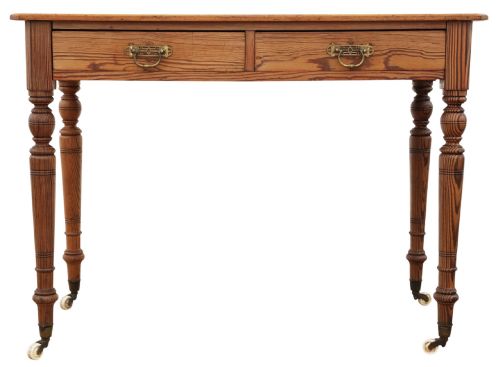
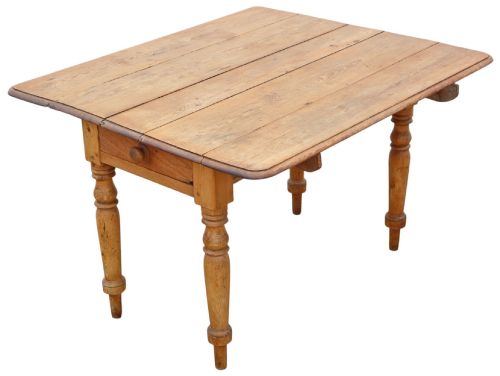
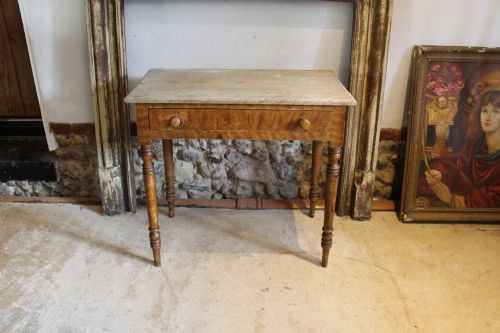
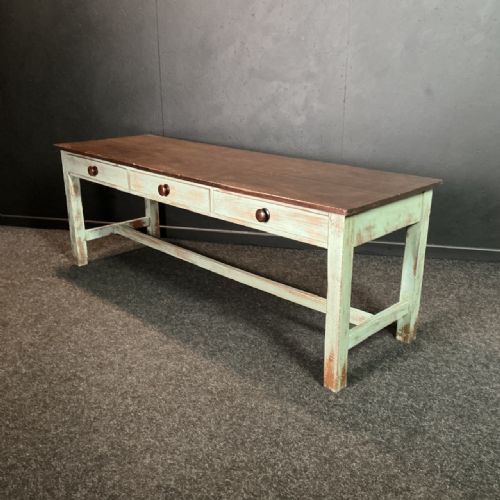

Vintage Pine Side Table
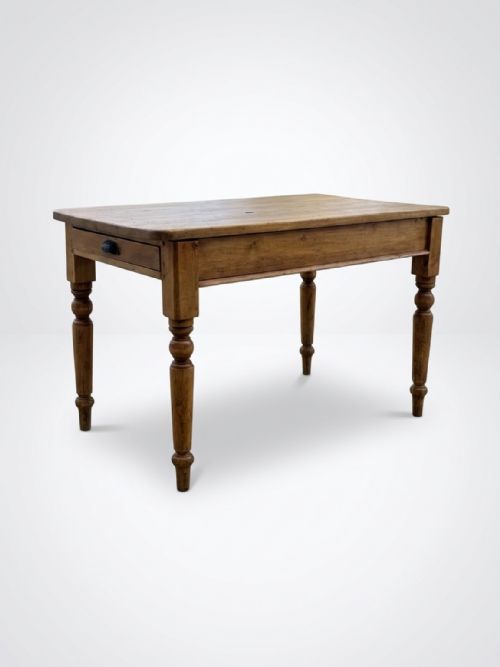
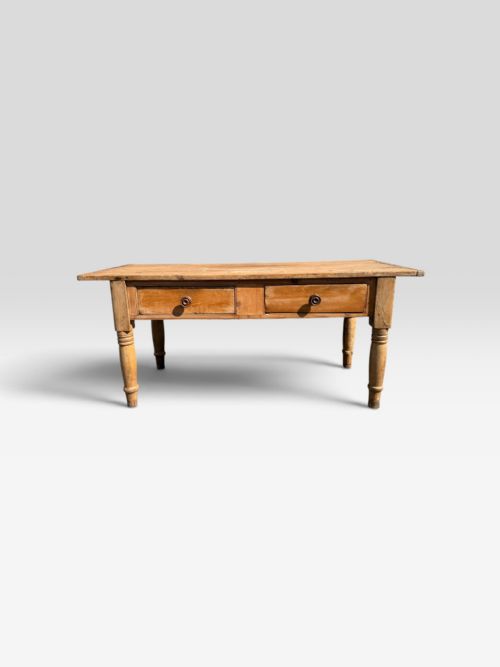
These vintage pine side table pieces offer practical surfaces built from durable wood, bringing honest utility and character to any room.
Vintage Pine Side Table
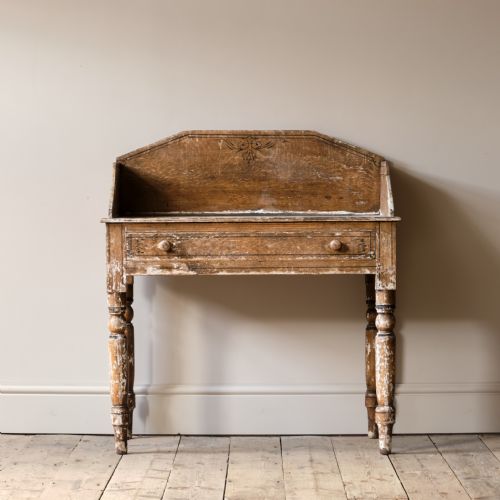
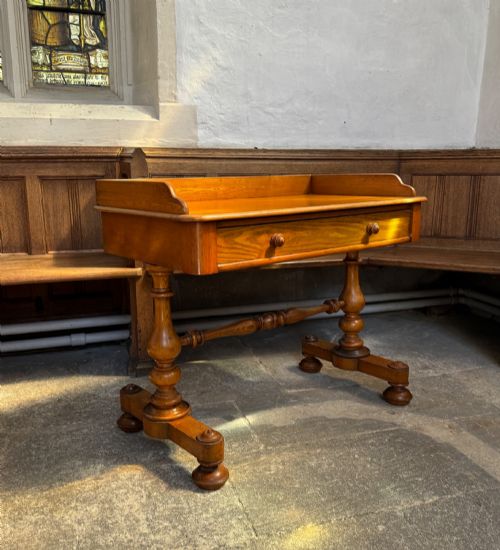
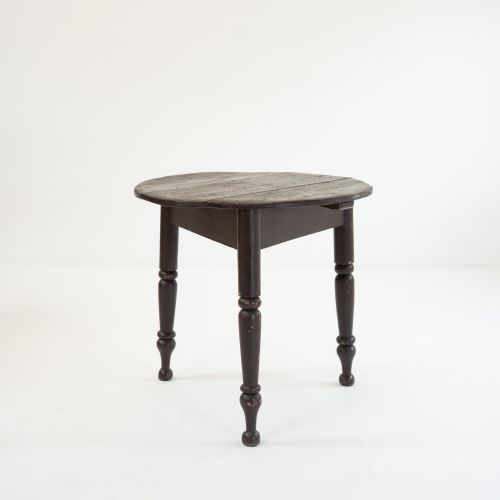
A vintage pine side table is a utilitarian wooden surface shaped largely by nineteenth-century and Victorian rural domestic life. Buyers searching this phrase meet pieces ranging from modest cricket tables with three legs to painted dairy tables and washstands.
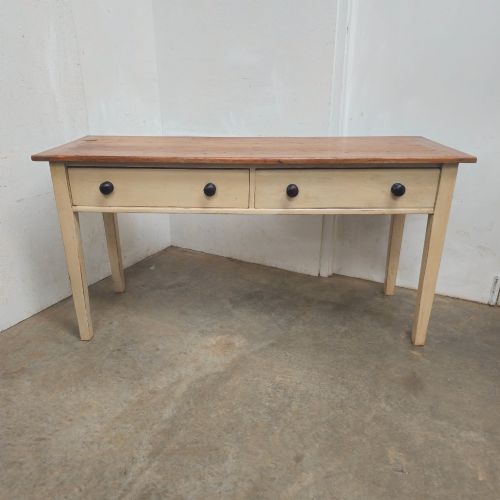
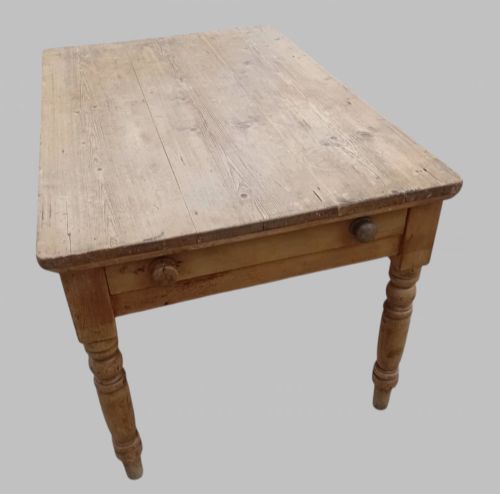
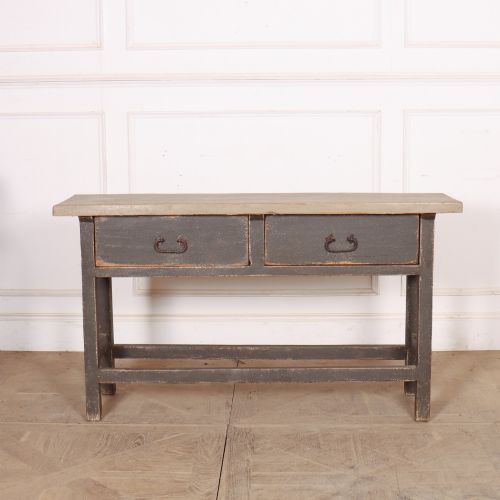
The material profile leans heavily on solid pine, pitch pine, and occasional oak plank tops paired with pine bases. Many examples carry traces of original paint finishes, scumble effects, or scrubbed wooden tops developed through decades of domestic service.
Forms span English, French, Scandinavian, and Welsh country traditions, encompassing drop leaves, drawers, and lower shelves. These tables served working functions in dairies, sculleries, and kitchens before finding a place in modern domestic settings.
Materials and construction
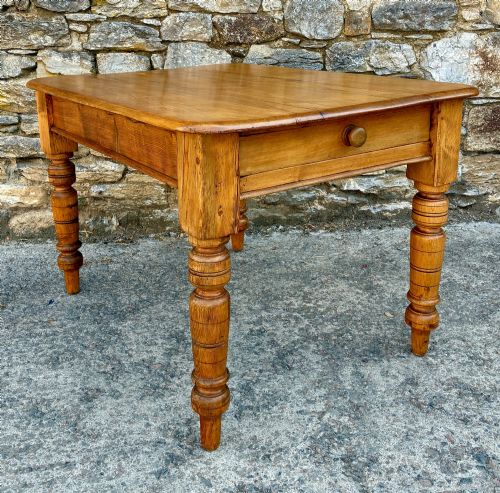
Construction relies on solid pine and pitch pine timbers selected for practical strength rather than decorative show. Carpenters joined tops and bases using traditional methods, often incorporating drawers with simple framing and sturdy legs.
Surfaces frequently show the marks of historical use alongside applied layers of paint, scumble glazes, or plain scrubbed finishes. Metal elements such as brass or iron appear sparingly on handles, brackets, or structural fittings where extra reinforcement was necessary.
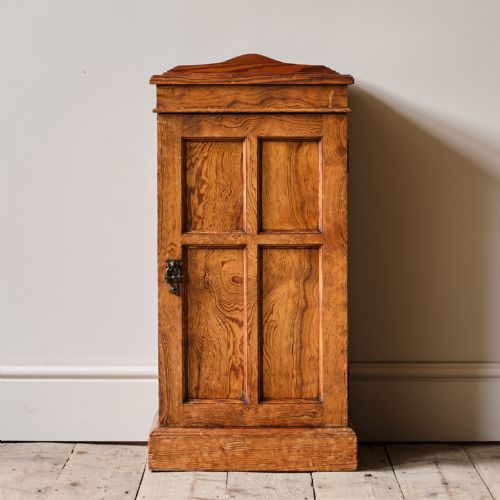
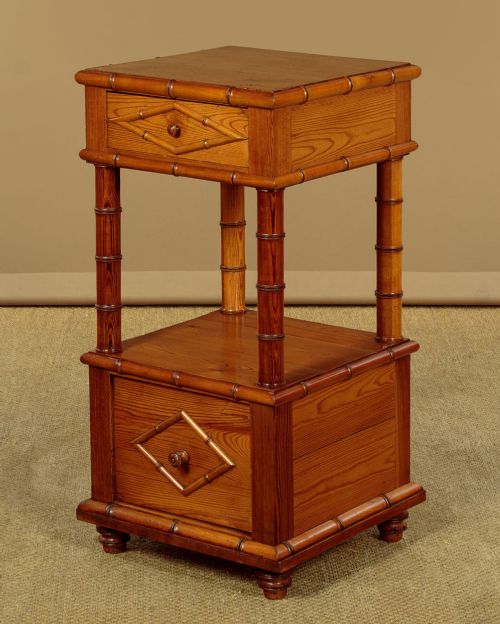
An organ bench disguised as a side table proves that nineteenth-century makers repurposed musical furniture whenever a sturdy surface was needed.
What separates the best examples
Quality rests in the survival of original surface treatments, such as early paintwork or scumble effects, rather than stripped bare wood. Untouched patination accumulated over generations distinguishes superior pieces from heavily restored ones.
Structural integrity and proportion also separate standard examples from finer items. Well-proportioned framing, original timber fixings, and functional drawers or drop leaves indicate a higher standard of regional carpentry.
The Vintage Pine Side Table Glossary
- Scumble
- A decorative painting technique involving a translucent top layer dragged or combed over a base coat to simulate grain. It appears on nineteenth-century furniture to imitate more costly hardwoods.
- Cricket table
- A small, lightweight table traditionally supported by three legs. The design prevents wobbling on uneven flagstone floors found in historic cottages.
- Pitch pine
- A durable North American pine variety containing high resin content. This timber yields a dense, hardwearing surface with pronounced grain patterns.
- Scrub-top
- A plain wooden tabletop left unpolished and regularly scrubbed clean with water and sand. This finish is typical of utilitarian kitchen and dairy tables.
- Washstand
- A dedicated piece of furniture designed to hold a basin and jug for personal washing. Many survivors now function adequately as compact side tables.
Vintage Pine Side Table: Frequently Asked Questions
Where did these tables originate?
These tables stem from various regional traditions across England, Wales, France, and Scandinavia. Makers constructed them for specific domestic and agricultural tasks.
They served working roles in farmhouse kitchens, dairies, and sculleries before entering the antique market.
How do I care for a painted pine surface?
Painted and scumbled surfaces require gentle cleaning with a soft, dry cloth to remove dust. Avoid harsh chemical cleaners that can lift historic paint layers.
Keeping the wood away from direct heat sources prevents the pine from drying out and splitting over time.
Are these tables suitable for daily use?
Solid pine construction makes these tables robust enough for everyday household activities. Their original purpose as working furniture ensures sound daily durability.
Using coasters and mats helps protect historic timber tops from moisture rings and heat damage.
How can I tell the age of a pine table?
Dating relies on examining construction marks, timber types, and surface wear patterns. Nineteenth-century examples often feature hand-cut joints and distinct tool marks.
Original paint layers and hardware styles also provide reliable clues to a piece's manufacturing period.