
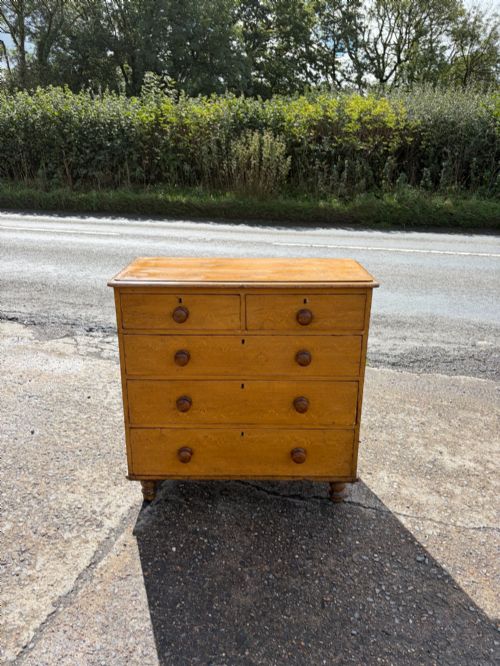

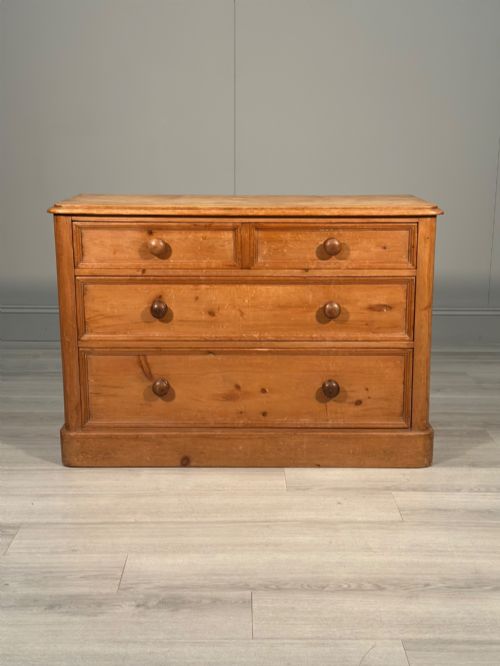
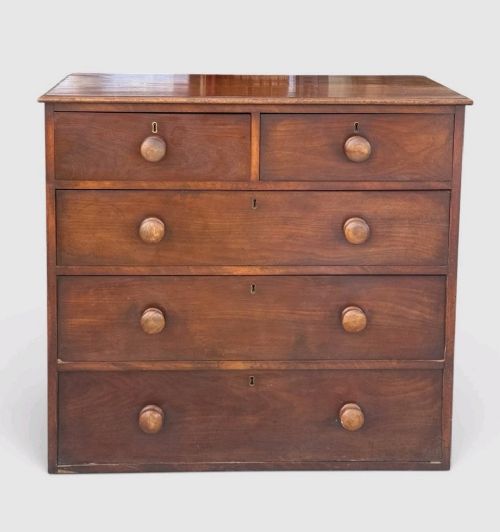
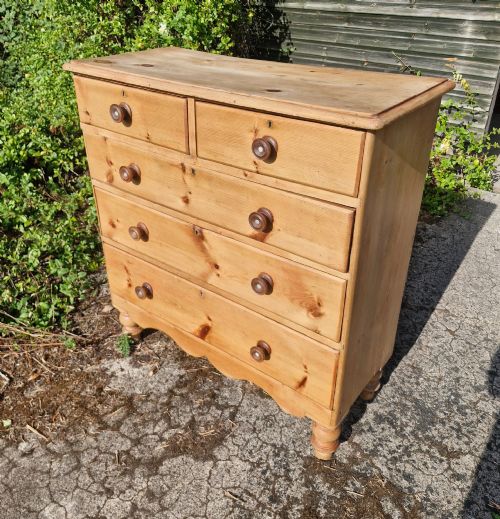
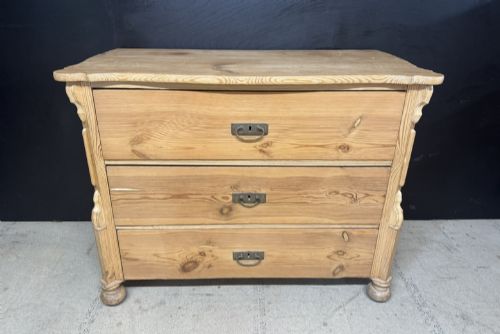
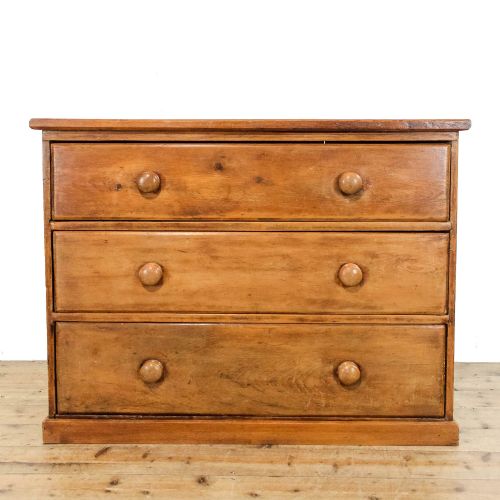

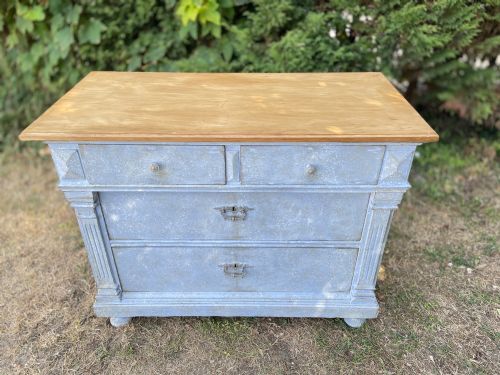
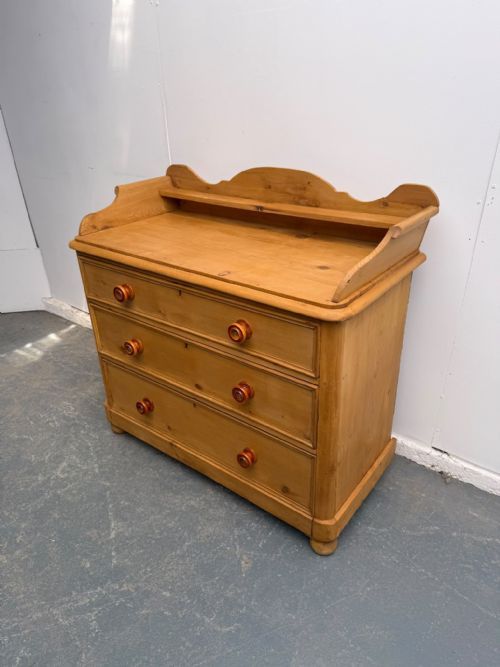
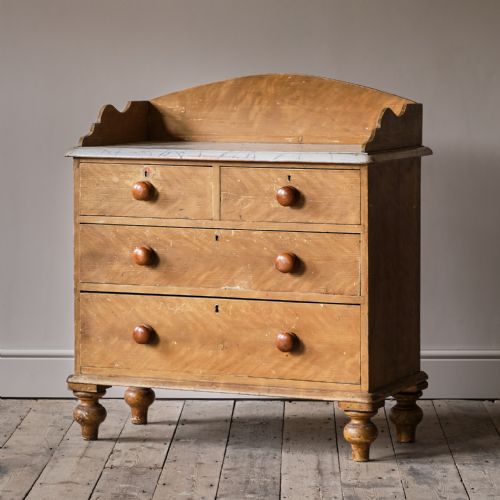
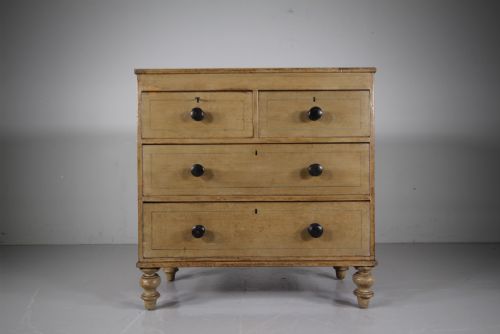
Vintage Pine Commode Drawers
These vintage pine commode drawers combine practical bedroom storage with regional country character, offering sturdy timber construction suited to traditional interiors.
Vintage Pine Commode Drawers
Vintage pine commode drawers encompass sturdy chests of drawers and cupboards originating from domestic settings across Britain, Scandinavia, and Europe. These pieces serve as functional bedroom storage while displaying the distinct regional aesthetics of their makers.
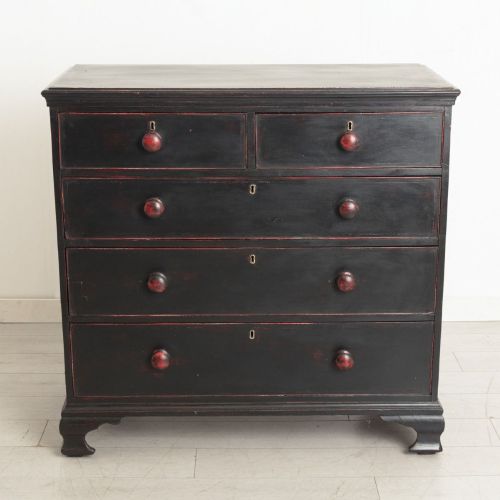
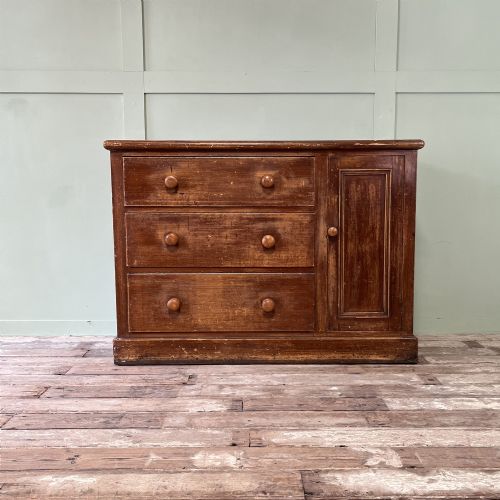
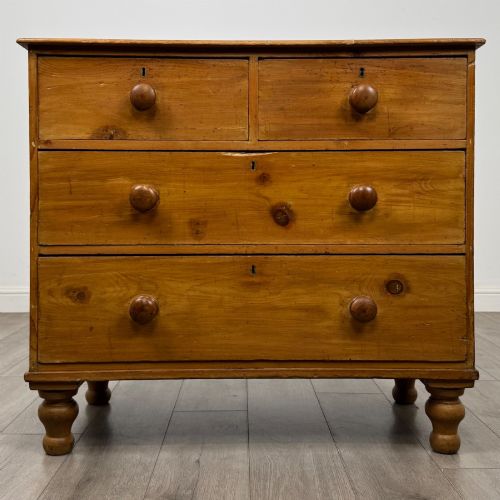
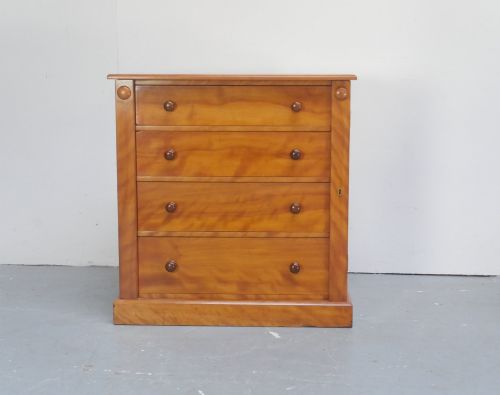
The selection on this page leans heavily towards Victorian and nineteenth-century examples alongside Georgian, Edwardian, and regional styles. Buyers frequently encounter standard two-over-three drawer configurations, low wide formats, and painted finishes originating from English and continental workshops.
Materials and construction methods
Makers utilised solid pine timber for the main carcass and drawer structures, often applying wax finishes or original painted treatments to protect the wood. Surface decoration ranges from simple waxed grain visibility to painted black surfaces and traditional Scandinavian colour palettes.
Hardware details typically incorporate brass or metal handles and ceramic pulls, while structural embellishments feature turned legs, shaped bases, and fluted drawer fronts. Regional variations showcase specific joinery traits, from diamond-point door panels to serpentine fronts.
Listings span periods from the Georgian era through to the Edwardian period, incorporating Victorian styles alongside Gustavian and English, Scottish, and Scandinavian country traditions.
Distinguishing quality across examples
Quality rests primarily in the survival of original surface treatments, such as original graining, historic paint layers, and untouched wax patination. Pieces retaining their original brass or ceramic hardware and unreplaced timber elements command greater interest from collectors.
Construction integrity distinguishes finer pieces, evident in well-fitted drawer runners, solid timber backs, and balanced proportions. Regional decorative flourishes, such as fluting, shaped bases, and serpentine contours, indicate a higher level of cabinetmaker skill.
The Vintage Pine Commode Drawers Glossary
- Commode
- A low chest of drawers or cabinet designed for domestic storage. The term often describes continental European pieces alongside English variants.
- Gustavian
- The Swedish interpretation of neoclassical design prevalent during the late eighteenth and nineteenth centuries. It relies on restrained ornamentation and pale painted finishes.
- Serpentine
- A curved furniture front characterised by a convex centre flanked by concave sides. This shape requires advanced woodworking skill to execute properly in solid pine.
- Waxed finish
- A protective coating applied to bare timber to nourish the wood and produce a soft sheen. This treatment highlights the natural grain patterns of the pine.
Vintage Pine Commode Drawers: Frequently Asked Questions
How do I date a pine chest?
Dating relies on examining construction techniques, timber preparation methods, and accompanying hardware styles. Earlier pieces often display hand-sawn board marks and simpler internal framing compared to later industrial production.
Period markers also appear in decorative details, such as turned legs or shaped bases characteristic of nineteenth-century regional cabinetmaking.
What is the difference between English and continental pieces?
English examples generally prioritise waxed or plain pine surfaces with straightforward proportions suited to traditional domestic spaces. Continental pieces, particularly from Sweden and Hungary, frequently incorporate painted finishes, carved fluting, or serpentine fronts.
These regional distinctions reflect local interior traditions and the specific decorative preferences of continental workshops.
How should I care for waxed pine furniture?
Maintain waxed pine by periodically applying a quality beeswax to nourish the timber and preserve the soft sheen. Avoid placing the chest near direct heat sources or in fluctuating humidity to prevent wood movement.
Dust regularly with a soft, dry cloth rather than wet cleaning agents that might degrade the historic wax finish.
Are painted finishes usually original?
Original painted surfaces show uniform wear patterns and historic layers that integrate naturally with the timber substrate. Secondary paint layers often reveal themselves around hardware fittings or edges during close inspection.
Pieces retaining their original paint or historic dark finishes are particularly valued for their untouched decorative character.