





Vintage Pie Crust Table
A vintage pie crust table brings carved raised edges and rich timber grain to sitting rooms, offering a practical surface with distinct character.
Vintage Pie Crust Table
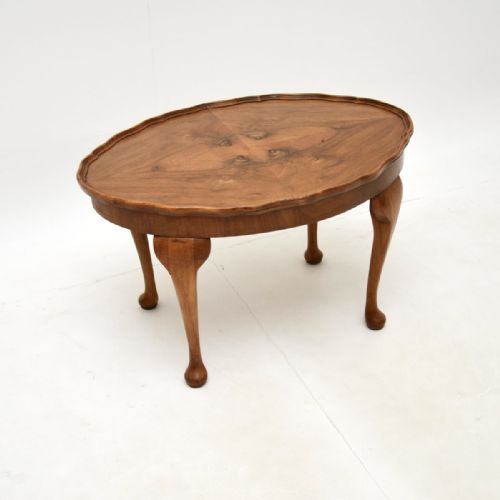
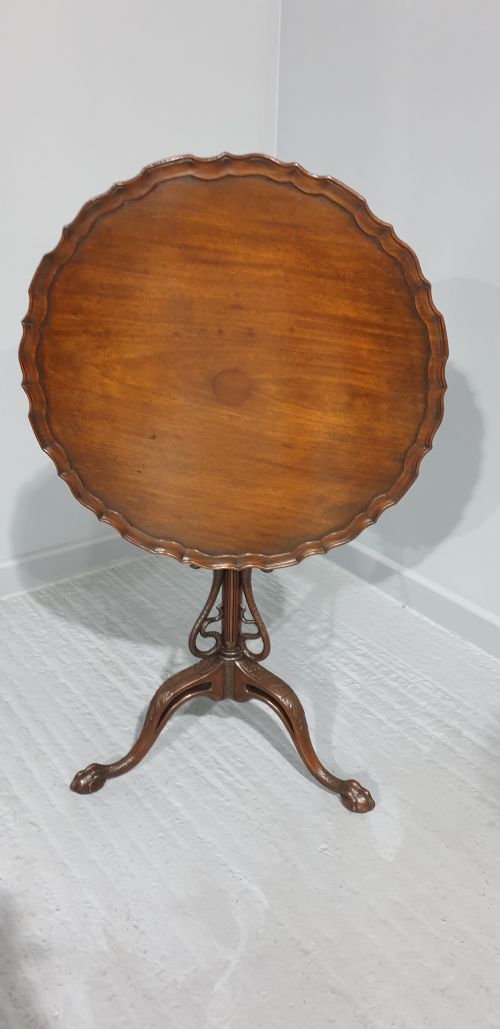
A vintage pie crust table is defined by its characteristic raised, scalloped rim carved directly from the timber or applied to the edge. These pieces emerge in various forms across our selection, predominantly as coffee tables, occasional tables, and wine tables.
Buyers searching for a vintage pie crust table will most frequently encounter walnut surfaces, including figured walnut and burr walnut dating from the early twentieth century, alongside earlier nineteenth-century mahogany iterations.
The styles span revivals of classic forms, with Queen Anne and Chippendale influences appearing regularly alongside Edwardian and Georgian examples. These tables function well as central coffee surfaces or compact side stands in traditional and mixed interiors.
Materials and construction methods
Makers utilised solid timbers and veneer constructions, selecting walnut, burr walnut, mahogany, and oak for their distinct grains and durability. Figured veneers provide complex patterns across circular tops, supported by solid wood frames.
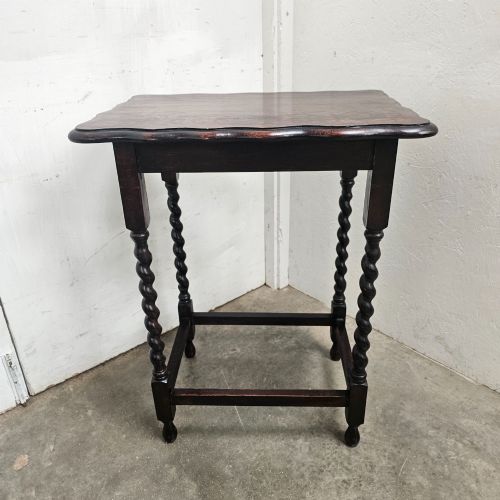
The signature rim requires precise hand-carving to shape the raised, undulating border from the solid edge of the board. Joinery methods connect the top to turned pedestals, tripod legs, or barley twist supports depending on the period.
Vintage Pie Crust Table Retail Price Guide 2026
Typical asking prices for vintage pie crust table among the pieces listed under this phrase on Sellingantiques today, from the lower quarter to the upper quarter. They describe what is for sale here now, not the wider market.
Early makers carved pastry-like edges into solid timber purely to stop tea cups sliding off.
Judging quality in construction and timber
Quality rests in the precision of the carved rim and the selection of the timber grain. Finer examples display deeply sculpted, smooth scallops without splintering, paired with highly figured burr walnut or rich mahogany veneers.
Structural stability distinguishes better pieces, seen in robust pillar attachments and well-fitted joints. The crispness of the carving on the edge and the legs determines the overall standard of the piece.
The Vintage Pie Crust Table Glossary
- Pie crust edge
- A raised, carved, and scalloped border resembling the pastry edge of a pie. This decorative treatment stops small items from rolling off the surface.
- Tilt-top
- A mechanism allowing the table top to pivot into a vertical position when not in use. This design enabled easier storage against room walls in earlier centuries.
- Barley twist
- A turned wooden support resembling a twisted rope. This ornamental turning appears frequently on early twentieth-century framework.
- Occasional table
- A small, portable table designed for specific, intermittent use around a room. These pieces serve as drinks stands or lamp bases.
Vintage Pie Crust Table: Frequently Asked Questions
What is a pie crust table?
A pie crust table is a small occasional or coffee table featuring a distinct raised, scalloped wooden rim. The edge is carved to resemble pastry work, adding decorative detail while keeping objects secure on the surface.
These tables appear in various timbers such as walnut, mahogany, and oak across several historical periods and revival styles.
How were these tables used originally?
Historically, smaller circular tables served for serving tea, holding lanterns, or supporting writing materials in reception rooms. Tilt-top versions were stored flat against walls to save floor space when the room was cleared.
Today, they function primarily as coffee tables or accent pieces next to seating areas.
How do I identify the wood type?
Walnut and mahogany dominate these listings, each offering distinct visual characteristics. Walnut often displays rich brown tones with darker grain figuring, while burr walnut presents dense, swirling circular patterns.
Mahogany typically shows a straighter, reddish-brown grain that deepens in colour with age.
Are these tables sturdy enough for daily use?
Solid timber construction and sturdy pedestal or leg arrangements make these pieces durable for everyday placement in modern living spaces. Maintenance requires simple dusting and protection from excessive moisture or direct heat.
Checking the stability of the central pedestal or leg joints ensures long-term reliability.
What styles do these tables come in?
The pieces span several revival movements, particularly Queen Anne and Chippendale styles, alongside Edwardian and Georgian eras. These designs often incorporate cabriole legs, claw and ball feet, or turned pedestals.
Selecting a style depends on the existing furniture within the room.