


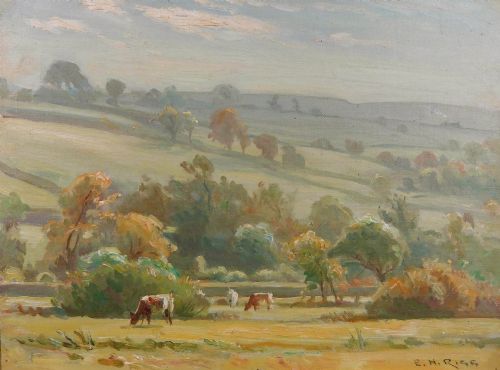
Vintage Pastoral Landscape Painting
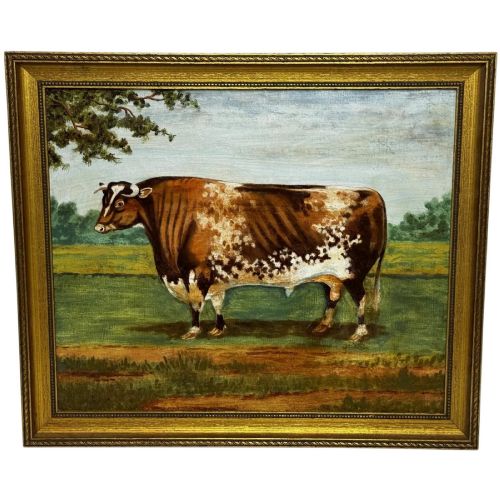
When you search for a vintage pastoral landscape painting, you seek scenes of rural quiet, where cattle graze and rivers wind through fields untouched by industry.
Vintage Pastoral Landscape Painting
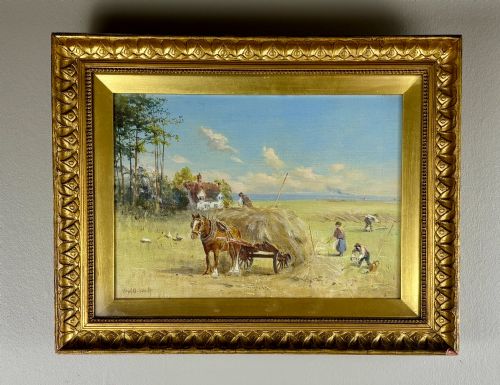
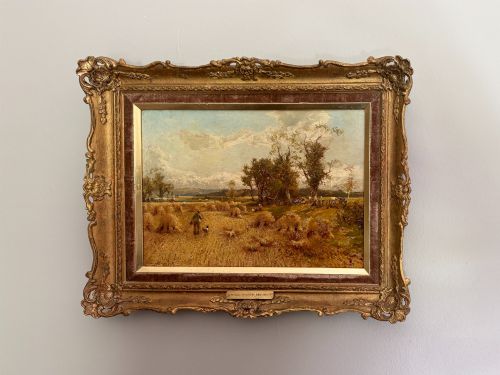
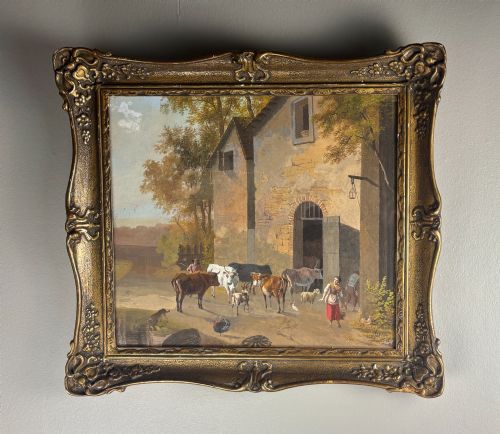
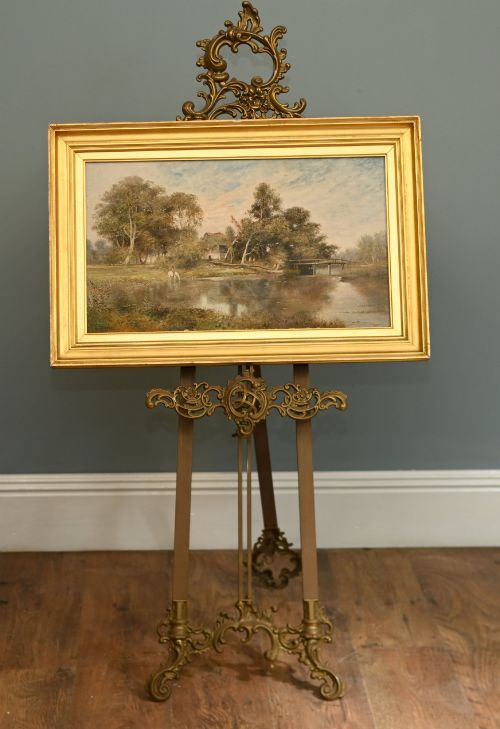
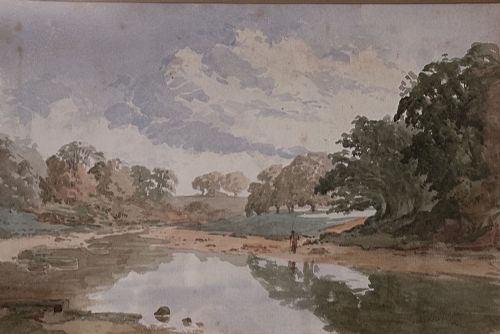
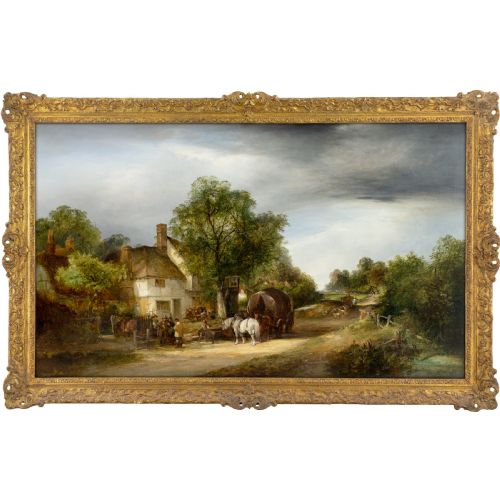
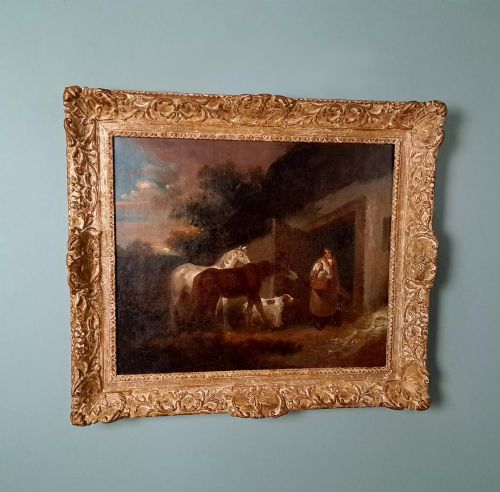
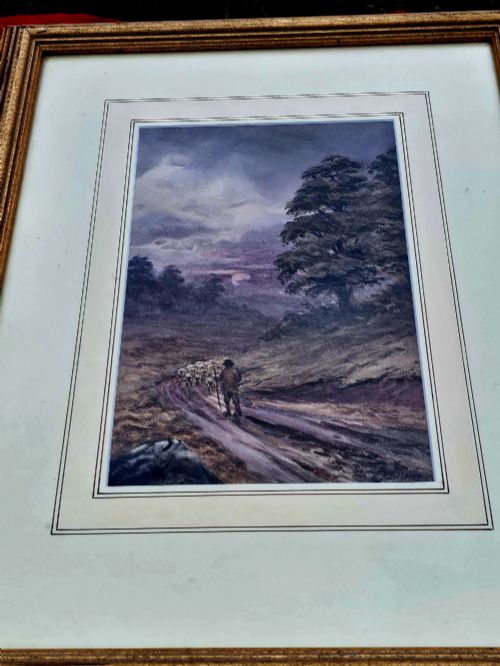
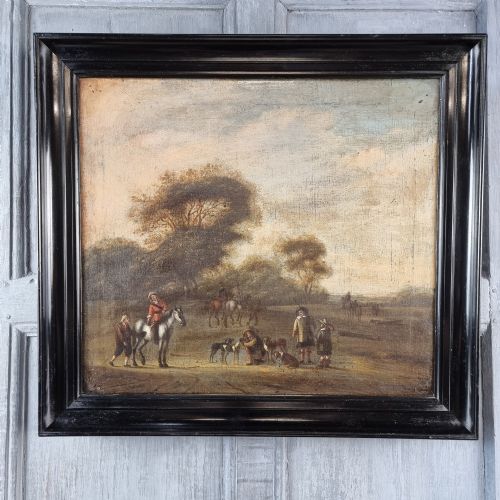
A vintage pastoral landscape painting captures the rural idyll through depictions of agricultural life, grazing livestock, and rolling countryside. The selection here leans heavily towards British and European schools, spanning from the Victorian era into the mid-twentieth century.
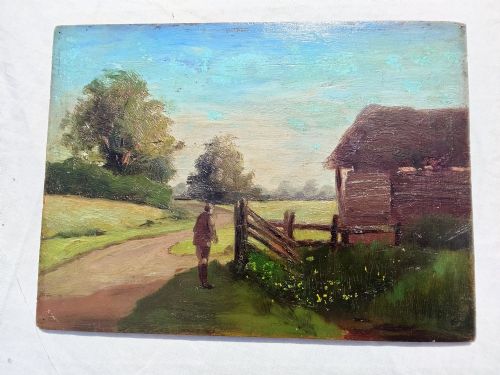
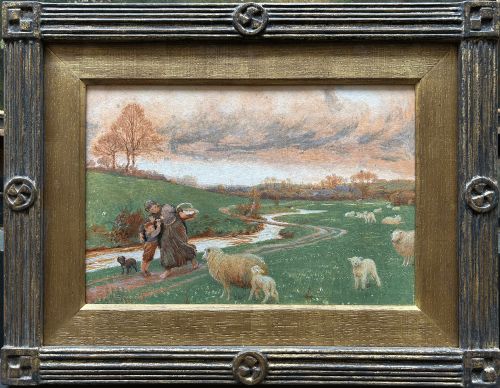
Most examples present traditional views of shepherds, cattle, and cottages framed by natural terrain. You will encounter works executed in oil on canvas, oil on wood panel, and watercolour on paper.
The aesthetic bridges several periods, taking in Edwardian charm and the influence of British Impressionism. These works reflect a widespread cultural affection for the agrarian landscape.
Materials and methods
Artists relied primarily on oil paint applied to stretched canvas or wooden board, allowing for rich textures and deep colour blending. Watercolours on paper provide a lighter, more translucent depiction of light and weather.
Pigments were worked with brushes and sometimes palette knives to capture the atmosphere of rural scenes. Many of these works remain housed within their original wooden and gilt frames.
Common supports include stretched canvas, wooden boards, and heavy paper.
Markers of quality
Quality rests upon the artist's ability to handle light, shadow, and perspective to create depth within the rural setting. Stronger pieces display confident brushwork and accurate anatomical rendering of animals and human figures.
The condition of the pigment and the original support material significantly influence the standing of a piece. Well-preserved works retain their surface tension and tonal harmony without excessive retouching.
Tom Campbell·Ernest Higgins Rigg·Owen Bowen·John Emms·Henry Charles Fox
The Vintage Pastoral Landscape Painting Glossary
- Pastoral
- Relating to the countryside and rural life, particularly depicting shepherds, farms, and domesticated animals in a rural setting.
- Wood panel
- A rigid wooden support used by artists instead of canvas, common in earlier periods.
- Gilt frame
- A wooden frame covered in a thin layer of gold leaf or gold-coloured pigment, frequently found on period fine art.
- British Impressionism
- A late nineteenth and early twentieth-century painting style focusing on light and everyday subjects with loose brushwork.
- Provenance
- The documented history of a painting's ownership and origin, establishing its authenticity.
Vintage Pastoral Landscape Painting: Frequently Asked Questions
What defines a pastoral landscape?
A pastoral landscape depicts scenes of country life, typically featuring farms, fields, shepherds, and grazing animals. These compositions emphasise a romantic and peaceful view of rural existence.
Such works often serve to evoke a sense of quiet nostalgia for an agrarian past. They concentrate on the harmony between humans, animals, and the natural terrain.
Are these paintings usually signed?
Many works bear the artist's signature or monogram, often placed discreetly in a lower corner. Signatures help attribute the work to specific painters active during the nineteenth and twentieth centuries.
Some pieces remain unsigned or carry indistinct signatures, which is common in works attributed to broader regional schools. Documentation or stylistic traits often help identify the hand behind these unsigned works.
How should I frame an antique painting?
Original frames should be preserved whenever possible, as they complement the period of the artwork and maintain its historical integrity. Conservation framing methods protect the canvas or paper from environmental damage.
Avoid modern synthetic mouldings that clash with the age of the piece. Proper backing boards and acid-free materials ensure the longevity of paper-based watercolours.
What is the difference between oil and watercolour?
Oil paint uses drying oils to bind pigments, resulting in a heavier texture and deep, buildable colour. Watercolours use water-soluble binders on paper, creating translucent washes that rely on the white of the paper for luminosity.
Oils are traditionally executed on canvas or wood panels and require no protective glass. Watercolours are sensitive to light and moisture, necessitating framing under glass for protection.