


Antique Collie Painting
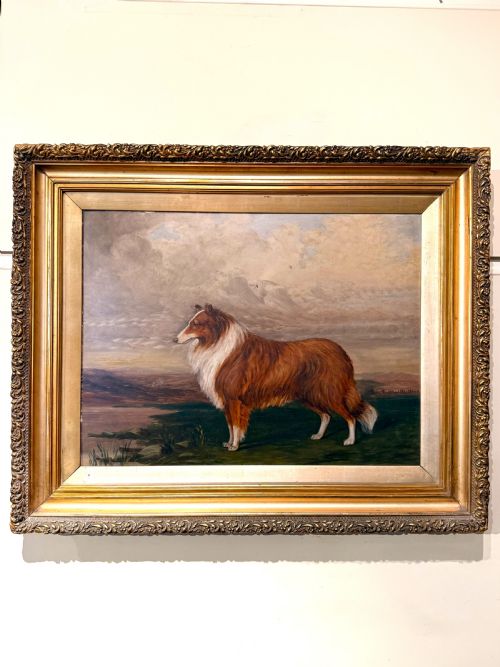
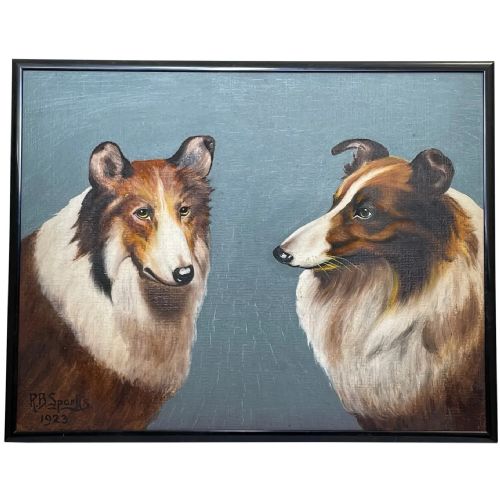
An antique collie painting captures the intelligence and loyalty of the breed through the skilled hands of Victorian and early twentieth-century artists.
Antique Collie Painting
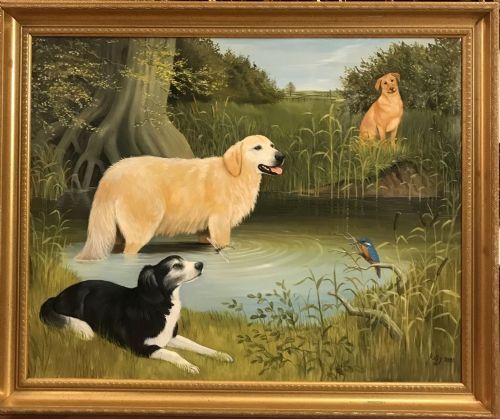
An antique collie painting brings domestic and working dogs into domestic interiors through oil on canvas or board. These works range from intimate canine portraits to pastoral landscape scenes involving sheep dogs and border collies.
Most examples originate from the Victorian period, the nineteenth century, and the early twentieth century. Buyers encounter oil paintings alongside sculptural variations like cast doorstops.
Schools of execution vary from English naive depictions to the detailed naturalist studies typical of Victorian sporting art and the French school.
How they were made
Artists built these works using oil paint applied to canvas or wooden board. Pigments were layered to render the dense coats and keen expressions characteristic of the breed.
Many surviving canvases remain housed within their original wooden frames, frequently enhanced with gesso, giltwood, or gold leaf finishes.
The documented materials across these listings include oil paint, canvas, wood, board, gesso, and gold leaf.
What varies in quality
Quality rests in the anatomical accuracy of the dog and the vitality of its expression. Master painters captured light in the coat and intelligence in the eye with a precision that separates fine art from naive or follower pieces.
The sophistication of the surrounding landscape or interior setting contributes heavily to the overall merit of the painting. Works bearing documented attribution to known artists command stronger attention than anonymous school pieces.
John Emms·John Trivett Nettleship·Daniel Pasmore·GW Horlor·George Earl·Benedict Angell Hyland
The Antique Collie Painting Glossary
- Oil on Canvas
- A traditional painting medium where oil-based pigments are applied to a stretched woven fabric support. This combination offers rich colour depth and longevity.
- Giltwood
- Wood that has been coated with a thin layer of gold leaf or metallic powder. It provides a decorative and luminous border for nineteenth-century picture frames.
- Naive School
- Art created by self-taught or informally trained painters who prioritized direct expression over strict academic perspective. These pieces possess a charming simplicity.
- Sporting Art
- Genre of painting dedicated to animals, hunting, and rural pursuits. Victorian examples often focus on prized pets and working farm dogs.
- Gesso
- A plaster-like mixture applied to wood or canvas as a smooth base for painting or gilding. It is frequently moulded into decorative patterns on antique frames.
Antique Collie Painting: Frequently Asked Questions
How do I identify a Victorian collie painting?
Victorian works generally display naturalistic portrayals of rough collies or sheep dogs within pastoral landscapes or quiet interiors. Look for period framing materials like gesso and giltwood alongside nineteenth-century canvas supports.
Examining the artist's signature and brushwork techniques further clarifies the period. Many pieces reflect the dominant sporting art and naturalist movements of the late nineteenth century.
Where should I hang an oil painting?
Oil paintings require placement away from direct sunlight and excessive moisture to protect the canvas and paint layers. Stable indoor environments preserve both the pigments and the wooden frames.
Selecting a wall with appropriate ambient light allows the details of the brushwork and gold leaf to show clearly without risking heat damage.
How do I care for antique giltwood frames?
Giltwood frames need gentle dusting with a soft, dry brush to prevent the accumulation of dirt within the gesso mouldings. Avoid liquid cleaners and chemical solvents entirely.
Maintaining stable humidity levels prevents the wood from warping and protects the fragile gold leaf surface from flaking over time.