




Isle of Man Landscape Art
Isle of man landscape art captures the distinct topography and coastal views of the island through Victorian and twentieth-century painting traditions.
Isle of Man Landscape Art
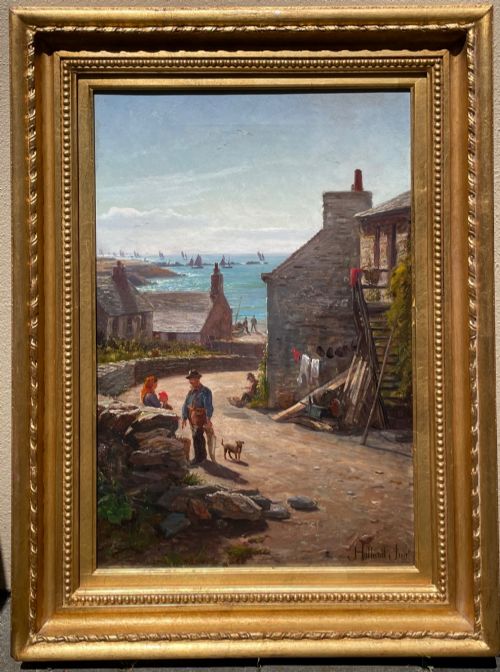
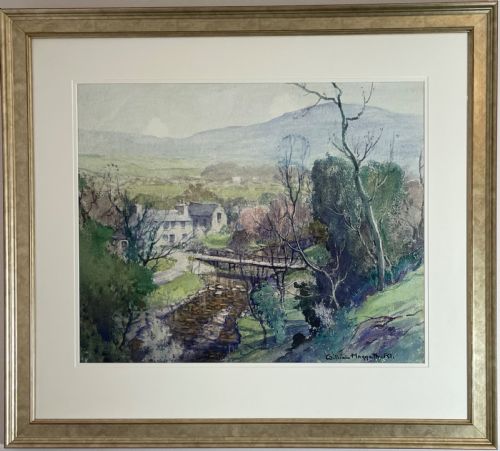
When you search for isle of man landscape art, you encounter framed works depicting specific Manx locations such as Port Erin, Peel Harbour, and Douglas Harbour. These pieces record the coastal cliffs, harbours, and inland valleys through the eyes of visiting and resident artists.
The selections available here span the nineteenth century, the Victorian era, and the mid-twentieth century. You will most frequently meet watercolours and oil paintings on canvas or paper, reflecting both local topography and broader British artistic movements of those periods.
Materials and Methods
The works utilise traditional media, predominantly oil paint on canvas or board and watercolour applied to paper. Painters built up their compositions using brushes and pigments that captured the shifting light over Manx seascapes and inland scenes.
Frames play a structural role in presenting these works, with period giltwood frames frequently housing the canvas and oil paintings. Works on paper typically require glass protection over the watercolour or pastel medium to preserve the delicate pigments.
Listings span from the nineteenth century into the mid-twentieth century, featuring watercolours, oils, and pastels housed in wood and giltwood frames.
Assessing Quality in Manx Art
Quality rests upon the artist's handling of light, atmosphere, and local topography, distinguishing a routine topographical record from a confident painting. Accomplished works by named artists demonstrate a sure grasp of colour and composition, particularly in capturing coastal weather and harbour activity.
The physical condition of the medium and its original housing also shape the standing of a piece. Well-preserved surfaces, stable oil paint, and appropriate period frames contribute to the overall integrity of the artwork.
John Holland·William Edward Webb·William Hoggatt·John Hobson Nicholson·Thomas Rose Miles·John McDougal·Owen Bowen·Arthur H Enock
The Isle of Man Landscape Art Glossary
- Watercolour
- A painting method where fine pigments are suspended in a water-based, translucent solution. It is typically applied to paper to achieve luminous washes of colour.
- Oil on Canvas
- A painting technique utilising pigments bound in a drying oil, applied to a stretched fabric surface. This medium allows for rich texture and deep colour saturation.
- Giltwood
- Timber carved and surfaced with a thin layer of gold leaf. It is commonly found on traditional frames enclosing nineteenth-century oil paintings.
- Seascape
- A work of art depicting the sea, coastal views, or harbour scenes. These subjects form a significant portion of Manx topographical painting.
- Pastel
- A dry art medium in the form of a stick, consisting of powdered pigment and a binder. It produces velvety surfaces with vibrant matte colour.
Isle of Man Landscape Art: Frequently Asked Questions
How do watercolours and oils differ?
Watercolour works utilise translucent washes on paper, offering a lighter and more delicate representation of light and atmosphere. They require protection under glass.
Oil paintings use heavier pigments on canvas or board, allowing for textured brushwork and deeper colour tones that often sit within giltwood frames.
Which periods are represented?
The selection spans the nineteenth century and the Victorian era through to the mid-twentieth century. Pieces date from the 1880s and 1890s, passing through Edwardian examples into the 1920s and 1960s.
This timeline encompasses Victorian realism, British impressionism, and mid-century British art styles.
How should I display these works?
These framed pieces suit domestic wall display, benefiting from placement away from direct sunlight to protect pigments and paper. Consideration of wall space helps accommodate different scales, from intimate watercolours to large oil paintings.
Matching the frame type to your interior style helps integrate historical artworks into contemporary or traditional rooms.