


Vintage Painted Window Seat
A vintage painted window seat brings distinct character to a room, offering both a practical perch and a decorative focal point.
Vintage Painted Window Seat
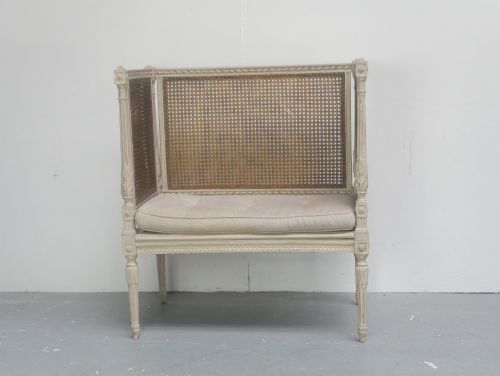
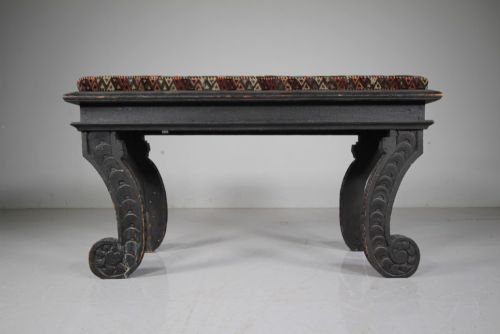
When you search for a vintage painted window seat, you are looking at low seating forms designed to fit beneath windows or along hallways. The selection here spans the nineteenth century through to the 1930s, taking shapes such as benches, long stools, and small couches. You will frequently encounter French styles alongside Edwardian pieces.
The forms include items styled after the Louis XV period, French Régence, and Edwardian neoclassical revival. Many examples utilise traditional bench and stool frames adapted for domestic spaces.
Origins represented in these items draw upon English and French cabinet-making traditions. The physical evidence shows pieces originating across the nineteenth and early twentieth centuries, particularly around 1900 to 1930.
How they were made
Construction relies upon solid timbers such as pine, beech, and other woods suited to structural framing. These wooden foundations are shaped through carving and joinery before receiving layers of surface paint.
Upholstery and detailing incorporate materials like cane, textile, and linen. Canework panels are woven directly into frames, while fabric and linen provide softer seating surfaces.
Some of these compact nineteenth-century frames spent their previous lives doubling as makeshift coffee tables before returning to active seating duty.
What varies in quality
Quality depends heavily on the crispness of carved detail within the wooden frame, particularly on pieces adopting Louis XV or Régence styles. Smoother integration of paint finishes over timber also separates finer workshops from simpler production.
The integrity of secondary materials, such as tight cane work or robust textile upholstery, dictates the refinement of the finished seat. Pieces retain distinction through the balance of their proportions, whether built as a long stool or a small couch.
The Vintage Painted Window Seat Glossary
- Cane
- Woven material made from rattan peel used for seat panels and backrests. It provides a lightweight, flexible surface.
- Louis XV Style
- A decorative design movement characterised by asymmetrical curves, natural motifs, and scrollwork. It influences many nineteenth-century French pieces.
- Pine
- A softwood commonly utilised for structural carcasses and painted furniture throughout the nineteenth century. It accepts surface paint readily.
- Régence
- A transitional French style preceding the full rococo movement, known for robust carving and symmetrical scrollwork. Pieces in this style often feature substantial wooden frames.
Vintage Painted Window Seat: Frequently Asked Questions
Where should I place a window seat?
These pieces are traditionally positioned beneath low windows to create a comfortable spot for reading or viewing. They also sit effectively at the foot of a bed or along an entrance hallway.
Because many examples take the form of long stools or small couches, they occupy minimal floor space while offering substantial surface utility.
How do I clean painted wood?
Painted wooden frames require gentle dusting with a dry, soft cloth to prevent accumulation. Avoid harsh chemical cleaners that might lift or dull the historic paint layers.
For stubborn marks, a slightly damp cloth with mild soap can be used sparingly, followed immediately by drying with a clean towel.
What is canework?
Canework involves weaving peeled rattan strands through drilled holes in a wooden frame to form a patterned mesh. This technique creates a breathable and resilient seating surface.
It appears frequently on light couches and stools dating from the Edwardian era onwards.
How do I identify a French style?
French styles like Louis XV or Régence are distinguished by carved cabriole legs, floral motifs, and flowing scrollwork. The woodwork often exhibits deeper relief carving than standard English utilitarian items.
Proportions tend to be decorative and graceful, reflecting courtly design influences.