

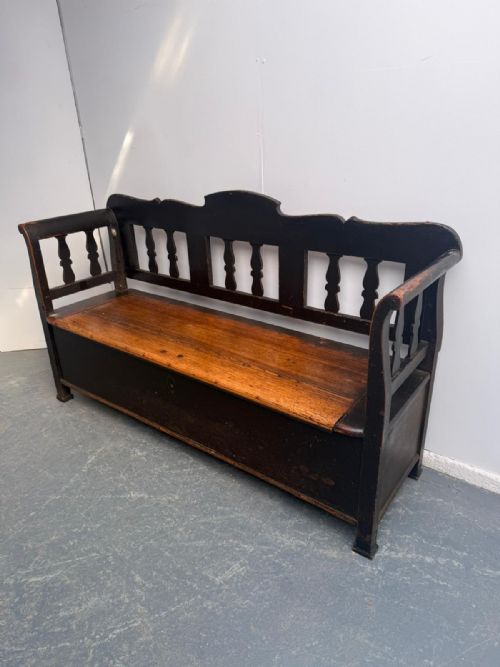
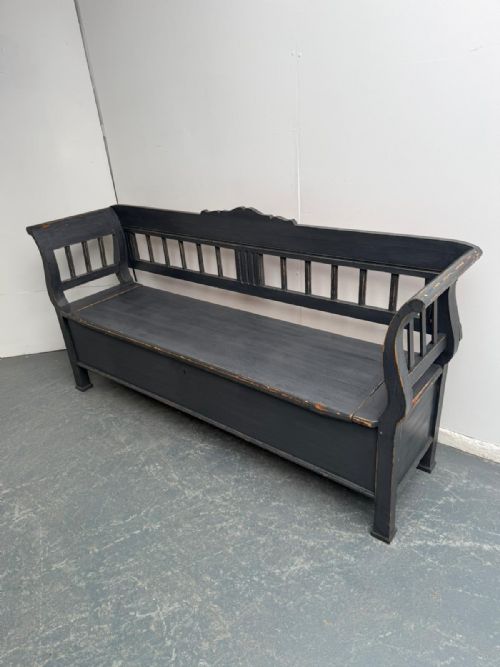
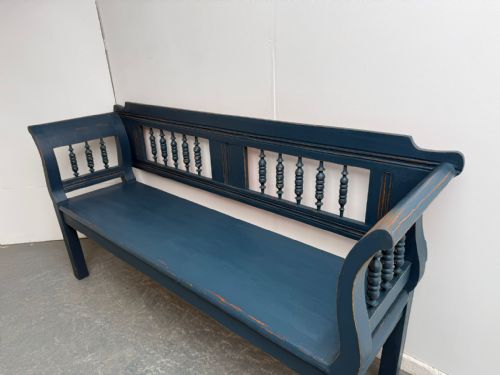
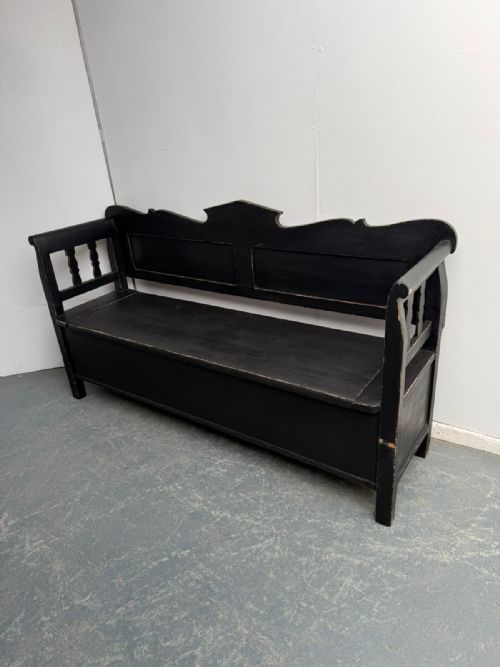
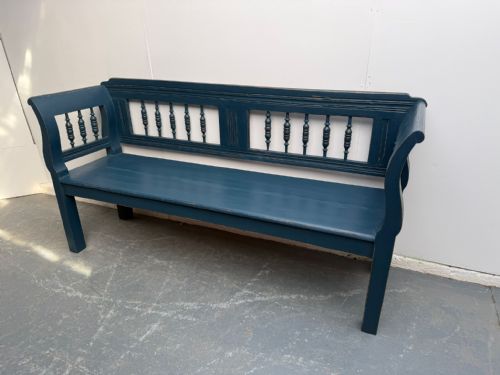


Painted Hallway Seat
A painted hallway seat offers practical seating and distinct character, bringing functional period charm directly into an entrance space.
Painted Hallway Seat
A painted hallway seat spans several distinct forms including settles, benches, and hall chairs designed for entrance spaces and corridors. These pieces originate from various traditions, with notable examples hailing from British, Scandinavian, and Hungarian workshops.
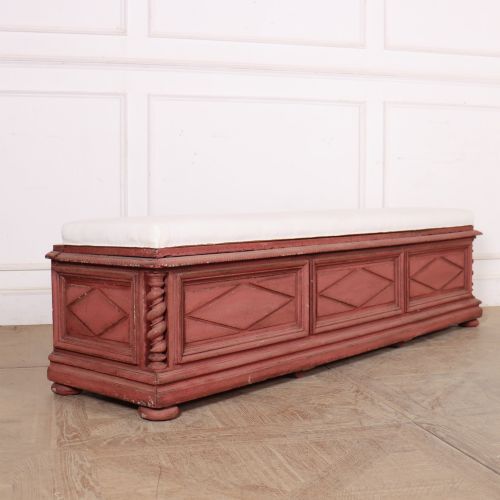
The selection ranges from compact two-seater benches to long dining benches and high-backed box settles with integrated storage. Buyers frequently encounter 19th-century pine and Victorian interpretations featuring original painted finishes in shades of grey, blue, black, and natural wood tones.
Regional variations include rustic country styles, Gustavian aesthetics, and Hungarian folk art designs that reflect local domestic customs. Each piece serves a dual purpose of providing immediate seating while establishing a defined decorative focal point near the entrance.
Materials and construction methods
Construction relies heavily on timber such as pine, beech, and oak, joined using traditional cabinetry techniques suited to domestic furniture. Box settles integrate enclosed storage compartments beneath the seat, requiring robust joinery to support daily use.
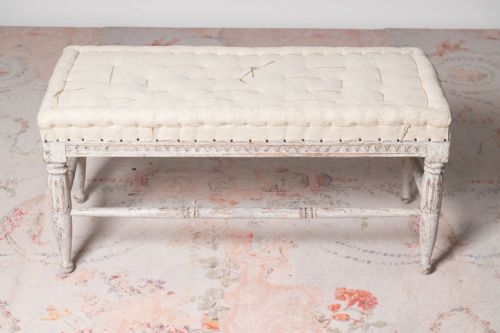
Surfaces are finished with paint, often applied in historical layers that weather over time to show authentic signs of age. Additional material elements like cane and linen upholstery appear on specific seating variations like window seats and salon couches.
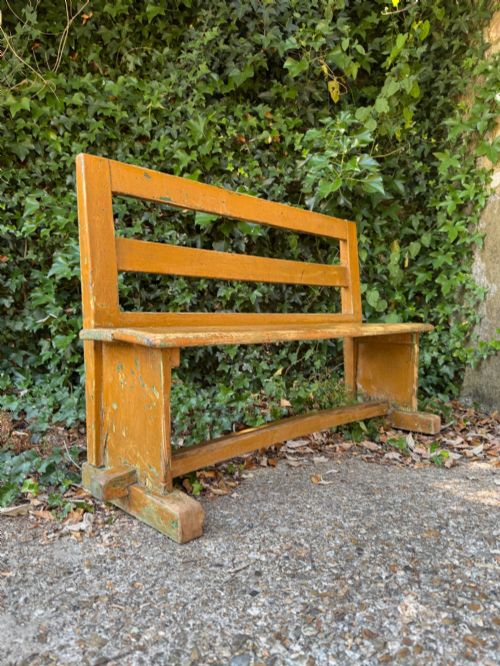
One surviving Victorian pine bench bears a specific painted mark indicating its former service at the chapel in Llanfair.
Assessing quality and authenticity
Quality rests significantly on the survival of original painted surfaces rather than later decorative overpainting. The integrity of the underlying timber framework and the preservation of structural joints dictate the durability of each bench or settle.
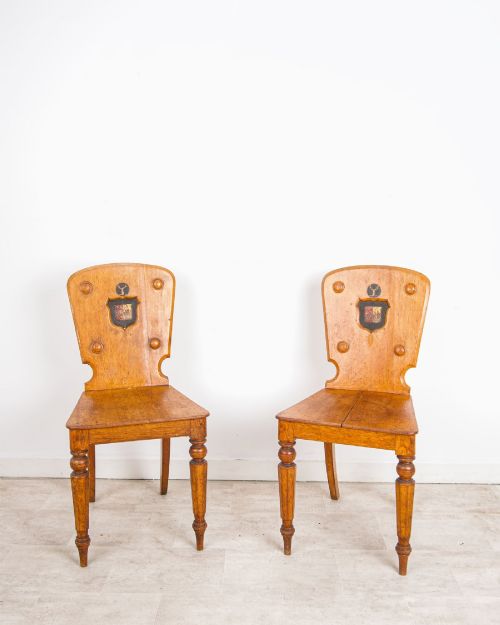
The refinement of regional carving, such as heraldic shield backs on oak hall chairs or the proportional balance of a high-backed settle, separates standard utility items from finer workshop output.
Gillows·Thonet
The Painted Hallway Seat Glossary
- Settle
- A wooden bench with a high back, solid arms, and often a box base forming a seat compartment. This form provides protection from draughts in traditional hallways.
- Gustavian
- The Swedish interpretation of French neoclassical style, characterised by restrained carving and pale painted finishes. These pieces display lighter proportions than contemporary British furniture.
- Box settle
- A form of bench incorporating a hinged lid beneath the seat for storage. It combines seating capacity with practical household organisation.
- Hall chair
- A rigid wooden seat, often featuring a high carved back displaying heraldic shields or family crests. They were traditionally positioned in grand entrances for callers waiting briefly.
- Folk art
- Decorative items produced within a regional tradition by artisan makers using local motifs. These pieces often feature vibrant painted ornamentation unique to their geographic origin.
Painted Hallway Seat: Frequently Asked Questions
What is a box settle?
A box settle is a wooden bench featuring a high back and a concealed storage compartment beneath the lifting seat. This design historically kept living areas tidy while offering protection from cold drafts.
In modern settings, the internal compartment provides practical storage for shoes, blankets, or hallway accessories while maintaining a traditional aesthetic.
How do I identify original paint?
Original painted finishes exhibit natural wear patterns, craquelure, and subtle fading consistent with age and domestic use. Pigments integrate closely with the underlying timber substrate rather than sitting in a flat modern layer.
Examining corners and protected areas reveals underlying coats and historical patination that distinguish authentic early finishes from recent decorative applications.
Where should I place a settle?
Settles suit entrance halls, boot rooms, and large corridors where their high backs create a sense of architectural enclosure. They function well against plain walls or beneath coat hooks.
Ensure adequate floor space is available for the depth of the piece, particularly for box settles whose seats lift forward or upward.
Are these seats comfortable?
Period wooden benches and settles offer firm, upright seating designed for brief resting rather than lounging. High backs and solid wooden arms provide distinct ergonomic support.
Adding loose cushions or squabs upholstered in complementary linen or fabric softens the seating surface while preserving the visible timber frame.