
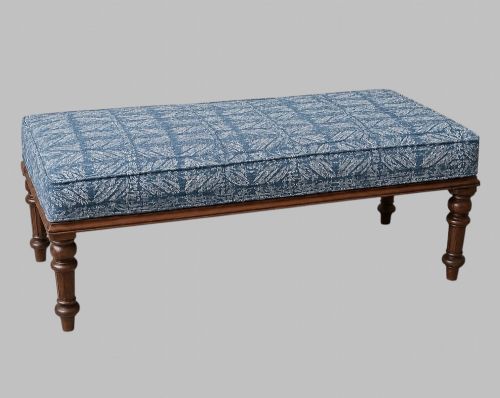
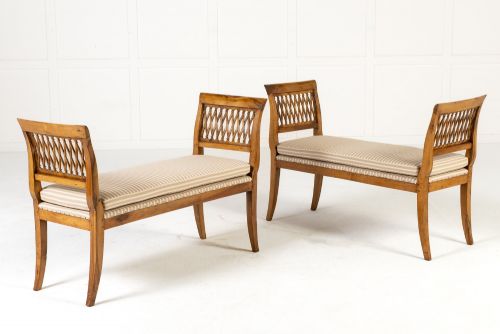
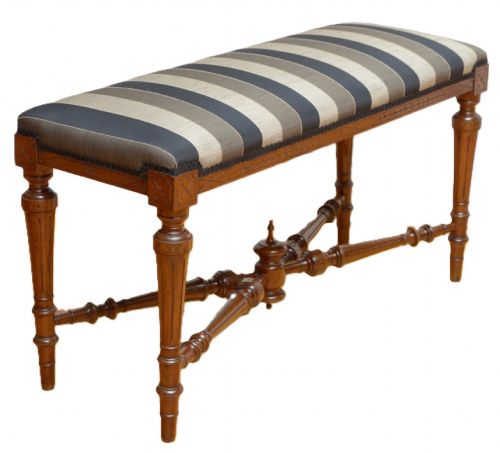


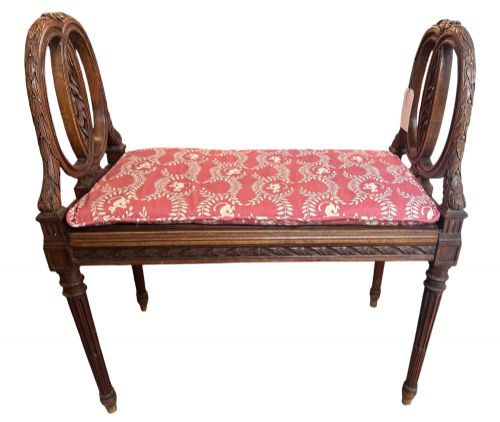
Bedroom Window Bench
A bedroom window bench offers a graceful place to sit while dressing, drawing on forms from the Victorian, Edwardian and Regency periods.
Bedroom Window Bench
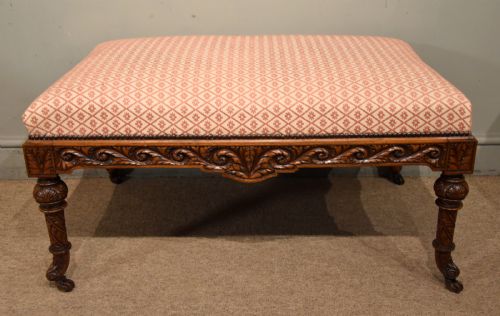
A bedroom window bench provides a low seat positioned beneath a casement or at the foot of a bed. When you search for a bedroom window bench, you find long stools, duet benches and armed seats designed for domestic chambers.
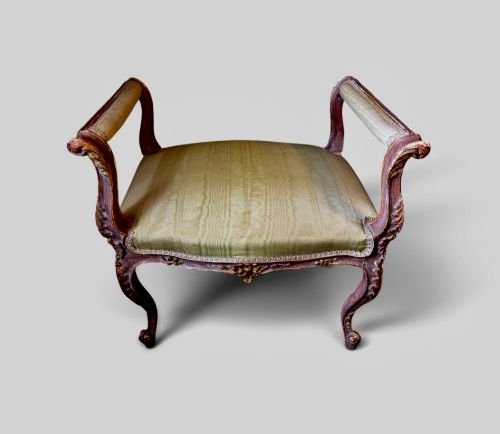
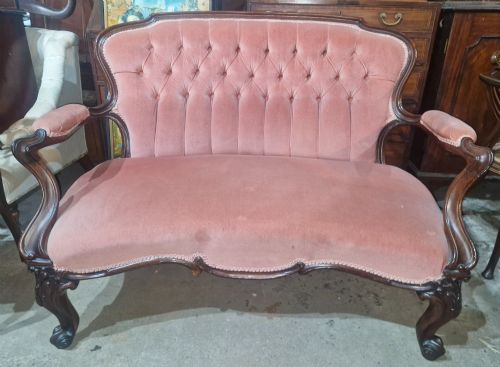
The pieces appearing here span the nineteenth and early twentieth centuries, including Victorian, Edwardian and Regency examples. Walnut, mahogany and giltwood frames dominate the selection alongside French stylistic revivals.
Materials and construction
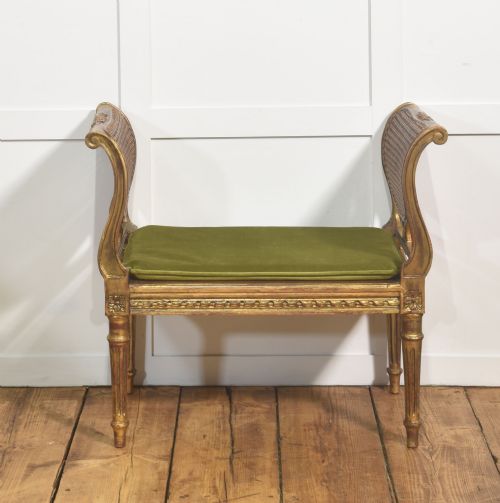
Frames are constructed from hardwoods such as mahogany, walnut and satin birch, often shaped with carved details or inlaid bone and satinwood. Wood framing is frequently paired with cane panels or exposed gilded surfaces.
Upholstery uses traditional textiles including velvet, linen and patterned fabric. Skilled carpentry joins the legs to the seat rails, supporting repetitive domestic use.
Some Edwardian makers integrated bone inlay into mahogany frames to keep slippers company in the dark.
Subtleties of execution
The distinction between ordinary and superior pieces rests on the crispness of the timber carving and the integrity of the frame. Hand-carved rosewood, walnut and giltwood display depth and precision that machine work lacks.
Upholstery execution and fabric selection alter the character of the seating. Professional re-covering in traditional textiles maintains the historical harmony of the piece.
James Shoolbred
The Bedroom Window Bench Glossary
- Duet stool
- A long seat designed to accommodate two people side by side. These double stools frequently appear in bedroom and dressing room settings.
- Cane
- Strips of rattan woven into an open pattern for seat panels or backs. This technique lightened the visual weight of heavy wooden furniture.
- Giltwood
- Timber coated with a thin layer of gold leaf or metallic paint. It defines decorative French-influenced seating from the nineteenth and early twentieth centuries.
- Cabriole leg
- A furniture leg that curves outward at the knee and inward at the ankle, ending in a pad or foot. This classical shape appears on several eighteenth and nineteenth-century designs.
- Inlay
- Contrasting wood or bone set flush into the surface of a primary timber. Edwardian makers utilised this method to decorate mahogany and satinwood frames.
Bedroom Window Bench: Frequently Asked Questions
Where do you put a window bench?
These seats sit naturally beneath low bedroom windows or directly against the foot of a bed. They provide a practical surface for putting on shoes or laying out garments.
The elongated proportions ensure they occupy minimal floor space while adding a formal seating option to private rooms.
How do I date a window seat?
Dating relies on combining the timber species, decorative motifs and upholstery style with the primary construction techniques. Victorian pieces often use heavy rosewood or walnut with deep carving, while Edwardian versions favour lighter inlaid mahogany.
French revival models from the late nineteenth century borrow Louis XVI or Régence details, visible in gilded surfaces and cabriole legs.
What is a duet stool?
A duet stool is an extra-long bench created to seat two people simultaneously. In bedrooms and dressing rooms, they served as extended seating at the foot of large beds.
They share the same decorative framing and upholstery treatments as standard single window seats but offer greater horizontal span.
Can I use these benches in a hallway?
Many sturdy mahogany and walnut benches transition easily from bedrooms to entrance halls. Their narrow profiles fit well along corridors or beside staircases.
Plain wood or linen-covered versions handle everyday transit without the delicate vulnerability of heavily gilded or silk-upholstered alternatives.