
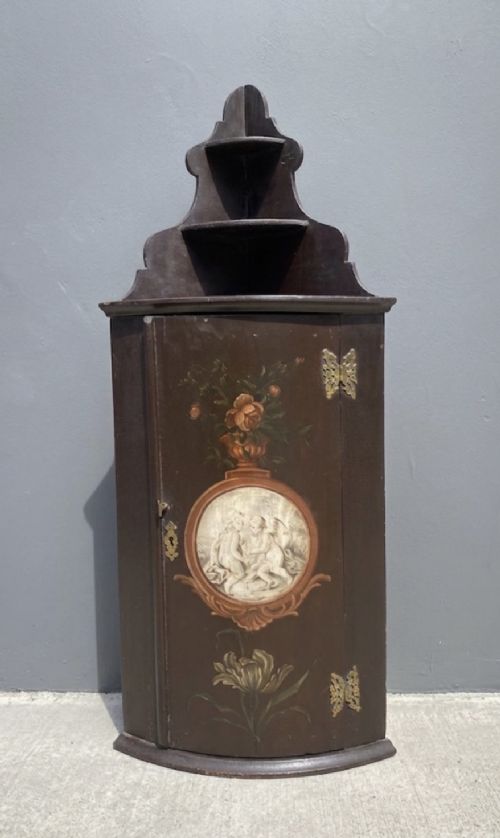


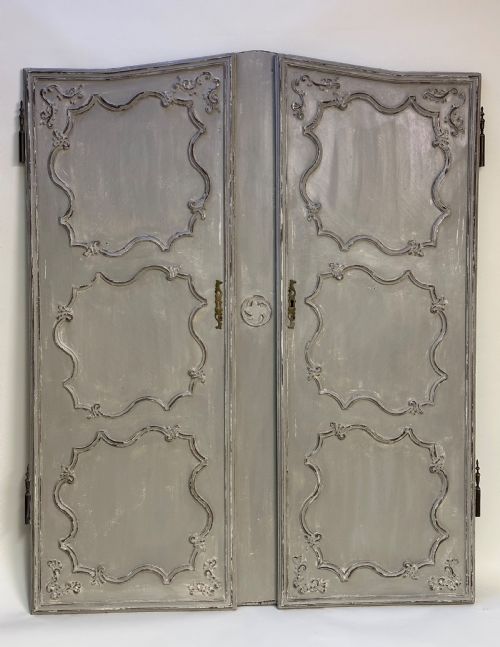


Vintage Painted Wall Cupboard
A vintage painted wall cupboard brings colour and character to a room, offering compact storage while anchoring a wall with period presence.
Vintage Painted Wall Cupboard
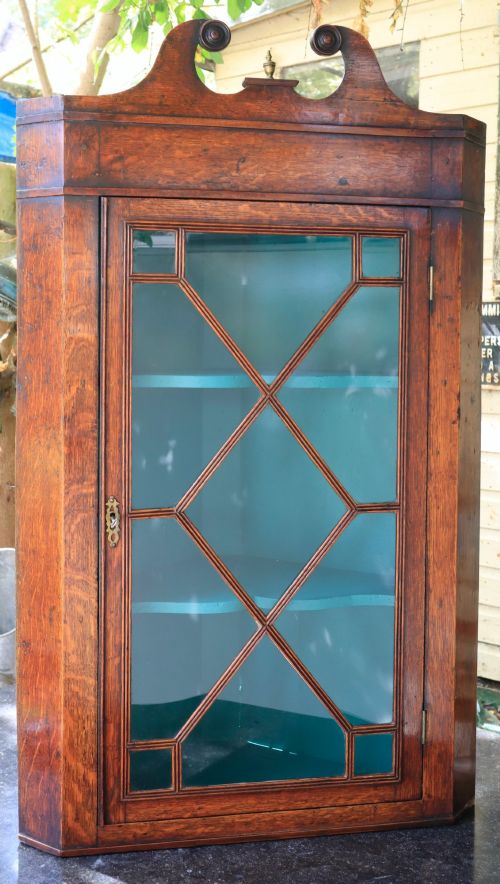
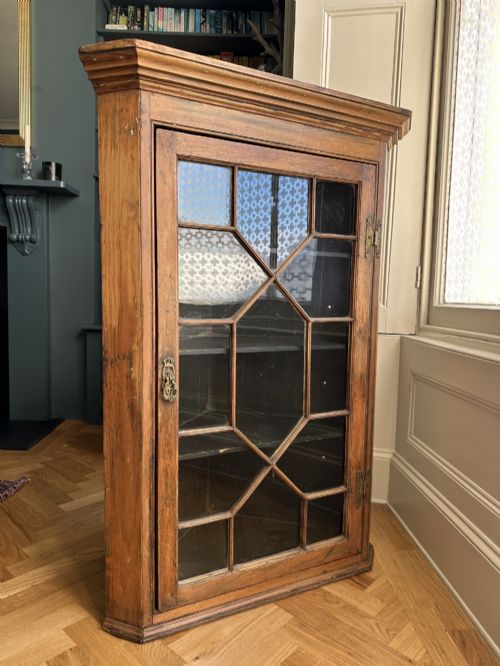
A vintage painted wall cupboard is a hanging cabinet or corner unit designed to maximise wall space while introducing decorative painted surfaces into an interior. When searching for a vintage painted wall cupboard, buyers encounter everything from modest pine country pieces to formal Georgian bow front designs.
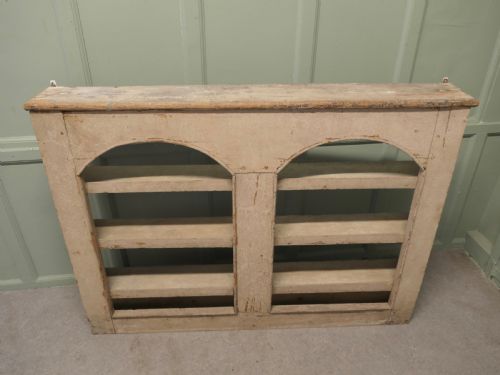
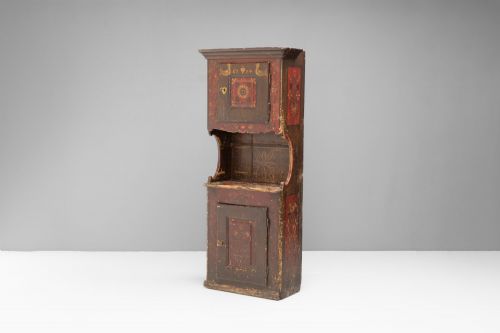
The selection ranges widely across origins and styles, featuring Scandinavian folk art, French provincial work, and Austrian hanging cupboards. Corner cabinets and architectural wall cabinets dominate the forms, frequently fitted with shelves or glazed doors.
Most examples date from the nineteenth century, though eighteenth-century and early twentieth-century pieces also appear. Buyers are most likely to meet pine and oak carcasses carrying either distressed original paint or later decorative finishes.
Materials and construction methods
Makers primarily built these cupboards from solid timber, with pine and oak serving as the foundational woods for both country and formal pieces. Iron and brass hardware, including hinges and latches, secure the doors and contribute structural stability to the hanging frames.
Surface decoration relies heavily on traditional paint application, spanning simple colour washes, faux tortoiseshell effects, and intricate Chinoiserie detailing. Some pieces incorporate glass panels within glazed doors to create display vitrines for small objects.
Faux tortoiseshell paint schemes let ordinary pine pretend to be exotic shell.
Distinguishing quality across pieces
Quality rests significantly on the preservation and authenticity of the surface finish, distinguishing original painted decoration from later overpainting. The integrity of the timber carcass and the survival of period brass or iron fittings also determine the standing of an individual cabinet.
Execution in construction separates standard utility cupboards from finer decorative works, particularly where hand carving or specialised techniques like Chinoiserie are employed. Proportion and balance in regional forms, such as Scandinavian folk art or French provincial pieces, further define the better examples.
The Vintage Painted Wall Cupboard Glossary
- Bow front
- A convex, curved front profile that projects outward, often seen on eighteenth and nineteenth-century corner cupboards to soften room angles.
- Chinoiserie
- European decorative style imitating Chinese artistic traditions, frequently featuring hand-painted motifs on lacquered or painted surfaces.
- Vitrine
- A glass-fronted cabinet or display case designed to showcase small possessions while protecting them from dust.
- Japanned
- A European form of decorative lacquer finish that emulates East Asian lacquerwork, popular on formal period cabinets.
- Alcove shelving
- Fitted storage shelves designed to fit within a recessed wall space or architectural niche.
Vintage Painted Wall Cupboard: Frequently Asked Questions
How do I hang a heavy wall cupboard?
Wall cupboards require secure fixing directly into masonry or internal wall studs using appropriate brackets and heavy-duty screws to bear the weight of the timber carcass.
Lighter pine hanging cupboards may use traditional strap fixings, while larger corner cabinets require multi-point wall anchoring for stability.
Where should I place a corner cabinet?
Corner cupboards suit unused room angles, utilising dead space while drawing the eye upward with decorative paint or architectural form.
They function effectively in dining rooms for tableware or in hallways to provide compact display areas.
How do I clean original painted surfaces?
Dust painted wood gently with a dry, soft cloth, avoiding commercial chemical cleaners that can soften or strip historic paint layers.
Moisture should be kept away from distressed or original painted finishes to preserve the integrity of the surface.
What distinguishes Georgian from country pieces?
Georgian cupboards typically exhibit formal design traits such as bow fronts and Chinoiserie decoration, reflecting refined urban tastes.
Country pieces, including Scandinavian and French provincial examples, favor simpler pine construction and folk art ornamentation.