
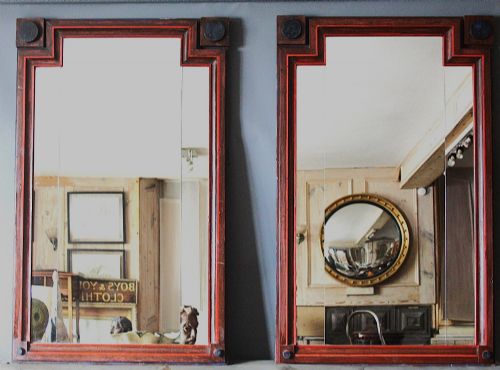
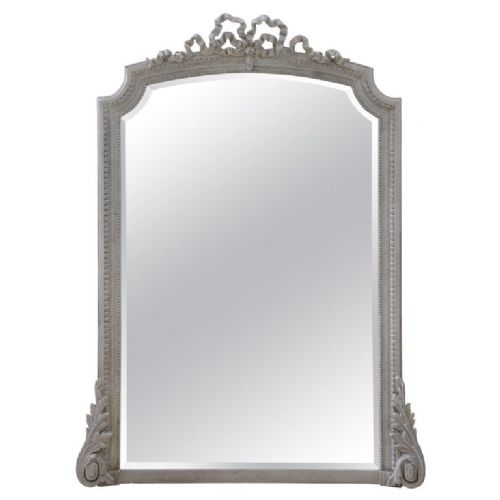
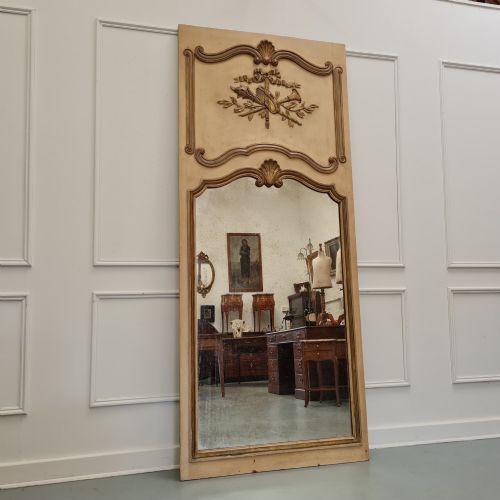

Vintage Painted Overmantel Mirror
A vintage painted overmantel mirror brings scale and character to a chimney breast, offering the reflective depth and decorative framing typical of nineteenth-century and later interiors.
Vintage Painted Overmantel Mirror
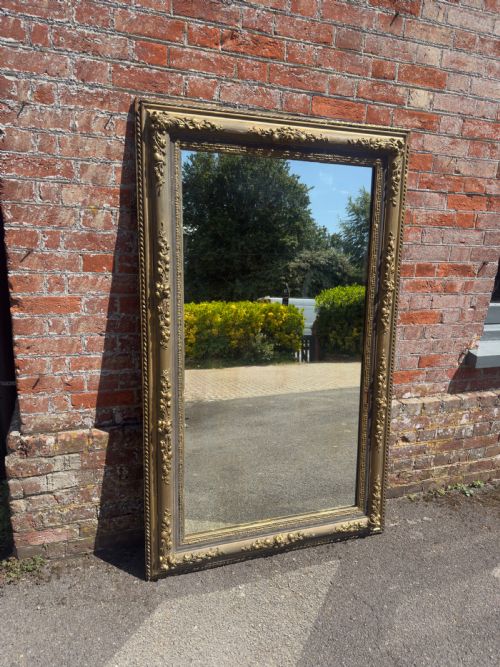
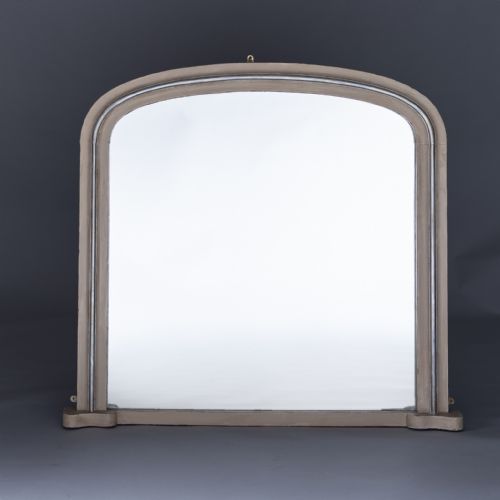
When searching for a vintage painted overmantel mirror, buyers encounter a selection spanning the nineteenth century through to the Edwardian period and Art Deco years. The most common examples on this page are large nineteenth-century English and French designs created to sit above a fireplace.
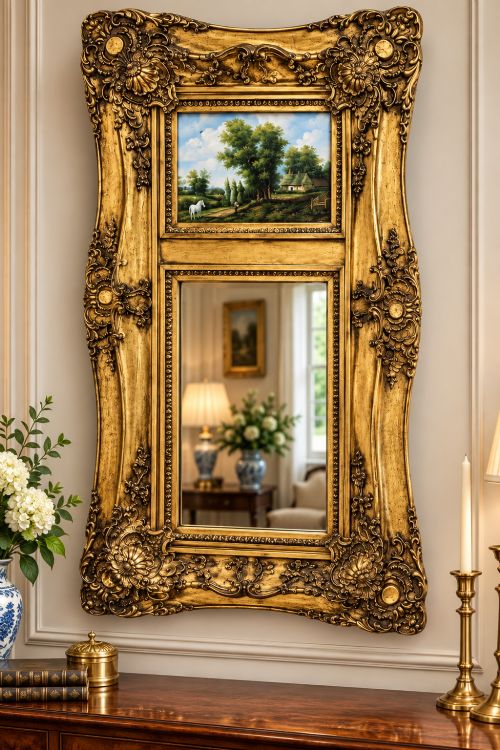
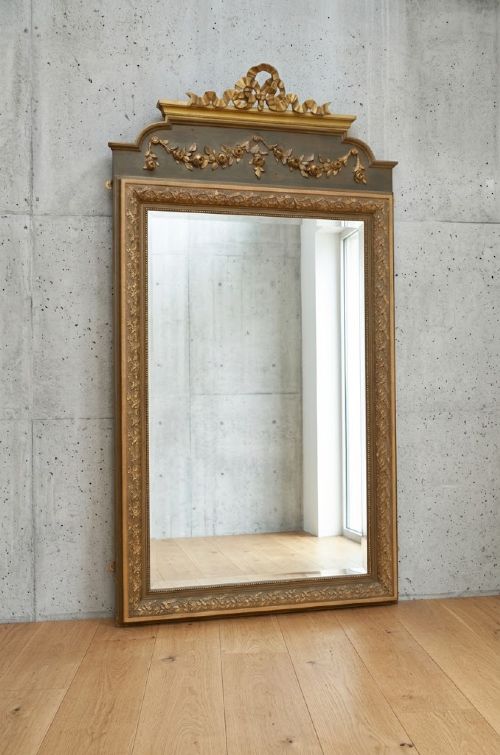
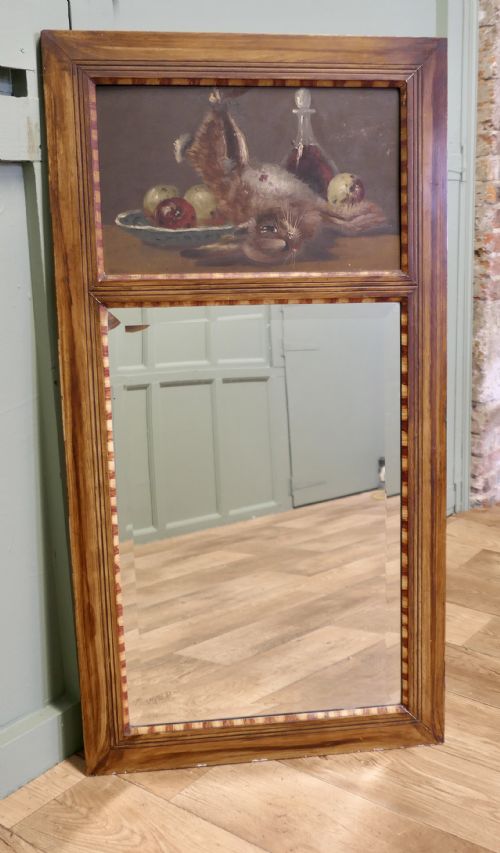
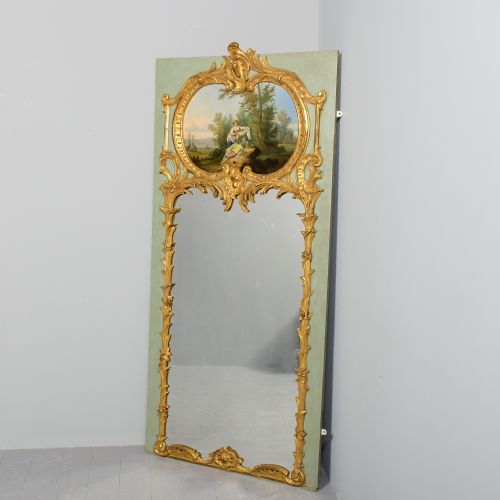
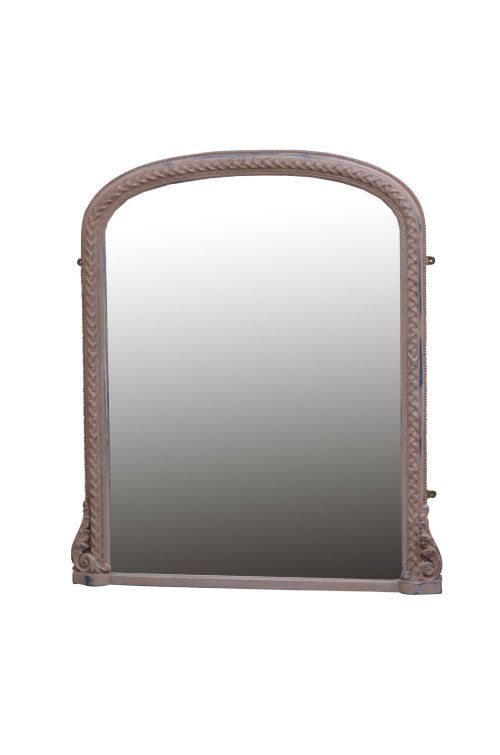
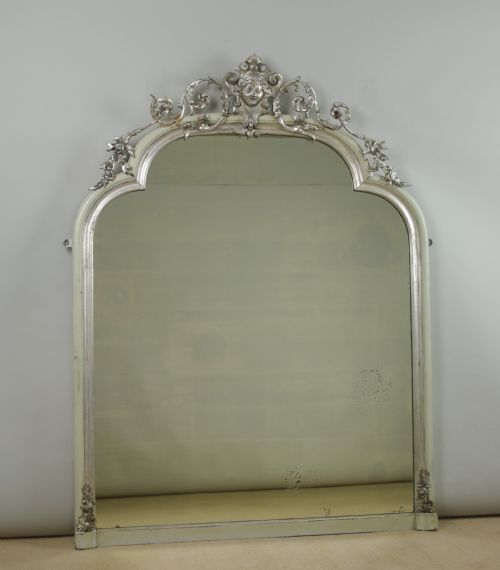
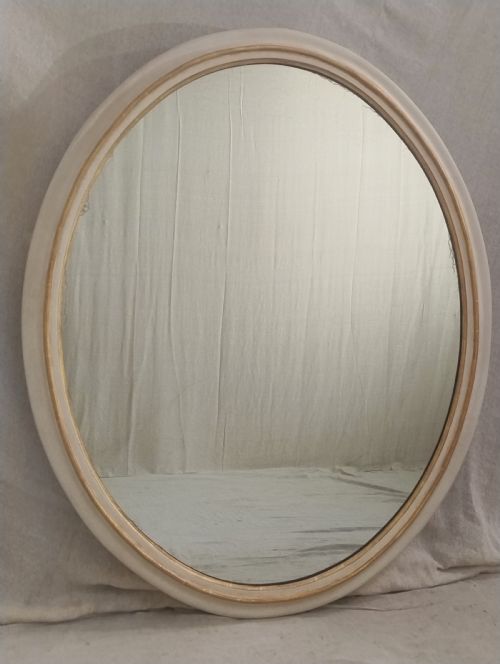
Forms range from simple architectural archtop and oval shapes to elaborate French trumeau mirrors with painted and gilded wooden frames. Makers utilised various regional styles, including Louis XV Rococo, Louis XVI, and Adam, adapting classical motifs for domestic hearths.
Many of these pieces combine painted surfaces with parcel gilding, gesso, or carved wood details. Overmantel mirrors served both a practical purpose in reflecting light around a room and a decorative role as the visual anchor of a reception room.
Materials and construction
The foundation of these frames is typically carved wood, shaped into architectural mouldings, crests, and columns. Artisans applied layers of gesso to the wooden base to create smooth surfaces and crisp relief details before painting or gilding.
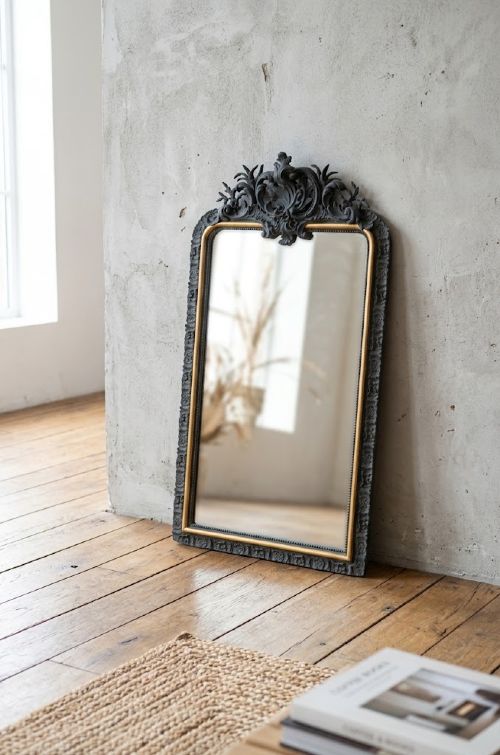
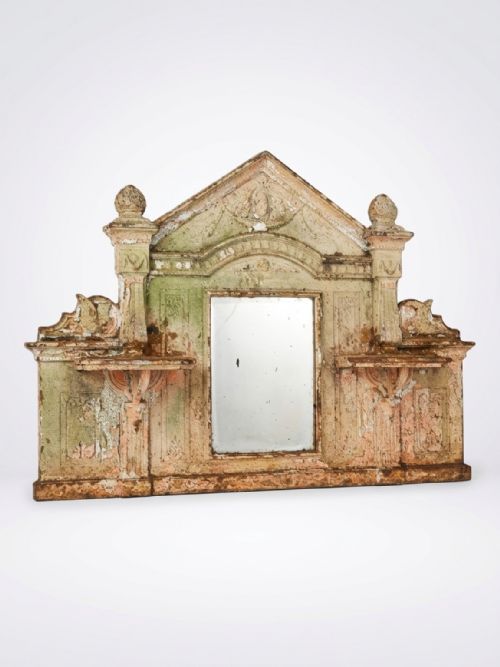
Finishes involve traditional paint palettes, ranging from layered lilac, ink blue, and olive green to ebonised black and cream, often paired with gold leaf or silvered accents. Mirror glass is set within these frames, sometimes retaining original plates or showing the characteristic foxing of age.
Listings feature pieces from the eighteenth, nineteenth, and early twentieth centuries, including Victorian, Edwardian, and Art Deco styles.
Judging quality and character
Quality in these mirrors rests on the depth and execution of the carved wood and gesso ornamentation. Finer examples display hand-carved details with sharp relief and well-balanced proportions that suit the grand scale of an overmantel position.
The integrity of the painted finish also dictates value, with original or patinated historical paintwork holding more interest than later repainting. Well-preserved mirror plates and robust structural framing ensure the piece functions securely on a wall.
The Vintage Painted Overmantel Mirror Glossary
- Overmantel mirror
- A large mirror specifically designed to be hung or placed on the mantelpiece above a fireplace. These pieces are proportioned to fit the horizontal space of a chimney breast.
- Trumeau
- A decorative wall mirror featuring an upper painted panel or artwork integrated into the wooden frame. They originated in eighteenth-century France and remained popular through the nineteenth century.
- Gesso
- A plaster-like mixture applied to wood frames to provide a smooth base for gilding and paint. It allows for intricate moulded details and relief ornamentation.
- Parcel gilt
- A finishing technique where portions of an object are highlighted with gold leaf while the rest is painted or left in the natural wood. This creates contrast across ornate mouldings.
- Pier mirror
- A tall mirror designed to hang on the pier, the solid wall space between two windows. They share many decorative characteristics with overmantel mirrors.
Vintage Painted Overmantel Mirror: Frequently Asked Questions
How do I hang a heavy overmantel mirror?
Due to their substantial weight and size, these mirrors require secure installation directly into wall studs or masonry using heavy-duty brackets. Professional fitting is recommended to support the combined weight of the wood, gesso, and glass safely above a fireplace.
Ensuring the weight is distributed evenly prevents strain on the frame joints. Wall fixings should match the specific construction material of the chimney breast.
Can these mirrors be placed in dining rooms?
While originally intended for the main reception room fireplace, these pieces suit dining rooms, hallways, and bedrooms. Their large reflective surfaces bounce light around smaller spaces and create a sense of depth.
Matching the scale of the mirror to the available wall space is more important than the room function. They work effectively above sideboards as well as mantelpieces.
How do I clean original painted mirror frames?
Dust frames gently with a soft, dry cloth to avoid disturbing fragile gesso or aged paint finishes. Liquid cleaners should be kept away from the painted and gilded wooden surfaces to prevent damage.
Glass cleaner can be applied sparingly to the mirror plate using a cloth rather than sprayed directly, ensuring liquid does not seep behind the frame edges.
What is the difference between Victorian and Edwardian mirrors?
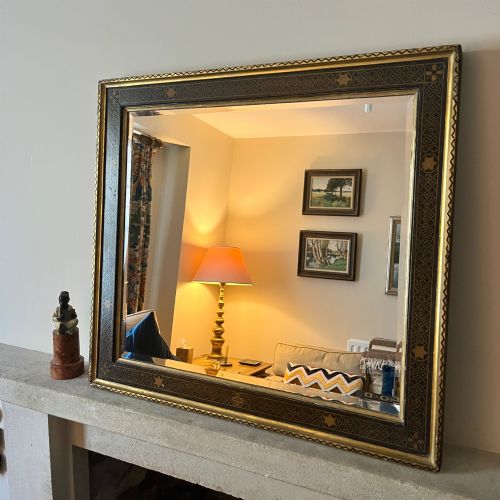
Victorian mirrors often feature heavier, more ornate carvings with rich gilt and painted combinations, reflecting an interest in classical and Rococo revivals. Edwardian examples tend towards lighter frames, including black lacquer and simpler oval shapes.
Both periods embraced decorative painted finishes, but Edwardian designs generally display a restrained approach to ornamentation compared to mid-nineteenth-century pieces.