


Vintage Painted Dressing Desk
A vintage painted dressing desk brings hand-finished colour and period character to a bedroom, combining a practical surface with decorative painted charm.
Vintage Painted Dressing Desk
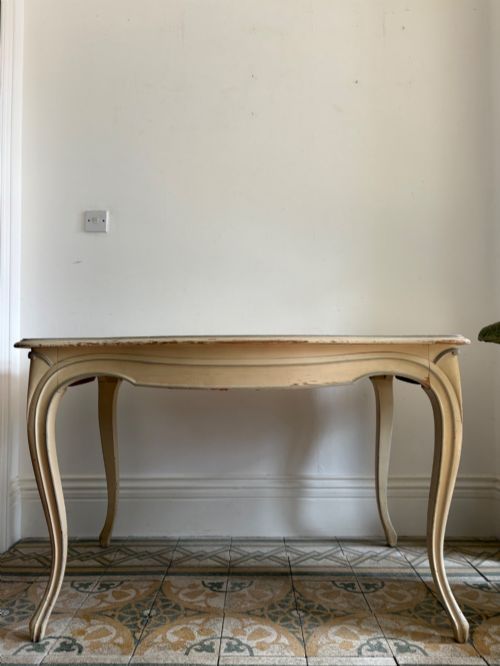
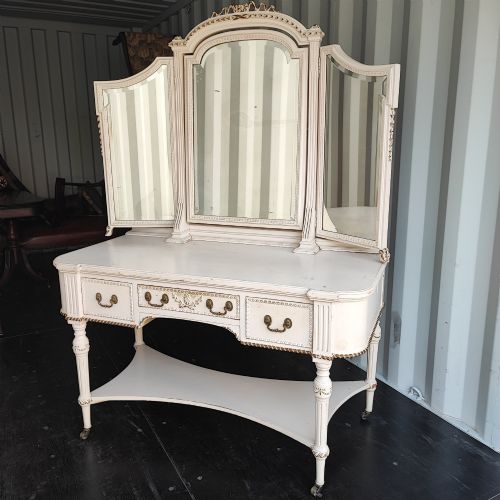
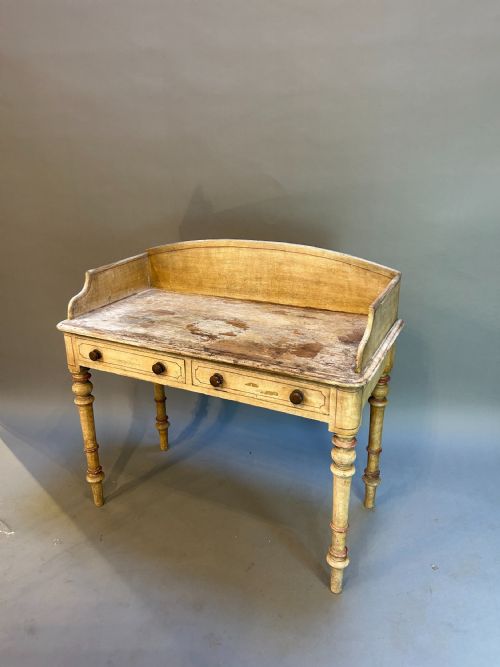
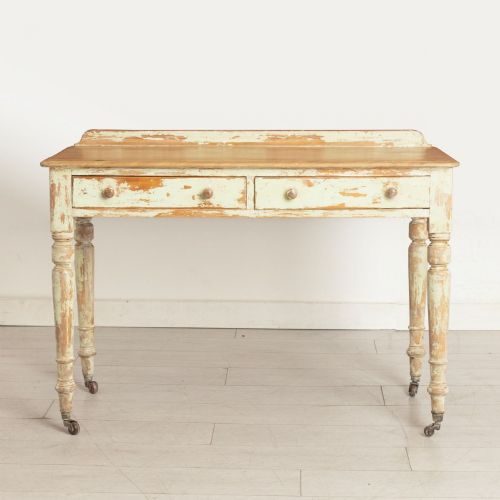
A vintage painted dressing desk is essentially a surface for grooming or writing, finished with decorative paint rather than polished clear wood. The form spans dressing tables, writing desks, and side tables configured for daily use.
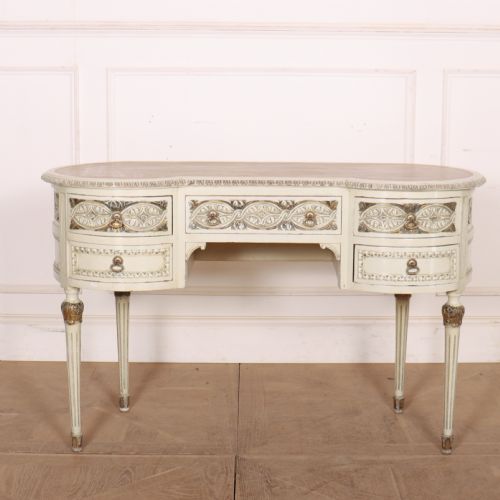
Most examples found here date from the nineteenth century into the early twentieth century, drawing on French Provincial, Regency, and Victorian aesthetics. Makers applied cream, grey, lacquer, and simulated finishes to timber, pine, and satinwood carcasses.
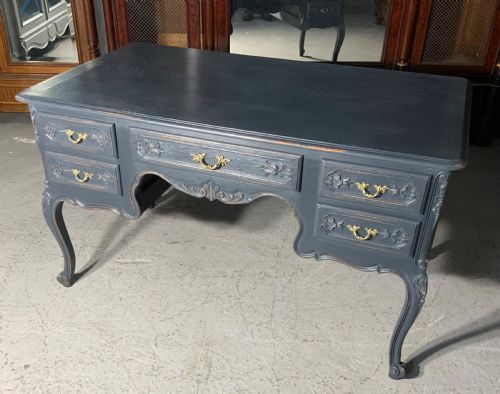
Buyers will encounter kidney-shaped desks, kneehole variants, and console tables fitted with mirrors or drawers. These pieces reflect diverse regional tastes, ranging from English country house styles to continental Louis XVI revivals.
What varies in quality
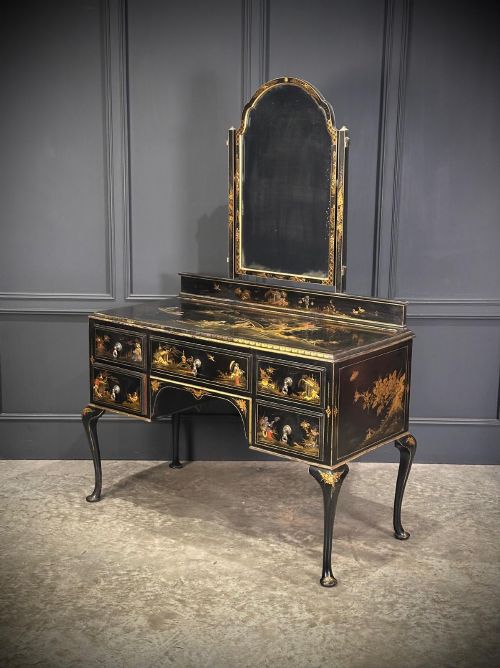
The sophistication of the painted surface distinguishes standard utility items from finer decorative pieces, particularly where original paintwork or Chinoiserie lacquer remains intact. Skill in the brushwork and the harmony of the colour palette dictate the visual presence of the desk.
Underlying cabinetmaking also sets pieces apart, seen in the choice of supportive timbers like satinwood and birch, alongside shaped serpentine fronts and integrated brass hardware. The integrity of the structural frame beneath the decorative finish ensures lasting utility.
Current listings feature pieces made from pine, birch, satinwood, and painted wood, spanning the nineteenth century into the nineteen-thirties.
The Vintage Painted Dressing Desk Glossary
- Chinoiserie
- European decorative style incorporating imaginary Asian motifs and lacquer techniques. It appeared frequently on dressing tables and desks during the early twentieth century.
- Kneehole desk
- A writing table featuring a central recess for the legs, flanked by pedestals of drawers. This configuration allows a comfortable seated position.
- Cabriole leg
- A furniture leg that curves out and then in, resembling an animal's leg. This form frequently appears on French Provincial and revival pieces.
- Satinwood
- A durable timber known for its yellowish sheen and smooth grain. It provided a fine base for decorative painted finishes.
Vintage Painted Dressing Desk: Frequently Asked Questions
How do I style a painted dressing desk?
Position the desk against a plain wall to let the painted finish and decorative details command attention without visual clutter. Add a simple stool or chair that complements the period style of the piece.
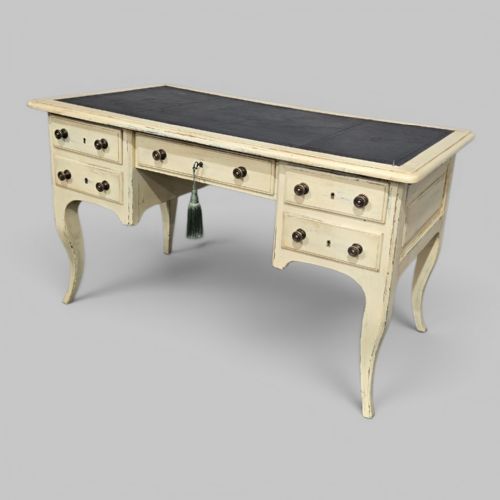
Keep surface accessories minimal to preserve the character of the painted timber or leather inset top. A small table lamp or mirror can complete the arrangement for a bedroom or study.
What is the difference between a dressing table and a writing desk?
Dressing tables typically incorporate mirrors, smaller compartmentalised drawers for cosmetics, and surface arrangements suited to personal grooming. They often lean towards decorative continental styles like French Rococo or Chinoiserie.
Writing desks prioritise flat surface area, frequently with inset leather or suede tops and kneehole clearances. Their proportions accommodate writing materials and ledgers rather than mirrors.
How can I tell the period of a painted desk?
Examine the underlying timber, construction joints, and stylistic cues such as Regency curves or Victorian proportions. Nineteenth-century examples often use solid pine or birch frames hidden beneath later decorative paint. Nineteeth-century examples often use solid pine or birch frames hidden beneath later decorative paint. Later pieces from the nineteen-twenties and thirties introduce Art Deco silhouettes and distinct colour palettes like plummet grey or cream.
Are these desks suitable for daily work?
Many vintage painted desks function effectively as writing tables or modern vanity surfaces. Their sturdy timber frames and ample surface area accommodate laptops and daily paperwork.
Care should be taken to protect painted finishes and leather or suede inserts from moisture and heavy wear. Using blotters or desk pads helps preserve the historical surface during everyday use.