
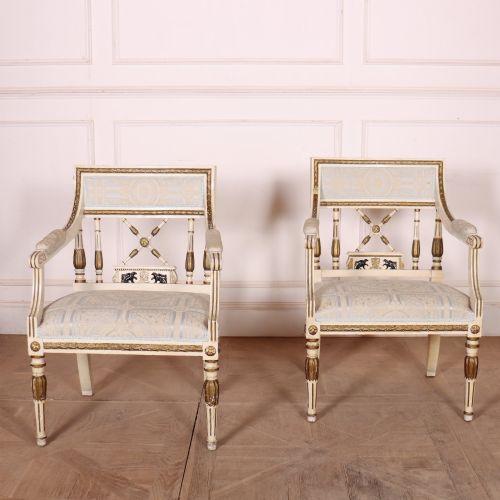
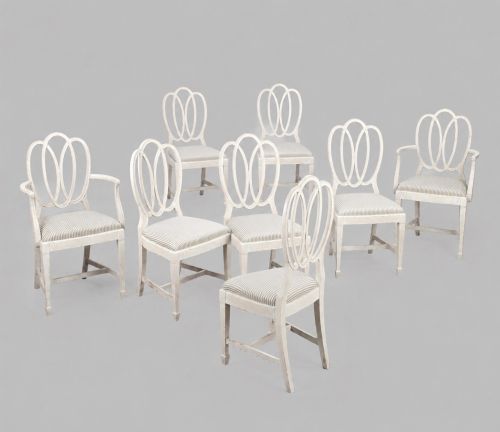
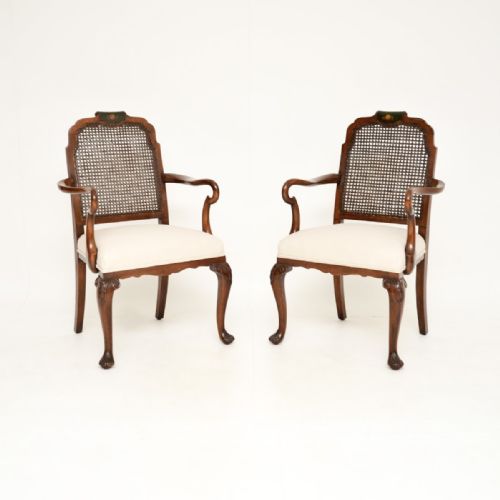


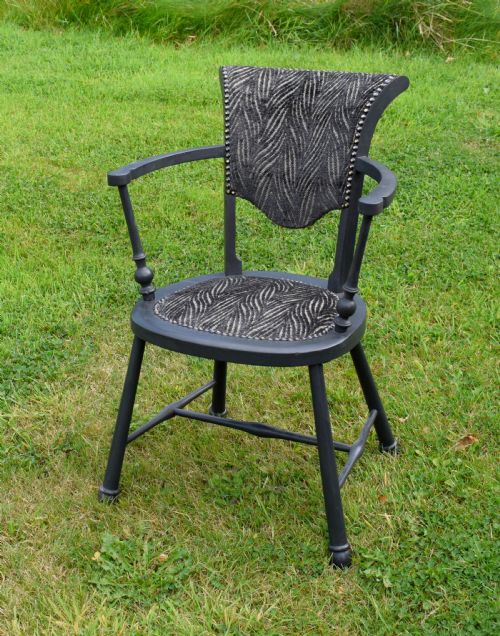


Vintage Painted Carver Chair
These vintage painted carver chair listings offer solid timber seating dressed in paint, lacquer and gilt, bringing period character directly to your dining table or desk.
Vintage Painted Carver Chair
A vintage painted carver chair brings substantial seating with armrests into domestic spaces, drawing on designs from the eighteenth century through to the early twentieth century. These pieces appear in single items, pairs and larger sets, serving both practical dining use and occasional desk placement.
The selections available here span diverse revivals and regional interpretations, including Swedish Empire, Queen Anne, Louis XVI, Hepplewhite and Arts and Crafts aesthetics. Buyers frequently encounter painted wood constructions paired with cane seating, fabric upholstery or carved wooden splats.
Origins stretch across British, French and Scandinavian workshops, reflecting varied historical revivals from Victorian interpretations to 1920s dining sets. Each piece combines structural armchairs or elbow chairs with decorative paintwork or lacquer finishes.
How they were made
Construction relies primarily on hardwoods such as walnut, oak, beech and mahogany, providing the rigid framework necessary for durable armchairs and dining seats. Timber elements are shaped, joined and subsequently finished with decorative paint, lacquer or giltwood layers.
Surface treatments involve meticulous hand painting or lacquering applied over wood, sometimes incorporating distressed effects or elaborate gilding. Upholstered variants integrate fabric or woven cane panels into the backrests and seats alongside carved wooden components.
Listings feature periods spanning the eighteenth century through to the 1920s, employing materials including walnut, oak, beech, cane and giltwood.
What varies in quality
Structural integrity separates utilitarian framing from finer cabinetmaking, visible in the tightness of joints and the retention of original timber strength across the arms and legs. Superior examples maintain balance and stability despite decades of daily use.
The execution of the painted or lacquered surface dictates the visual calibre of the chair, distinguishing refined artistic brushwork from crude later additions. Authenticity of period finish and the preservation of original cane or upholstery contribute substantially to historical and aesthetic value.
The Vintage Painted Carver Chair Glossary
- Carver chair
- An armchair designed with open sides to accommodate the bulk of clothing, typically used at the head of a dining table or as a desk chair. These pieces feature structural armrests integrated into the main frame.
- Splat back
- A vertical wooden strip running up the centre of a chair back, often shaped, pierced or painted for decorative effect. It provides central lumbar support in wooden dining and elbow chairs.
- Giltwood
- Timber that has been coated with a thin layer of gold leaf or gilt paint to simulate solid gold. This material appears on decorative revival armchairs.
- Lacquer
- A hard, durable varnish applied in multiple coats to wooden surfaces, originating from traditional Asian techniques or European imitations. It provides a glossy, protective finish on decorative chairs.
Vintage Painted Carver Chair: Frequently Asked Questions
How do I use a carver chair?
Carver chairs traditionally sit at either end of a dining table to mark positions of importance. Their armrests also make them suitable as writing desk chairs or occasional seating in a hallway.
Because they feature arms, ensure your dining table offers sufficient clearance underneath for the chair to push in properly. Pair them with simpler side chairs from a matching period for a cohesive room layout.
Are painted chairs durable?
Painted and lacquered wooden surfaces withstand regular domestic use provided they receive sensible care. Hardwoods like oak, walnut and beech form sturdy skeletons underneath the decorative finish.
Avoid placing painted furniture in direct sunlight or damp environments to prevent the timber from warping and the paint from flaking. Gentle cleaning with a dry or slightly damp cloth preserves the surface integrity.
Can I mix different styles?
Mixing various revival styles, such as French Louis XVI and Arts and Crafts, creates an eclectic interior scheme. The unifying element across these listings is the painted or lacquered wooden finish.
Matching colours or complementary wood tones help tie disparate chairs together around a shared table. Focus on seat height consistency if you plan to use them for dining.