
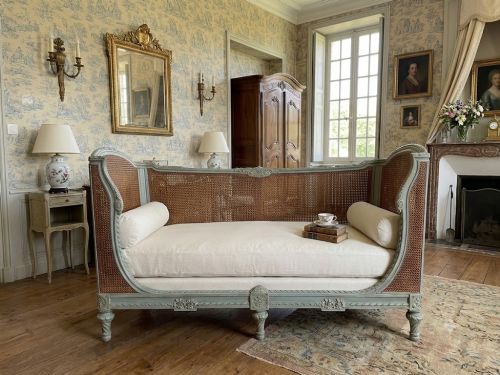
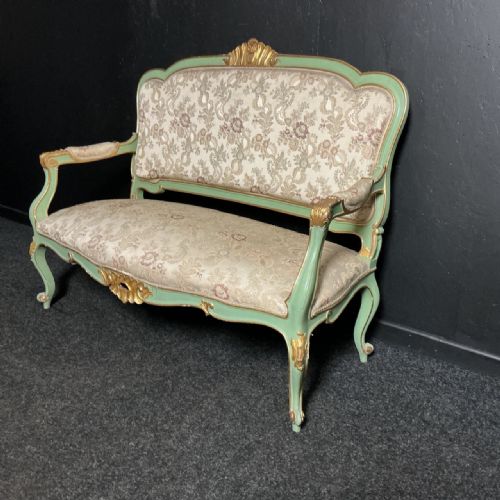


Vintage Painted Canape
These vintage painted canape pieces are French-influenced seating forms designed for grand rooms, offering a blend of carved framework and relaxed upholstery that collectors prize.
Vintage Painted Canape
A vintage painted canape brings classical French seating forms into domestic spaces through long, upholstered frames designed for multiple sitters. These pieces appear in forms such as sofas, settees, daybeds, and love seats, spanning the nineteenth century through the mid-twentieth century.
The aesthetic leans heavily on historical revivals, particularly Louis XV and Louis XVI styles, alongside Edwardian Neoclassical interpretations. Buyers encountering this selection will find painted wood frames paired with cane work, fabric, or linen upholstery.
Materials and Construction
Makers built these frames primarily from solid wood, frequently utilising beech for its strength in handling intricate hand carvings. Wood surfaces then received coats of paint, sometimes accented with gilt details to highlight the carved ornament.
Structural elements incorporated woven cane panels for backs and sides, providing a lighter visual weight alongside fully upholstered versions covered in fabric or linen. Traditional joinery secures the long rails and cabriole or tapered legs characteristic of these settees.
Early makers sometimes hid chalk assembly marks beneath the upholstery, leaving tiny secret notes for fellow craftsmen inside the frame.
Markers of Quality
The distinction between ordinary and superior pieces rests in the crispness of the carved wood details and the integrity of the painted finish. Hand-carved motifs that retain depth and precision separate finer examples from softer, less detailed production.
Originality of surface finish and the tightness of cane weaving or upholstery work dictate the overall grade of a canape. Pieces retaining their early paint layers without heavy modern intervention command greater attention from discerning buyers.
The Vintage Painted Canape Glossary
- Canapé
- A traditional French long sofa or settee designed for more than one person, typically featuring an exposed wooden frame.
- Corbeille
- A basket-shaped furniture design featuring a curved, enveloping back that wraps around the sitter.
- Bergère
- An enclosed upholstered armchair or settee with wooden frames and an upholstered back and sides.
- Louis XVI Style
- A neoclassical design vocabulary marked by straight tapered legs, geometric symmetry, and restrained carving.
- Louis XV Style
- A rococo revival aesthetic defined by asymmetric curves, cabriole legs, and elaborate floral motifs.
Vintage Painted Canape: Frequently Asked Questions
Where did people put a canape?
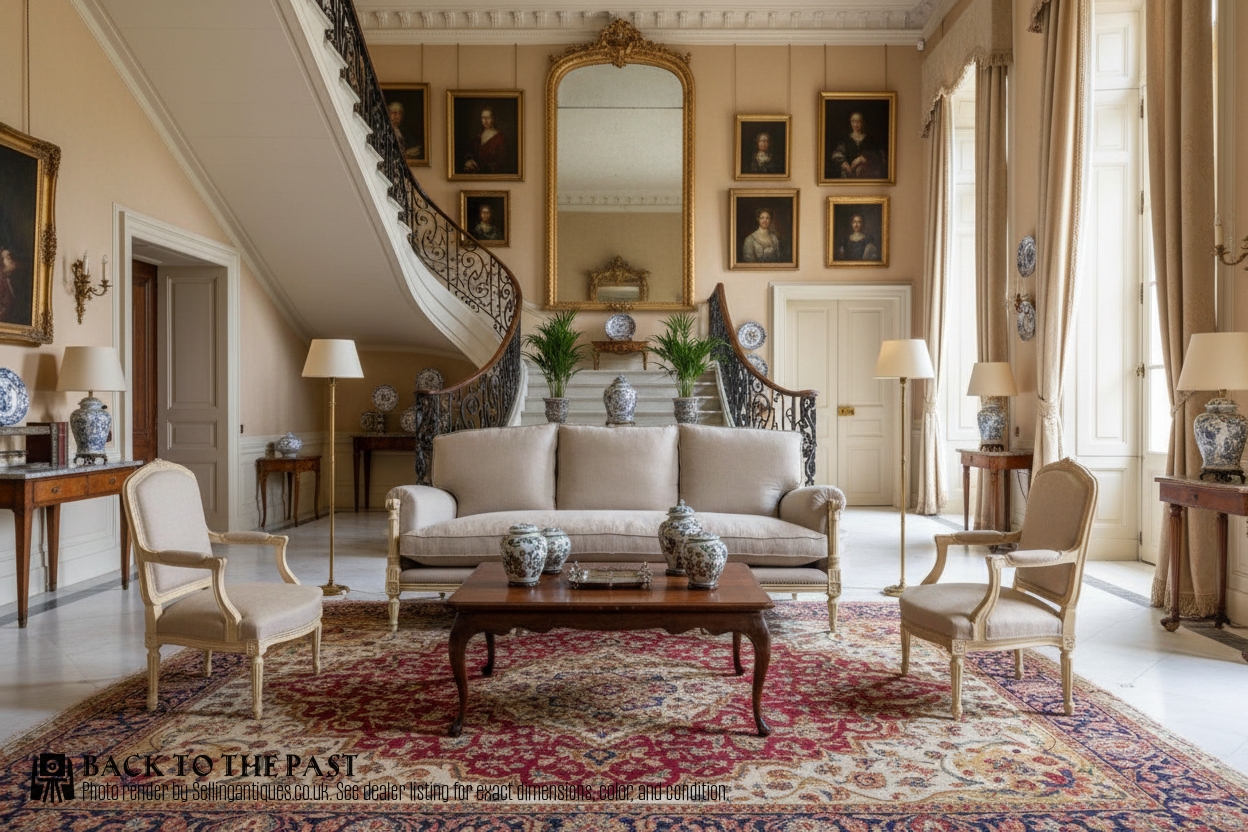
Historically, these long settees occupied formal salons, withdrawing rooms, and grand bedchambers where residents received guests or rested during the day. Their decorative backs made them suitable for placement against walls or sometimes positioned within large rooms.
Today, they function well in living rooms, large hallways, or bedrooms as statement seating. Their elongated proportions allow them to serve as daybeds or conversational sofas.
How do I spot Louis XV versus Louis XVI styles?
Louis XV pieces exhibit curving lines, cabriole legs, and asymmetrical rococo carving that feels organic and flowing. The overall impression is soft and sinuous.
Louis XVI pieces shift toward straight lines, geometric symmetry, and tapered fluted legs reflecting neoclassical restraint. The frames look architectural and structured by comparison.
Are painted canapes delicate to sit on?
Most antique settees possess sturdy hardwood frames made from beech or other dense timbers designed to support regular weight. The structural joinery remains robust despite the elegant appearance of the carved elements.
Care is required mainly around woven cane panels and older upholstery fabrics. Sitting with reasonable care preserves both the antique framework and the historic webbing.
Can I reupholster a vintage canape?
Upholstery on these pieces can be updated to suit modern interiors while respecting the underlying antique frame. Traditional webbing and stuffing techniques maintain the correct profile for the sofa.
Preserving the original painted wooden frame is standard practice during any restoration work. The paint layer provides the primary visual character and historical context of the piece.