





Vintage Oversized Persian Rug
A vintage oversized Persian rug brings grand scale and rich colour to a room, offering room-filling presence through traditional hand-knotted artistry.
Vintage Oversized Persian Rug
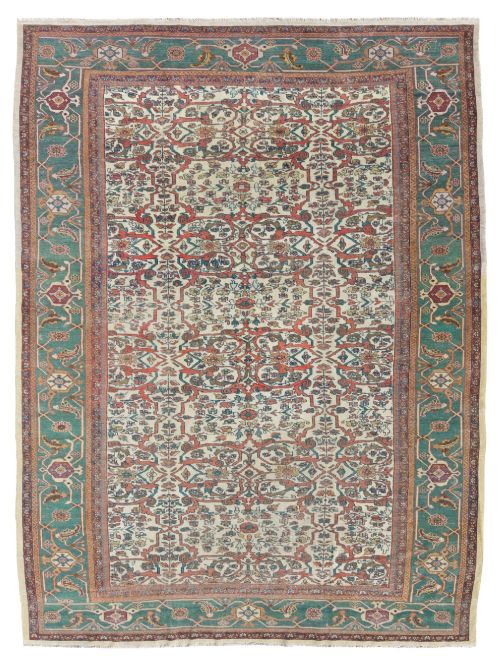
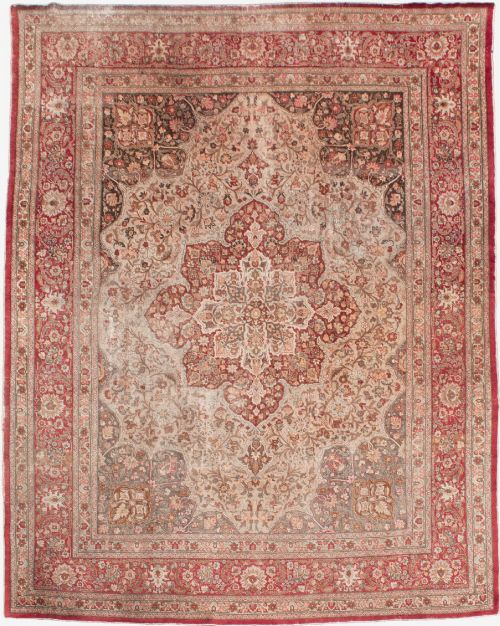
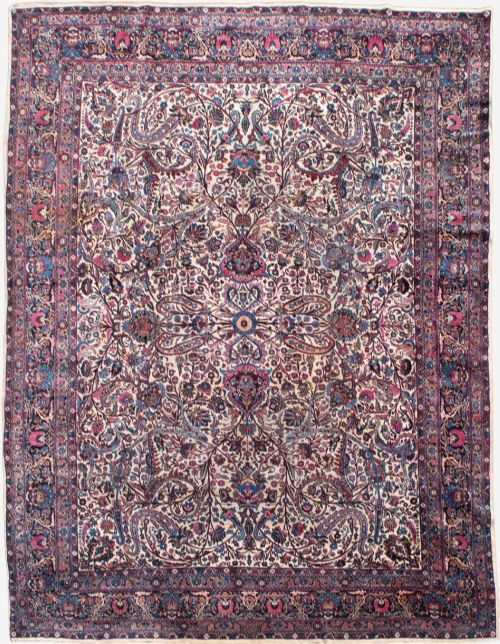
When searching for a vintage oversized Persian rug, collectors examine large-scale room carpets originating from notable weaving centres such as Heriz, Kirman, Sultanabad, Mahal, and Tabriz. These substantial carpets date primarily from the late nineteenth century through to the early twentieth century, spanning periods from eighteen seventy to nineteen twenty.
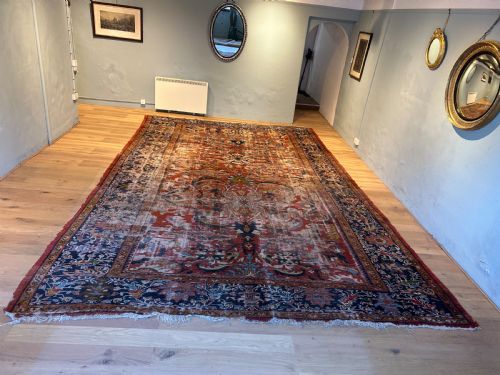
The pieces available on this page take the form of extensive area rugs and expansive carpets designed for country houses and large reception spaces. Traditional Persian styles dominate the selection, showcasing regional weaving patterns executed in grand dimensions that often exceed four metres in length.
Assessing quality and craftsmanship
Knot density and fineness of execution separate standard room carpets from exceptional weaving masterpieces produced by renowned workshops. The precision of the drawing and the complexity of the medallion or all-over floral layout indicate the skill level of the original weavers.
The condition of the wool pile and the integrity of the cotton foundation determine the structural longevity of each carpet. Original dyes and evenly balanced proportions elevate certain specimens above standard commercial production of the period.
Listings span multiple decades from eighteen seventy to nineteen twenty, featuring wool and cotton construction across traditional Persian regional styles.
Ziegler and Co·Haji Jalili
The Vintage Oversized Persian Rug Glossary
- Heriz
- A style of Persian carpet originating from the north-west region, known for bold geometric medallions and robust structural wool.
- Sultanabad
- A nineteenth-century commercial weaving classification from Persia noted for large-scale, open floral patterns designed for Western export markets.
- Kirman
- A central Persian weaving centre famous for finely knotted carpets featuring intricate floral vases, gardens, and pictorial elements.
- Warp
- The vertical threads stretched tightly on the loom that form the foundational skeleton of the rug.
- Weft
- The horizontal threads passed through the warps after each row of knots to secure the pile in place.
Vintage Oversized Persian Rug: Frequently Asked Questions
How do I clean a large antique Persian carpet?
Professional specialist washing remains essential for oversized wool and cotton rugs to protect the natural dyes and historical fibres.
Regular gentle vacuuming without a beater bar removes surface dust safely between professional cleans.
Where should I place an oversized Persian rug?
These grand dimensions suit expansive reception rooms, dining halls, and drawing rooms where furniture can sit comfortably on the field.
Allowing a uniform border of exposed flooring around the edges highlights the scale of the carpet.
How do I date a nineteenth-century Persian rug?
Examination of the knotting structure, palette, and regional design traits provides clues to the period of manufacture.
Comparing structural characteristics against documented pieces from centres like Tabriz or Heriz narrows down the decade.
Are distressed Persian rugs still durable?
Area rugs showing age-related wear often retain structural integrity in the foundation despite a lower pile height.
Proper underlays help cushion the cotton warp and weft against hard flooring to prolong active use.