


Vintage Oval Cocktail Table
These vintage oval cocktail table pieces offer practical elegance, bringing classic timbers and period forms straight into the modern living room.
Vintage Oval Cocktail Table
A vintage oval cocktail table combines refined domestic utility with traditional furniture styles spanning the Victorian era through to the interwar period. Buyers searching this phrase typically encounter low coffee tables, serving trays, and occasional display furniture.
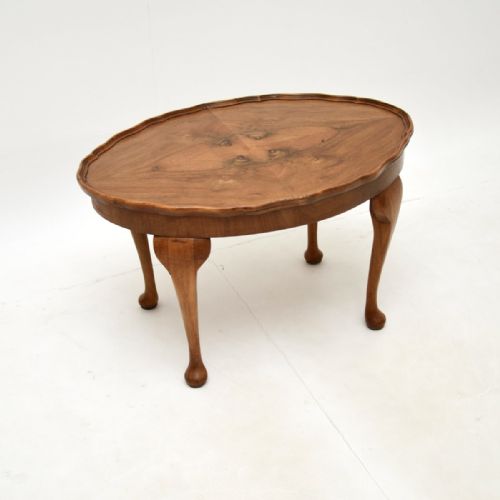
The selection here draws heavily from the nineteenth century, Victorian periods, and early twentieth-century revivals like Queen Anne and Sheraton styles. Walnut, burr walnut, and mahogany dominate the forms, often shaped with raised pie crust edges or glass tops.
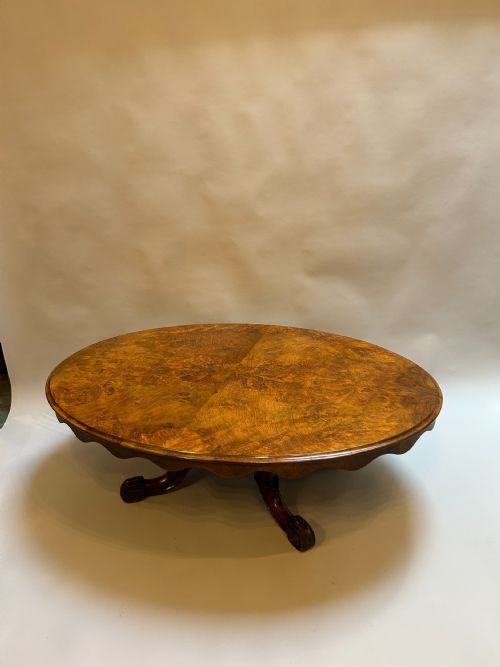
Many pieces display traditional craftsmanship adapted over time, such as Victorian burr walnut tops mounted onto modern cast iron tripod bases. Other variations include tray tables and drinks cabinets originating from colonial and continental workshops.
How they were made
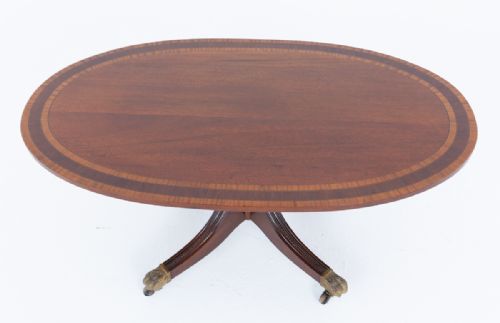
Decorative details rely on traditional joinery, inlaid satinwood stringing, and intricate brass or silver-plated metalwork. Edges frequently incorporate raised carved mouldings, such as pie crust borders shaped by hand.
Listings feature woods including mahogany, satinwood, macassar, and burr walnut across Victorian and nineteen-thirties periods.
What varies in quality
The standard of timber selection largely defines the upper tier of these tables, particularly the depth of figure in burr walnut and flame mahogany veneers. Richness of grain and balanced book-matching elevate an ordinary piece into something striking.
Subtlety of proportion and the crispness of carved details, such as pie crust edges or inlaid Sheraton motifs, separate standard production from finer cabinet work. Adaptation over the years also influences character, particularly where nineteenth-century tops meet later supports.
The Vintage Oval Cocktail Table Glossary
- Burr walnut
- A highly prized wood veneer taken from the warted excrescences of walnut trees. It yields swirling, organic patterns that decorators favour for table tops.
- Pie crust edge
- A decorative raised rim carved into the perimeter of a tabletop with undulating curves. This technique was popular in eighteenth-century cabinet making and later revivals.
- Macassar
- A dense tropical wood with dark brown and black streaks used for decorative veneer during the art deco period. It provides a striking contrast to lighter timbers.
Vintage Oval Cocktail Table: Frequently Asked Questions
What periods do these tables come from?
The pieces span the nineteenth century, the Victorian era, and the interwar period up to the nineteen-thirties. Revivals of earlier Georgian and Regency styles also appear frequently.
Craftsmen during these eras utilised traditional timbers like mahogany and burr walnut, creating forms that ranged from formal serving trays to low coffee tables.
How are tray tables used today?
Tray tables function effectively as versatile coffee tables or low serving surfaces in contemporary living spaces. Their portable nature makes them practical for serving drinks or displaying decorative objects.
Many designs feature removable trays or raised edges that prevent items from sliding off during use.
What is burr walnut?
Burr walnut is a decorative wood veneer harvested from the deformed growth or knot of a walnut tree. The resulting grain is exceptionally ornate and swirling.
Cabinet makers used this timber on prominent surfaces like table tops to create visual texture and luxury.
Are these tables solid wood?
Construction methods vary, but many examples utilise fine hardwood veneers applied over solid secondary timbers. This technique preserved expensive woods while providing structural stability.
Mahogany and walnut solids often formed the frames, while figured veneers covered the primary display surfaces.