
Inlaid Tapered Leg Table
An inlaid tapered leg table brings refined geometry and delicate woodwork into a room, offering both a useful surface and decorative elegance.
Inlaid Tapered Leg Table
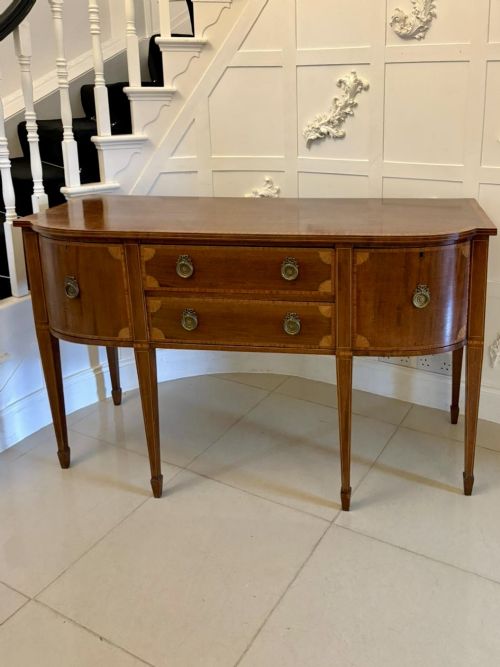
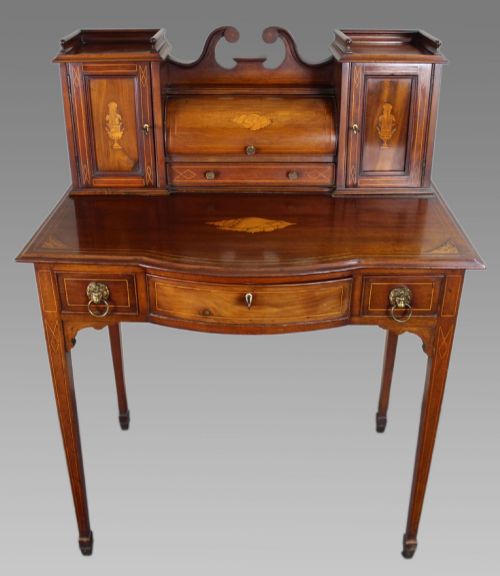
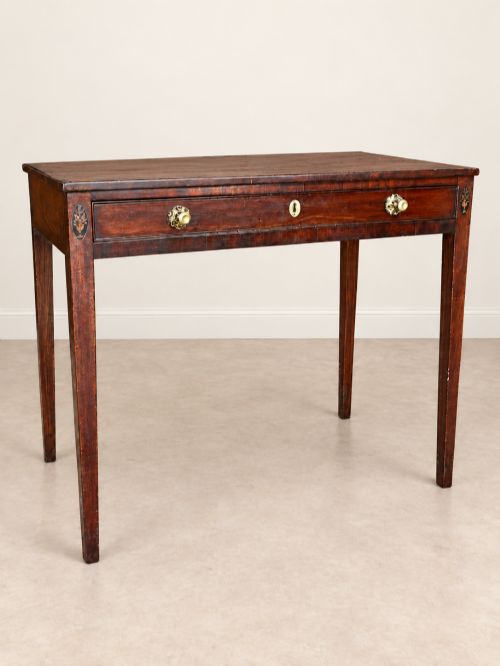
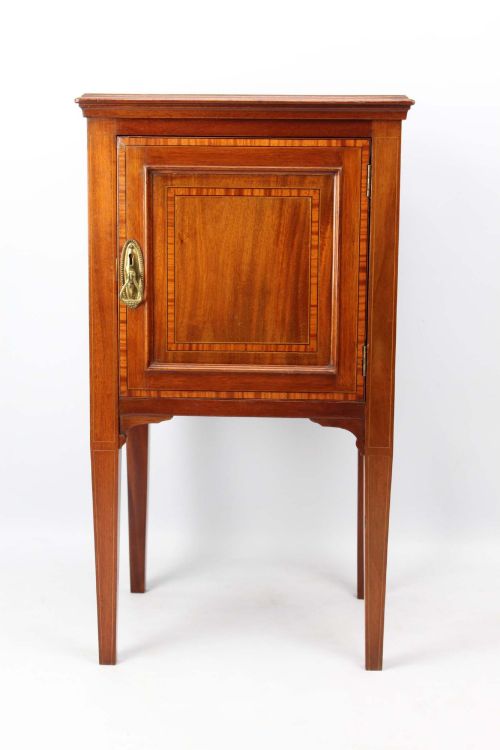
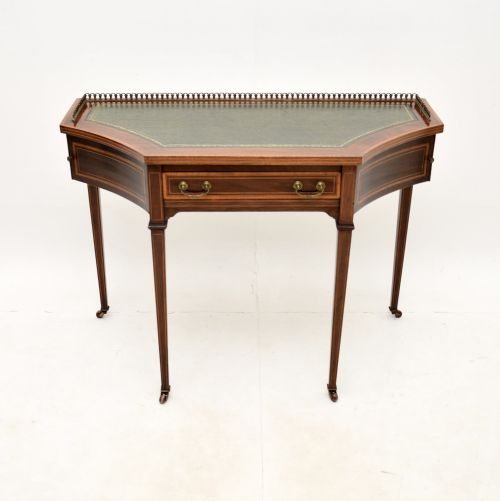
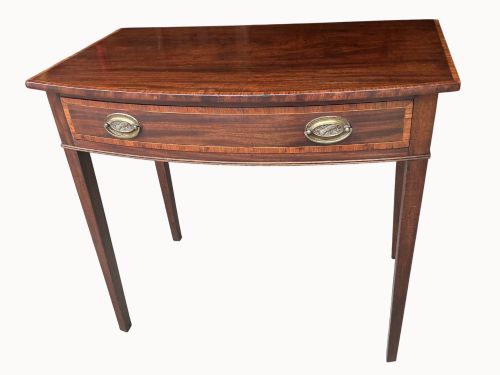
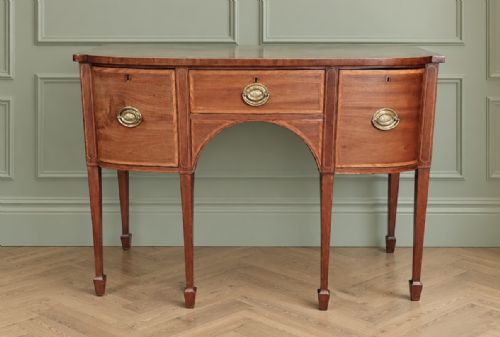
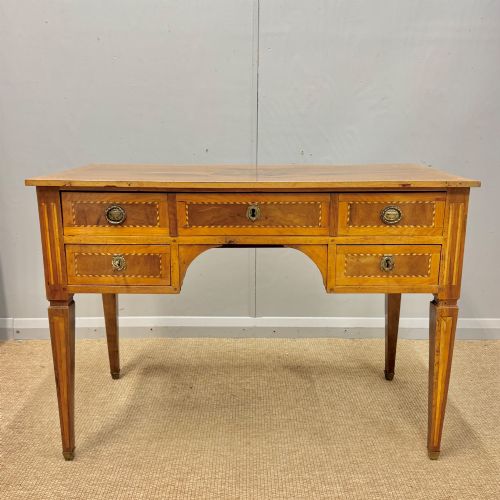
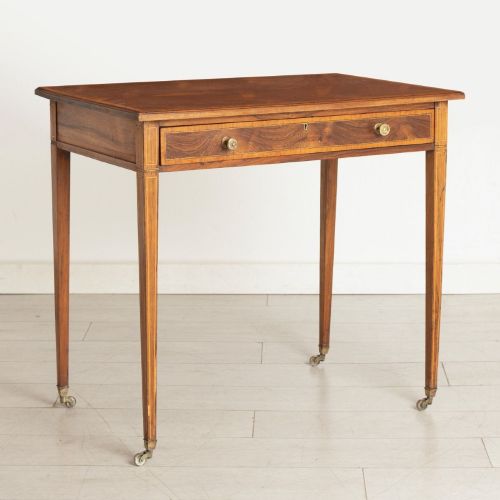
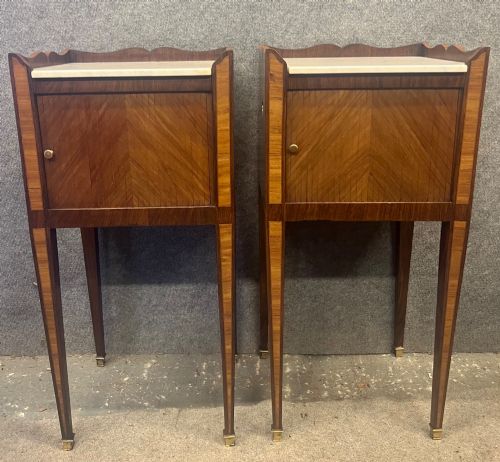
When you search for an inlaid tapered leg table, you encounter diverse forms ranging from side tables and card tables to writing desks and sideboards. These pieces span the eighteenth century, the Regency era, and the Edwardian period, reflecting shifting domestic needs over generations.
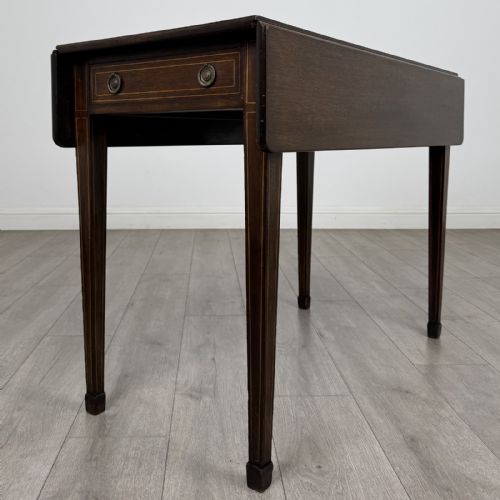
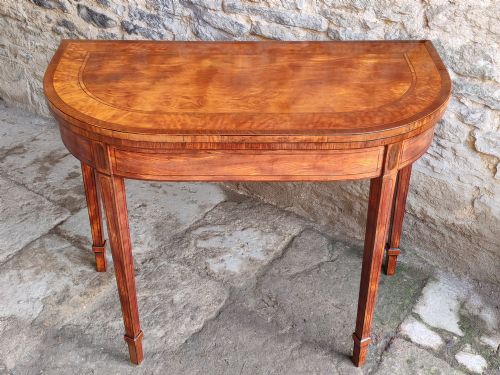
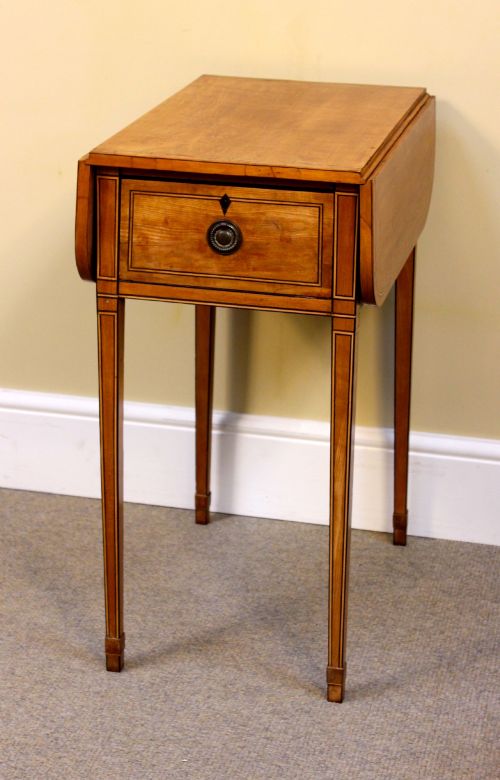
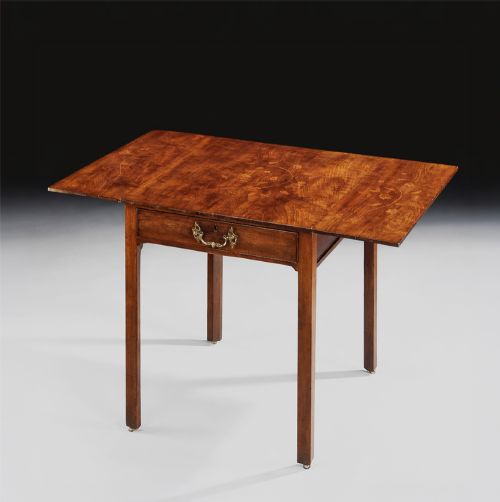
The most frequent examples on this page are Edwardian satinwood crossbanded creations and Georgian mahogany card or Pembroke tables. They combine slender straight supports with contrasting wood details to lighten the visual weight of heavy timbers.
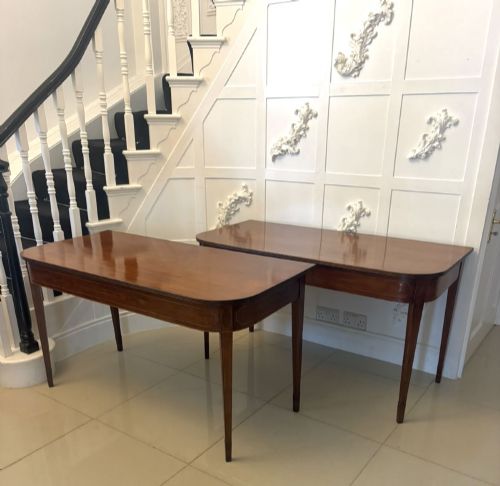
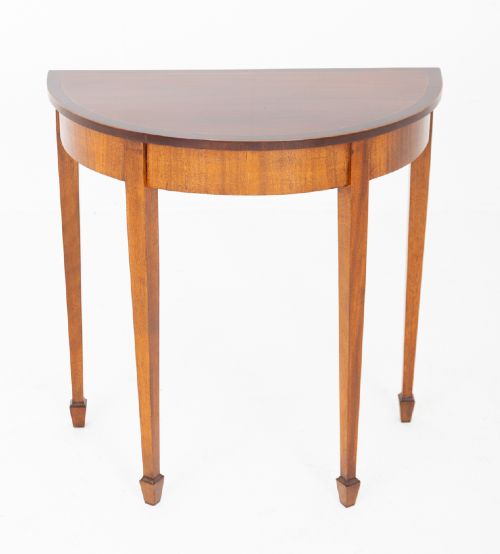
Makers utilised these slender supports across various tabletop shapes, including rectangular, demi-lune, and octagonal formats. Each configuration serves a specific domestic function, from serving tea to displaying ornaments or writing correspondence.
Construction and materials
Cabinet makers constructed these tables primarily in mahogany, walnut, or rosewood, often applying veneers of satinwood or harewood to the primary surfaces. They reinforced the framework with internal corner blocks while keeping the outer silhouette light and balanced on four narrow uprights.
Decoration relied on contrasting timbers such as boxwood and ebony, inlaid into shallow channels to form geometric borders, stringing, or elaborate marquetry motifs. This linear inlay directs the eye down toward the characteristic narrow supports.
Makers tapered the lower section of each support on two or four sides, producing a slender foot that required precise woodworking to maintain structural integrity. Crossbanding along the edge of tabletops framed the central timber figure.
Some Edwardian card tables hide secret storage wells beneath their fold-over leaves for storing midnight decks.
Distinctions in craftsmanship
The standard of execution in the inlay work separates ordinary pieces from superior examples. Crisp, tight joints around stringing lines and delicate floral motifs demonstrate a high level of joinery skill.
The choice of timber figure on the top surface determines the visual impact of the piece. Well-matched mahogany or satinwood grain exhibits depth and chatoyancy that plain or mismatched timber lacks.
Proportion dictates the grace of the object, where the taper of the lower support balances the mass of the top. A successful design maintains structural stability without thickening the slender ground-touching members.
Bruce and Burns of Edinburgh
The Inlaid Tapered Leg Table Glossary
- Crossbanding
- A border strip of veneer laid around the perimeter of a tabletop with the grain running perpendicular to the central panel. This technique frames the primary wood figure.
- Stringing
- Thin lines of contrasting timber inlaid into channels cut into the surface of the wood. It creates delicate linear borders around drawers and tabletops.
- Demi-lune
- Half-moon shape used for console and card tables designed to stand flat against a wall. These pieces often feature folding tops supported by a swinging leg.
- Pembroke table
- A small rectangular table with hinged drop leaves on either side and a drawer beneath the frieze. It developed during the eighteenth century for versatile use in parlours.
- Marquetry
- Elaborate patterns formed by fitting together pieces of veneer into a paper-thin mosaic. Artisans used diverse woods and tinted foils to picture floral or architectural scenes.
Inlaid Tapered Leg Table: Frequently Asked Questions
What rooms suit an inlaid tapered leg table?
These pieces fit easily into sitting rooms, hallways, and studies where floor space is limited. Their slender supports prevent them from dominating a smaller interior.
Card tables and Pembroke versions offer expandable surfaces that adapt to different social occasions throughout the day.
How do I identify a Sheraton style piece?
Sheraton style furniture relies on classical geometry, straight lines, and contrasting veneers like satinwood and boxwood. The decoration is restrained and architectural.
Supports are typically square-sectioned and taper toward the floor, often accented with vertical stringing.
What is the difference between Edwardian and Georgian tables?
Georgian examples usually employ solid timbers like mahogany with hand-cut joinery and minimal, precise stringing. They date from the eighteenth or early nineteenth century.
Edwardian versions often revive eighteenth-century motifs with machine-sawn veneers, satinwood crossbanding, and lighter structural frames dating around nineteen hundred.
How were card tables used originally?
Card tables stood against a parlour wall with their leaves folded shut until guests arrived for evening entertainment. The hinged top unfolded to reveal a baize-lined playing surface.
A pivoting rear leg swung out to support the extended leaf during play.