






Vintage Outdoor Urn Pair
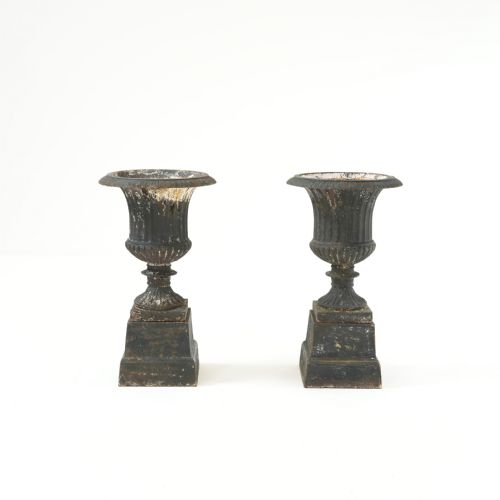
A vintage outdoor urn pair brings classic garden architecture to a terrace, offering deep planting bowls shaped in cast iron, terracotta, and stone.
Vintage Outdoor Urn Pair
A vintage outdoor urn pair consists of matching garden vessels designed to flank steps, pathways, or formal lawn edges. Buyers searching this phrase look for heavy, durable containers that can withstand weather while holding seasonal plants or small trees.
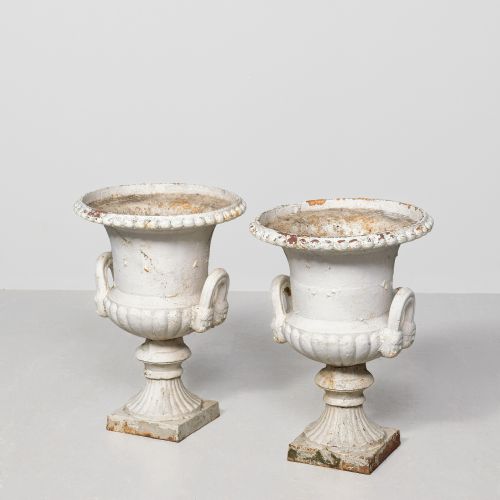
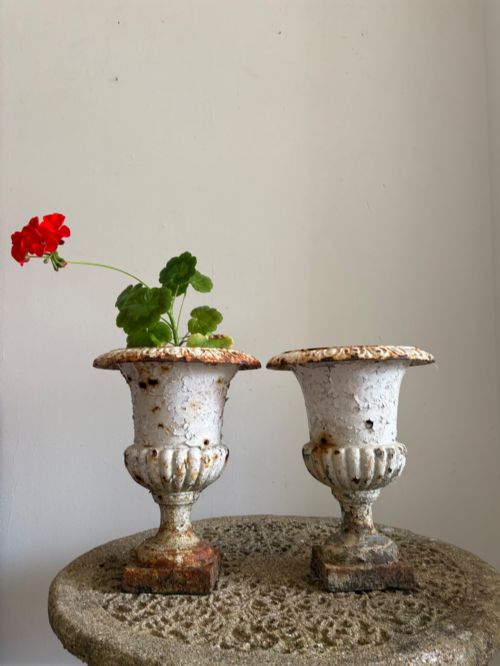
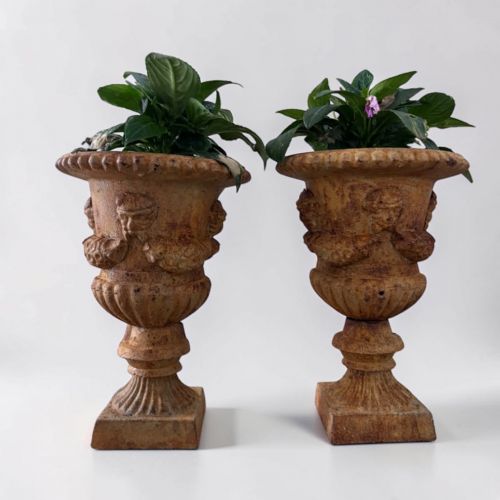
The most common version on this page is the cast iron campana urn, often raised on a matching plinth or stand. These pieces date from the nineteenth century through the mid twentieth century, reflecting classical revival tastes in garden design.
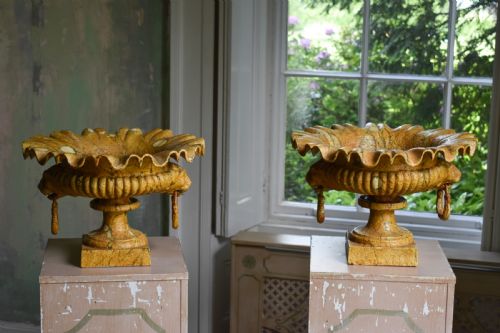
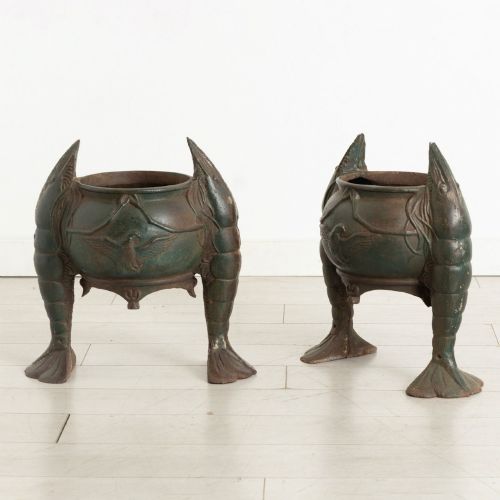
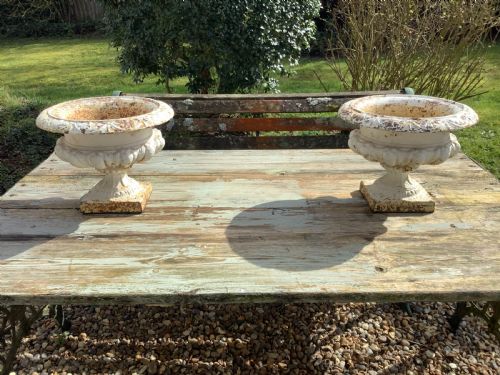
Other forms include shallow tazza shapes, novelty shrimp designs, and terracotta pots with scroll details. They range from compact table urns to large terrace ornaments created in Britain, France, and Italy.
How they were made
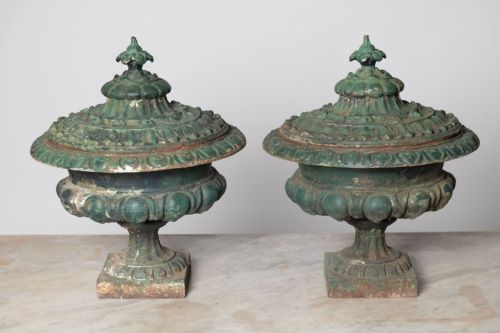
Foundries and workshops cast heavy metals in sand moulds, utilising durable cast iron for robust campana and tazza forms, alongside wrought iron strapwork. These metal pieces frequently received coats of paint or developed rich patinas from exposure to the elements.
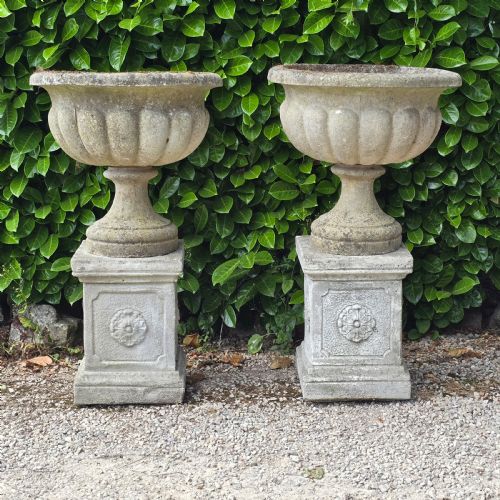
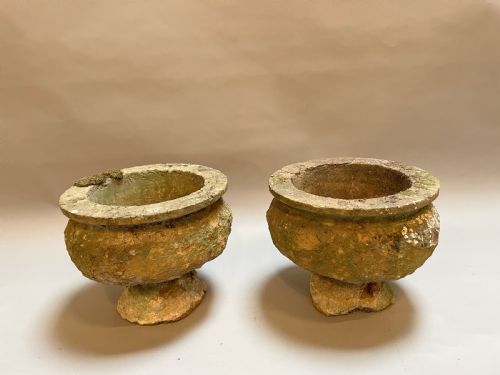
Potters and masons shaped natural materials by hand or in moulds, utilising terracotta, soft stone, limestone, reconstituted stone, cast stone, and carved marble. These porous and dense materials give garden planters distinct earthy textures and heavy, stable structures.
Listings feature nineteen-century and mid-century pieces cast in iron, terracotta, stone, and marble.
What varies in quality
The sophistication of the casting and carving sets the standard for these garden ornaments. Crisp relief details on classical foliage, sharply defined rims, and well proportioned stems distinguish finer studio or foundry work from simpler utilitarian pots.
Material integrity and surface history define the character of each pair. Original paint surfaces, complete matching plinths, and intact structural elements elevate the presence of the pieces in a garden setting.
Coalbrookdale
The Vintage Outdoor Urn Pair Glossary
- Campana
- A bell shaped garden urn with an everted rim and a tapering body. This classical silhouette forms the basis of many nineteenth century metal and terracotta planters.
- Tazza
- A shallow bowl shaped vessel raised on a stem and foot. These open forms provide wide planting beds for trailing summer flowers.
- Plinth
- A heavy rectangular or square base block that elevates an urn. Matching plinths lift garden planters to improve sightlines along terrace walls.
- Strapwork
- Decorative bands of flat metal crossing in ornamental patterns. Wrought iron strapwork creates open, architectural plant holders.
- Terracotta
- Fired unglazed clay producing a warm reddish brown earthenware. Italian and British potteries utilised this porous material for traditional garden pots.
Vintage Outdoor Urn Pair: Frequently Asked Questions
How do I care for cast iron urns?
Cast iron garden vessels require minimal maintenance beyond checking drainage holes to prevent standing water. Applying protective metal paint periodically helps preserve the surface against winter frost and rain.
Positioning the planters on stable stone pads or plinths prevents direct contact with damp soil. This simple step stops moisture absorption from the ground and keeps the metal bases intact.
Can terracotta urns stay outside in winter?
Terracotta garden pots can withstand cold weather if they are adequately fired and kept clear of trapped soil moisture. Elevating the planters on pot feet allows winter rain to drain freely away from the base.
Severe frost can crack porous clay if water freezes inside the vessel walls. Moving smaller terracotta urns into a shed or greenhouse during freezing spells ensures long term survival.
How do I date a metal garden urn?
Nineteenth century metal urns typically feature thick, heavy casting sand textures and multi layered paint histories accumulated over decades. Examining the assembly bolts, seam lines, and base plates reveals manufacturing methods from specific eras.
Victorian and Edwardian foundry pieces often display classical revival motifs that shifted toward simpler modernist lines by the mid twentieth century. Comparing ornament styles helps narrow down the decade of production.
What plants work best in campana urns?
Trailing ivy, cascading flowers, and compact boxwood balls suit the flared shape and elevated height of campana urns. The deep bowl accommodates root systems while the wide rim frames spilling foliage.
Seasonal displays transition easily from spring bulbs to summer annuals and autumn cyclamen. The substantial weight of the urn provides necessary balance for top-heavy shrubs.