



Vintage Oushak Carpet
A vintage oushak carpet brings soft, muted colour and large-scale geometric designs into a room, grounding the space with centuries of Anatolian weaving tradition.

Vintage Oushak Carpet
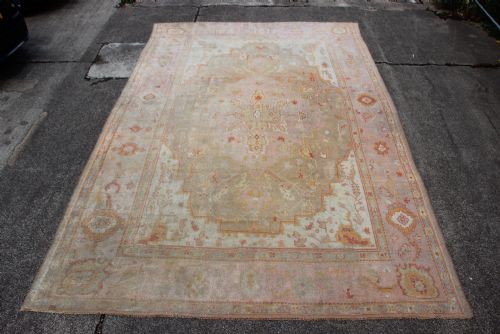
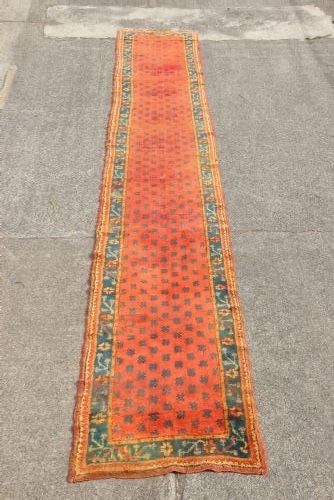
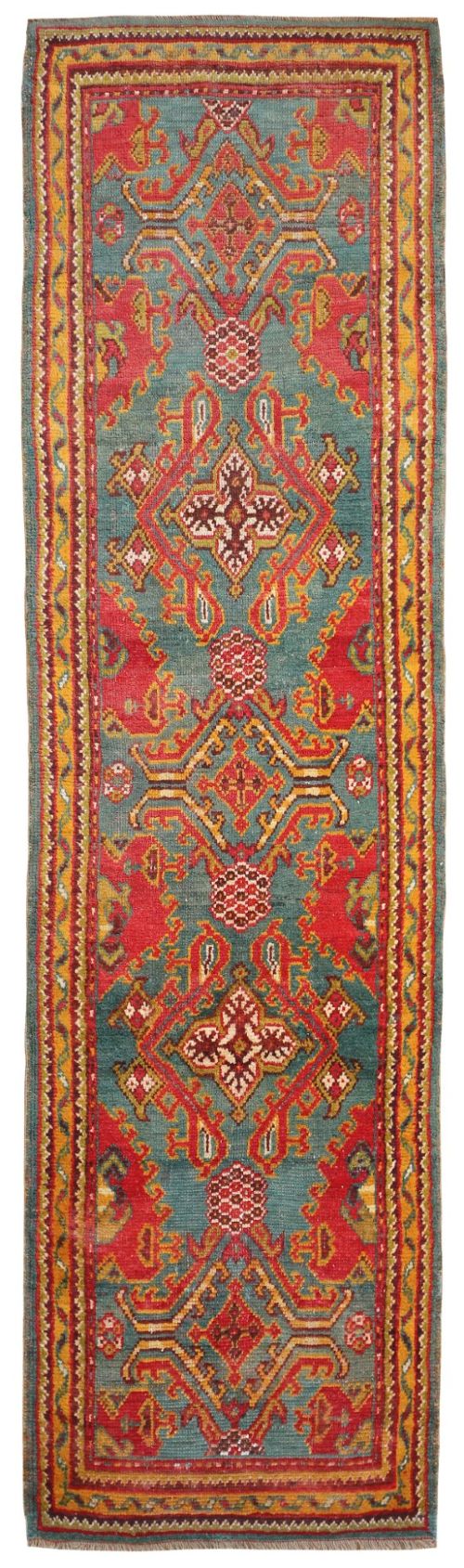
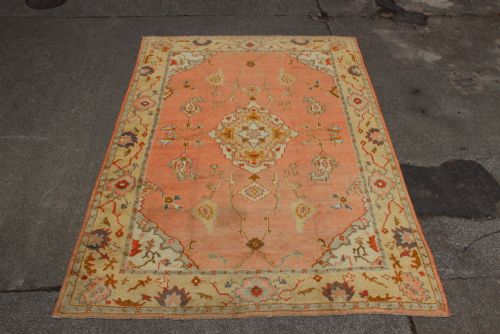
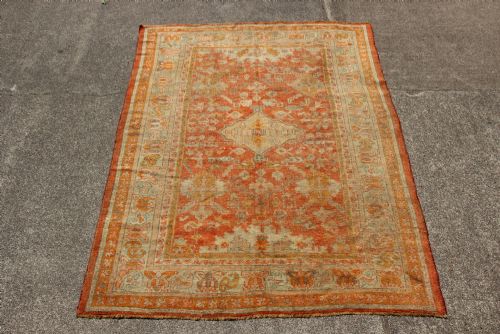
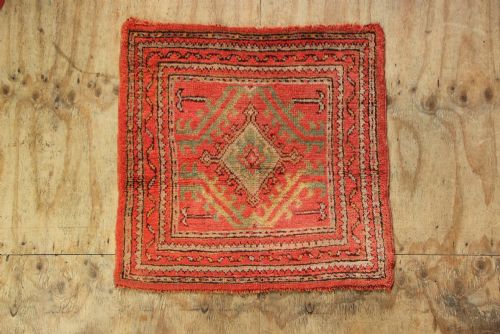
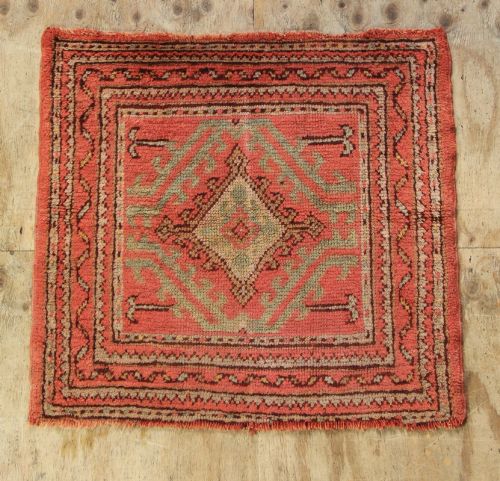
A vintage oushak carpet represents a tradition of floor coverings originating from western Turkey, specifically the town of Ushak, which has produced textiles since the Ottoman era. These pieces span from the late nineteenth century into the early twentieth century, encompassing various formats from large square and rectangular carpets to long, narrow runners.
The aesthetic is distinct from other Persian or Caucasian weaving traditions due to a looser knotting structure and a preference for larger floral motifs and medallion patterns. These textiles often exhibit a softened palette, influenced by age and light exposure on the wool fibres over the decades.
Materials and Construction
Weavers constructed these carpets predominantly using natural wool for the pile and foundation yarns, occasionally incorporating cotton or specialised angora wool to achieve different textures. Hand-knotting techniques secured the pile to the warp and weft threads, creating a supple handle that distinguishes them from stiffer commercial floor coverings.
Dyers utilised natural materials to colour the wool, yielding characteristic pale blues, beiges, and soft greens that define the visual appeal of the region. The resulting pile interacts with light differently depending on the direction of the nap and the specific characteristics of the wool used in each individual loom.
Vintage Oushak Carpet Retail Price Guide 2026
Typical asking prices for vintage oushak carpet among the pieces listed under this phrase on Sellingantiques today, from the lower quarter to the upper quarter. They describe what is for sale here now, not the wider market.
Some runners measure over five metres in length, designed originally for long Ottoman corridors rather than standard modern hallways.
Factors of Quality
Quality in these textiles depends heavily upon the fineness of the knotting and the balance of the composition across the field and border. Finer examples display greater precision in the execution of intricate floral or geometric motifs, whereas simpler village pieces show a more rustic interpretation of traditional designs.
The integrity of the foundation and the evenness of the wear across the surface dictate the structural merit of each piece. Variations in the wool quality, from standard highland wool to softer angora blends, also influence how the carpet holds its texture and responds to foot traffic over time.
The Vintage Oushak Carpet Glossary
- Oushak
- A traditional style of carpet originating from the town of Ushak in western Turkey, known for softer palettes and large-scale designs. These textiles often feature generous floral motifs and distinctive medallion layouts.
- Anatolian
- Pertaining to the Asian region of Turkey where these traditional rugs and carpets were hand-knotted. This geographic term encompasses various local weaving traditions.
- Ghiordes
- A historic Turkish weaving centre and a term applied to carpets sharing specific knotting techniques and design characteristics. It often appears alongside Oushak to denote regional stylistic influences.
- Kilim
- A flat-woven textile produced without a pile, distinct from knotted carpets. These pieces rely on interlocking warp and weft threads to form geometric patterns.
- Angora wool
- A finer fibre derived from regional goats, occasionally utilised in select carpets to impart a softer handle and distinct sheen to the surface pile.
Vintage Oushak Carpet: Frequently Asked Questions
How do I style a vintage oushak carpet?
These carpets work well in both traditional interiors and modern minimalist spaces, where their muted tones soften hard architectural lines. Their restrained colour palettes allow them to anchor large furniture arrangements without overwhelming the room.
Because they come in various dimensions, from small squares to expansive room-sized formats, you can place them in living rooms, bedrooms, or extended hallways.
What is the difference between an oushak and a kilim?
An oushak is a pile carpet featuring hand-knotted wool that creates a plush, tactile surface underfoot. This construction method allows for deep texture and complex curved motifs.
A kilim is entirely flat-woven with no pile whatsoever, resulting in a lighter textile that relies on sharp geometric blocks of colour formed by the weaving process itself.
How do I determine the age of an oushak carpet?
Age is typically assessed by examining the natural wear patterns, the composition of the dyes, and the structural characteristics of the foundation. Pieces originating from the late nineteenth century often display specific botanical dye subtleties that differ from later twentieth-century productions.
Stylistic markers, such as the specific interpretation of Ottoman motifs and the integration of the border designs, also provide reliable clues to the era of manufacture.
Are these carpets suitable for high-traffic areas?
The sturdy wool construction makes many of these pieces durable enough for regular domestic use, provided they are treated with care. Runners and larger formats handle hallway and living room environments well when paired with a quality underlay.
Very fine or heavily aged examples benefit from placement in lower-traffic zones to preserve the integrity of the surviving pile.