


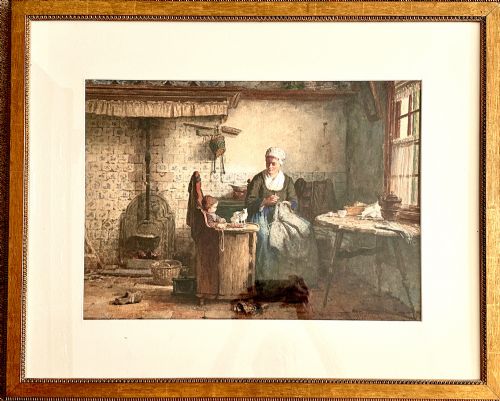

Vintage Original Watercolour Scene
A vintage original watercolour scene brings immediate atmosphere into a room through the transparent wash of pigment on paper.
Vintage Original Watercolour Scene
A vintage original watercolour scene represents a hand-painted composition executed on paper, capturing landscapes, marine views, and genre subjects. Buyers searching this phrase encounter works originating from the nineteenth century through to the mid-twentieth century.
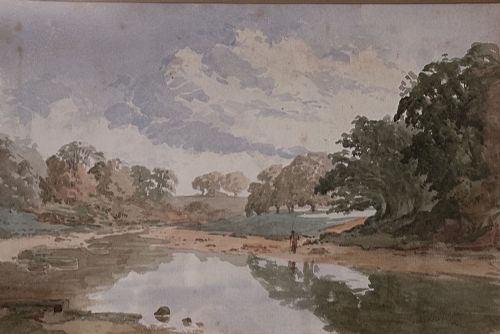
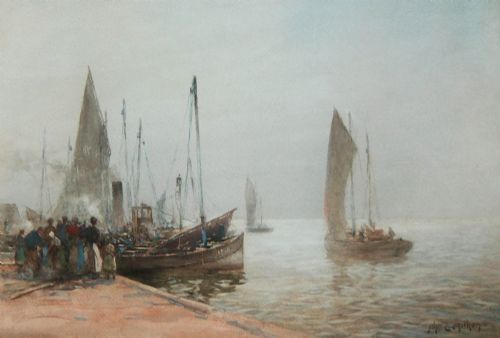
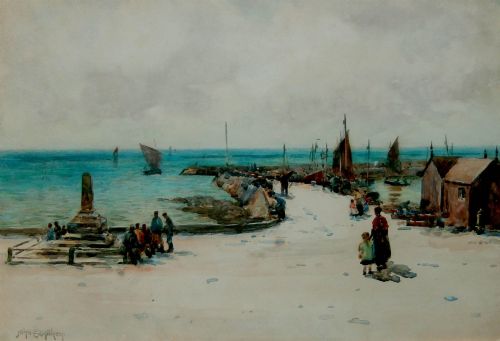
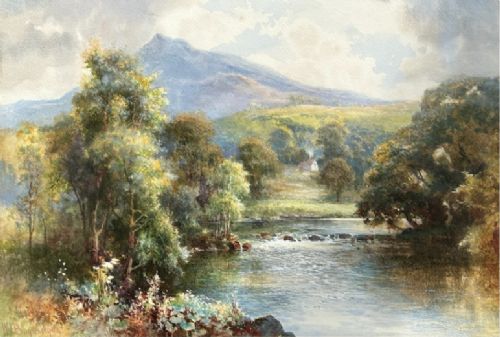
The pieces appearing most frequently span the Edwardian and Victorian periods alongside early twentieth-century British impressionism. Common formats include framed paintings and drawings depicting coastal harbours, rural farmsteads, and river valleys.
Artists record specific locations across Britain and Europe, ranging from Cornish fishing ports to Welsh rivers. Each artwork offers a singular glimpse into historical topographies rendered through direct observation.
Materials and technique
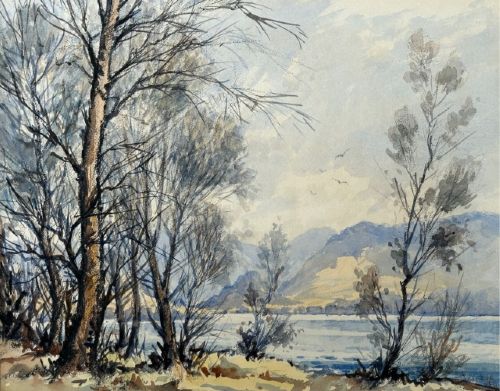
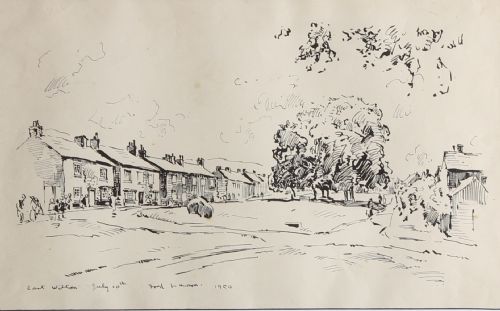
Watercolour pigment mixed with water forms the primary medium, applied in translucent washes onto heavy paper supports. Artists often incorporate ink lines to define architectural elements or tree branches before applying colour.
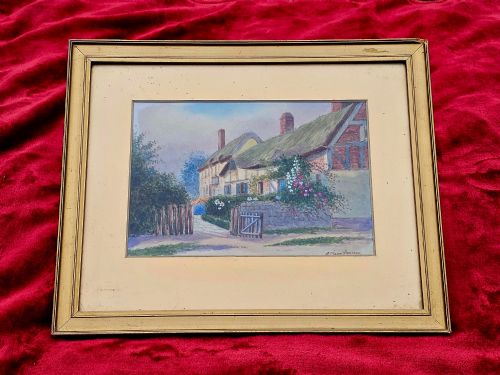
Protective framing under glass preserves the delicate pigment layers from atmospheric moisture and dust accumulation. Many surviving examples retain their original wood mouldings and gold leaf accents from the period of creation.
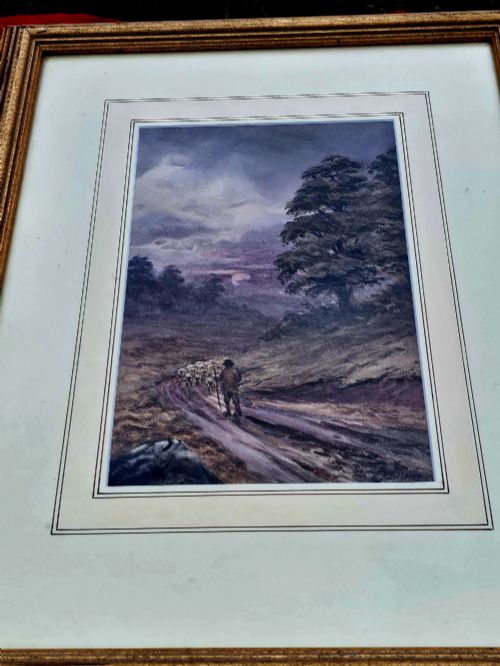
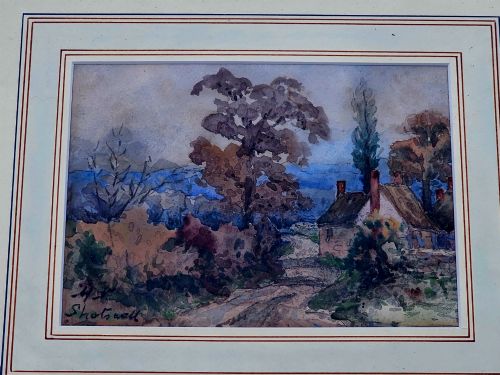
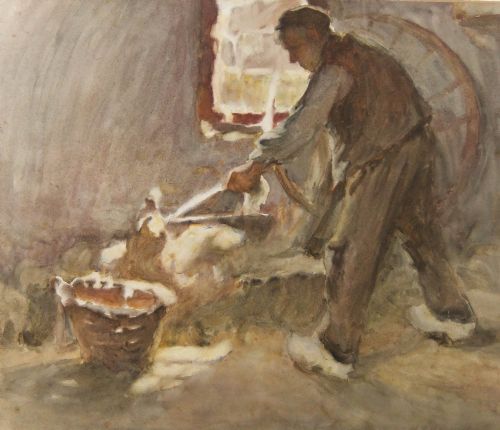
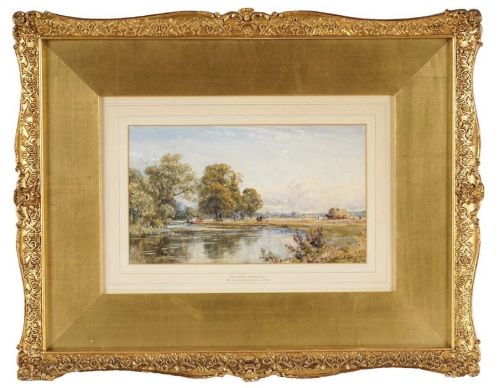
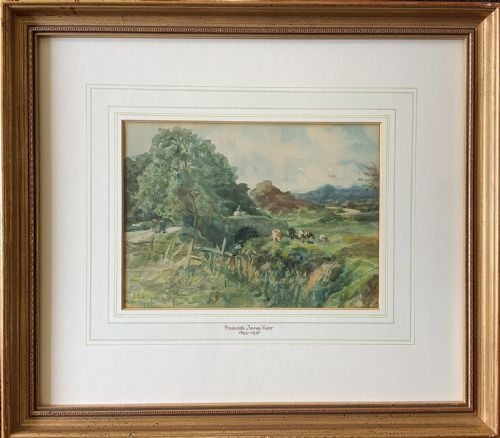
The selection includes regional British landscapes and coastal views framed in period wood mouldings with gold leaf detailing.
Assessing visual standard
The strength of composition and confidence of brushwork separate accomplished watercolours from standard topographical records. Mastery appears in the handling of light, shadow, and atmospheric depth within the scene.
Paper condition and pigment vibrancy depend heavily upon past exposure to direct sunlight and damp environments. Superior examples maintain the luminous quality of the initial washes without fading or discolouration.
Alfred Young Nutt·A. Marie Parsons·James E. Aitken·Robert Leslie Howey·Henry Silkstone Hopwood·Fred Lawson·Robert Thorne Waite·Albert Ludovici Jnr·Frank Kelsey·George F Pennington·Alfred George Morgan·Richard Harry Carter·William Lee Hankey·Ernest Pile Bucknall·Ernest Uden·John Atkinson·Louie Stanley Maurice Prince·George Soper·George Hamilton Constantine
The Vintage Original Watercolour Scene Glossary
- Watercolour pigment
- Finely ground colour particles suspended in a water-soluble binder. This material allows artists to build luminous translucent layers on paper.
- Gouache
- An opaque watercolour paint containing added white pigment to create solid areas of colour. It frequently appears alongside standard watercolour to highlight reflective surfaces.
- Wash
- A thin, fluid application of diluted pigment across the paper surface. This technique establishes uniform skies or broad background expanses.
- Impressionism
- An art style prioritising the accurate depiction of light and fleeting visual moments. Practitioners favour visible brushstrokes and en plein air observation.
Vintage Original Watercolour Scene: Frequently Asked Questions
How should I frame an antique watercolour?
Antique watercolours require framing under glass with acid-free mounts to prevent direct contact with the paper surface. This barrier protects the delicate pigments from atmospheric pollutants and humidity.
Conservation-grade materials ensure the paper breathes while blocking ultraviolet light that causes fading over decades of display.
Are these paintings unique?
Every piece created in this medium is a singular, hand-painted work executed directly onto the paper support. Unlike printed reproductions, the artist applies wet pigment by hand.
Brush texture and subtle variations in wash density confirm the original nature of each composition.
How do I identify the date of a watercolour?
Dating relies upon artist signatures, stylistic markers, and framing materials characteristic of specific eras like the Victorian or Edwardian periods. Documentation or exhibition labels on the reverse often provide secure chronological markers.
Paper watermarks occasionally offer additional clues regarding the period of manufacture.
What subjects are most common?
Rural landscapes, coastal harbours, and domestic agricultural scenes dominate the historical output of this period. Artists frequently travelled to picturesque regions in Britain and Europe to capture local industries and topography.
Townscapes and architectural views also appear regularly among regional British artists.