



Vintage Oriental Blanket Box
A vintage oriental blanket box brings aromatic wood, brass hardware, and hand-carved relief panels into a room for practical storage.
Vintage Oriental Blanket Box
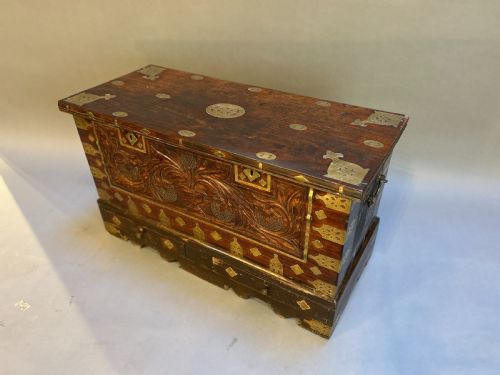
When you search for a vintage oriental blanket box, you encounter heavy trunks and storage chests built for travel and domestic use. The pieces appearing here span the nineteenth century through the art deco period, taking forms such as camphor chests, Zanzibar chests, and China trade trunks.
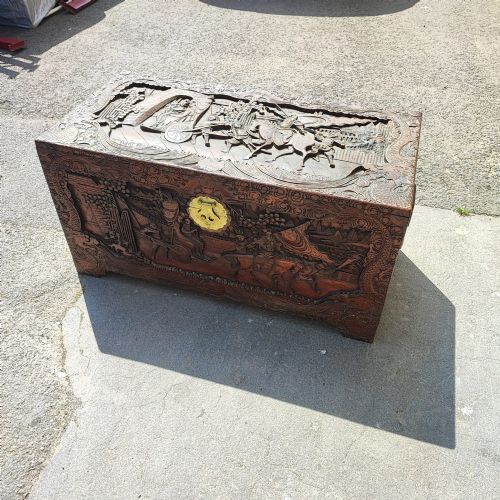
The version you meet most often on this page is the Chinese carved camphor wood chest. These storage boxes appear in various scales, frequently featuring hand-carved exterior panels and fitted brass hardware.
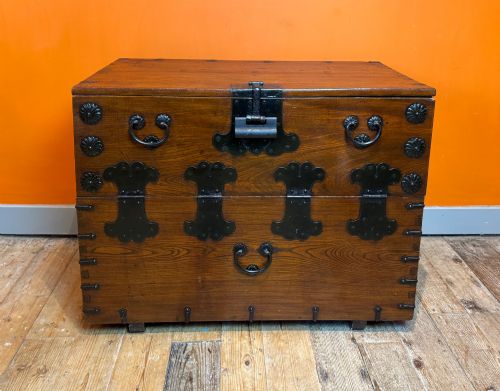
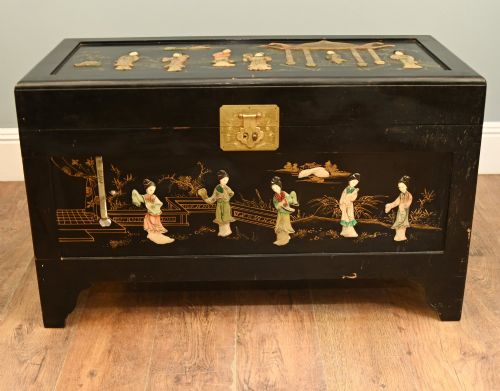
Beyond standard camphor chests, the selection includes lacquered leather pieces, brass-bound trunk forms, and regional variants like Korean elm bandaji chests. Each object serves as deep storage while displaying distinct regional cabinet-making traditions.
How they were made
Makers utilised aromatic timbers like camphor wood and teak, valued for their natural insect-repellent qualities and durability in transit. Hardwoods such as rosewood and oak also form the primary structure of these storage chests.
Construction relied on heavy brass hardware, strapwork, and studding to reinforce corners and edges during shipping. Surfaces received carved relief detailing, black lacquer, polychrome paint, or leather coverings depending on regional trade workshops.
Vintage Oriental Blanket Box Retail Price Guide 2026
Typical asking prices for vintage oriental blanket box among the pieces listed under this phrase on Sellingantiques today, from the lower quarter to the upper quarter. They describe what is for sale here now, not the wider market.
Listings span the nineteenth century, the Edwardian era, and the nineteen-twenties, incorporating camphor wood, brass, lacquer, and leather.
What varies in quality
The standard of carving determines much of the distinction between pieces, moving from simple surface incisions to deep, undercut relief panels depicting figures and landscapes. Crisp detailing in the woodwork indicates greater skill by the maker.
Hardware integrity and the retention of original brass mounts affect the overall merit of a chest. Pieces featuring intact brass hinges, corner plates, and carrying handles hold more integrity than those with replaced elements.
The Vintage Oriental Blanket Box Glossary
- Camphor wood
- An aromatic timber traditionally used for storage trunks because its natural scent protects textiles from moths. It forms the body of most pieces on this page.
- Zanzibar chest
- A heavy storage chest featuring brass studding, strapwork, and corner brackets, reflecting trade connections between India, the Middle East, and East Africa.
- China trade trunk
- A chest produced in Chinese treaty ports for export to Western buyers, often constructed from camphor wood and covered in leather or painted lacquer.
- Bandaji chest
- A traditional Korean storage chest constructed from elm with prominent metal hinges and lock plates.
- Brass hardware
- Metal mounts, hinges, and corner brackets fitted to trunks for both structural reinforcement and decorative effect.
Vintage Oriental Blanket Box: Frequently Asked Questions
What were these chests used for originally?
These trunks served as secure luggage and storage for clothing and valuables during long sea voyages across trade routes.
Their dense wood and tight lids protected contents from moisture and insects in transit.
How do I use a camphor chest at home?
They function well at the foot of a bed or in a living room as a coffee table that provides hidden storage.
The natural timber scent helps keep stored blankets and woollens fresh.
How do I date an antique trunk?
Dating relies on the style of the brass hardware, the depth of the carving, and construction marks left by the workshop.
Nineteenth-century examples often feature heavier brass strapwork, while later pieces incorporate art deco influences or limed oak.
Are all these chests made of camphor wood?
While camphor wood is the most common material found in these listings, other timbers appear across the selection.
Pieces also utilise teak, rosewood, oak, and elm depending on the regional workshop of origin.