
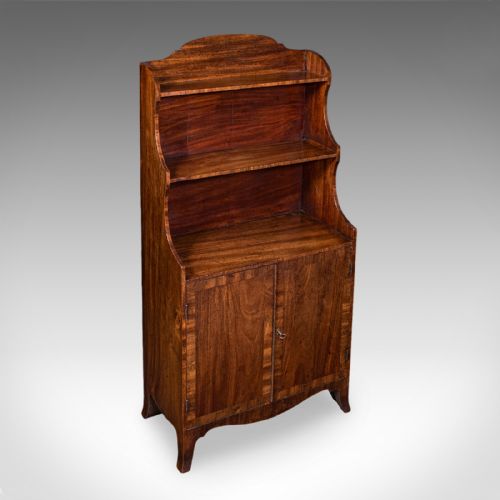
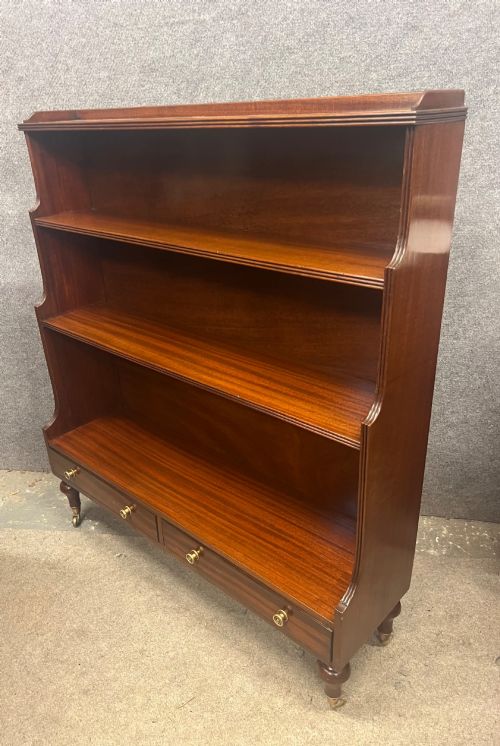
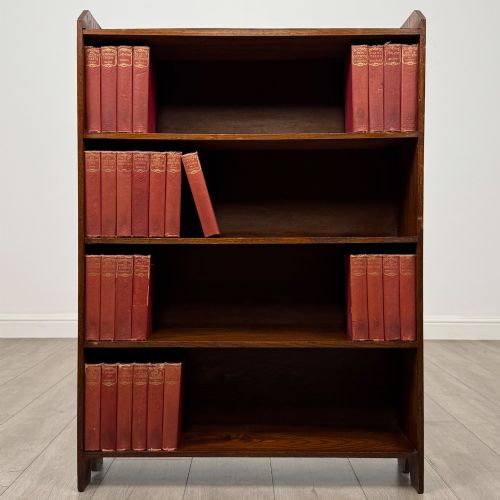
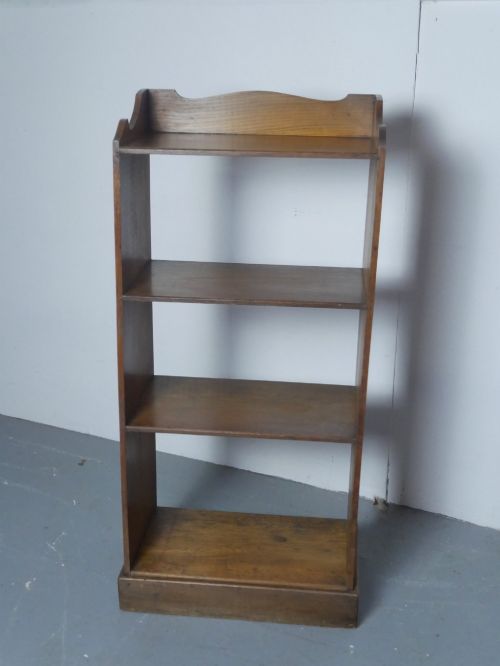
Vintage Open Tier Bookcase
These vintage open tier bookcase examples provide tiered shelving for display and storage, bringing architectural wood grain and open access into a room.
Vintage Open Tier Bookcase
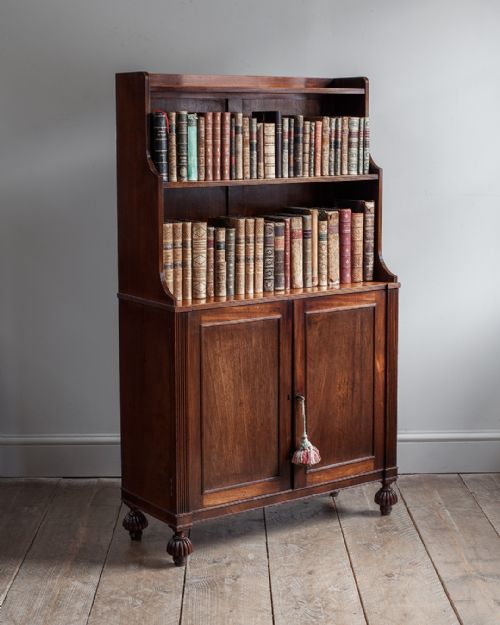
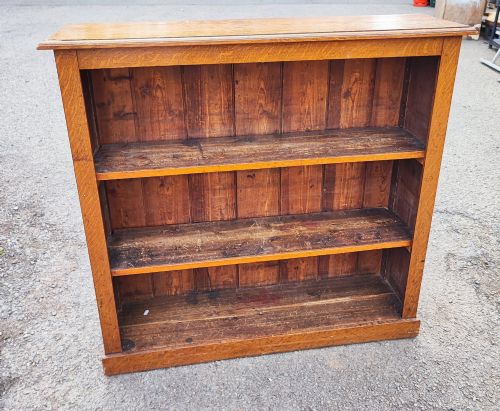
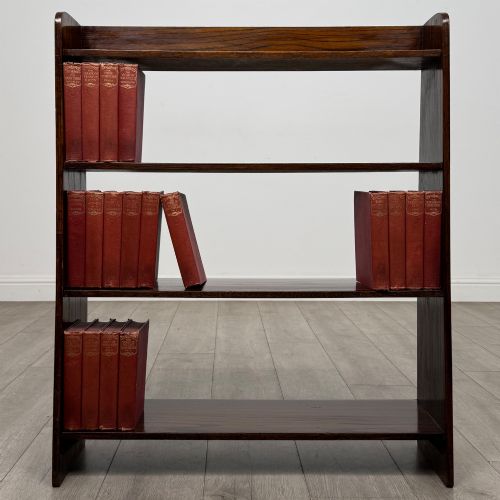
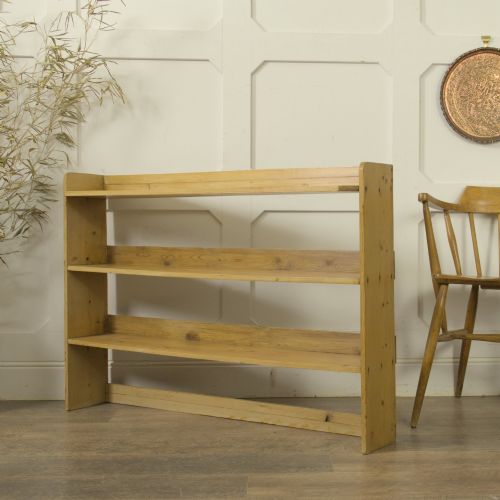
A vintage open tier bookcase offers accessible shelving across multiple levels, functioning as a practical home for books and decorative objects. The selections gathered here span several distinct periods, notably the Regency, Victorian, Edwardian, and Georgian eras.
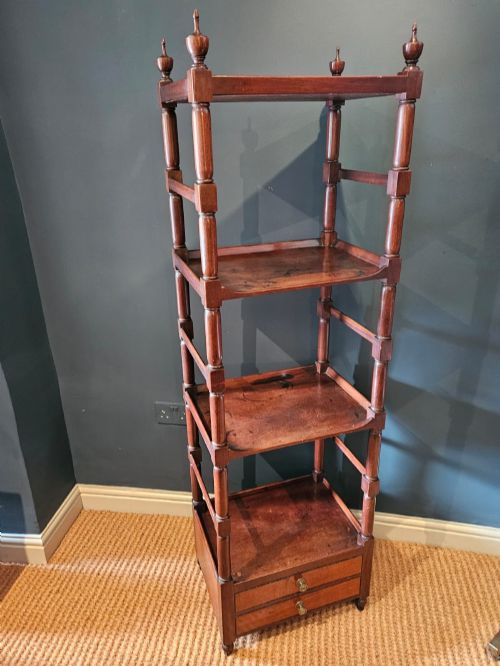
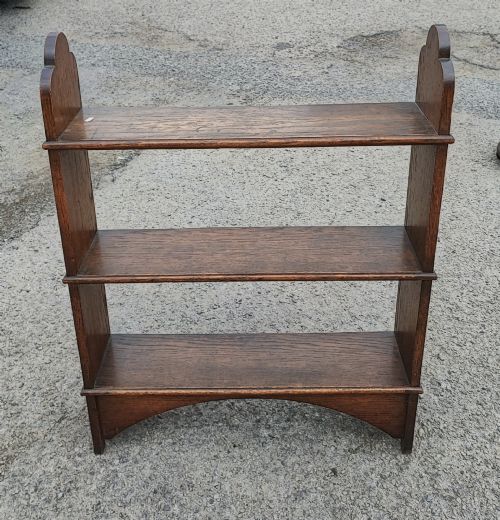
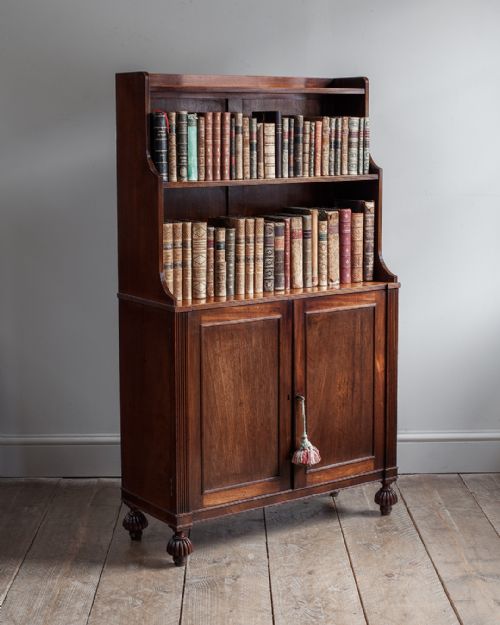
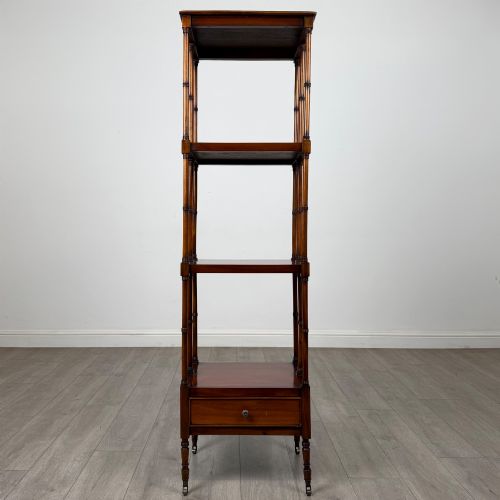
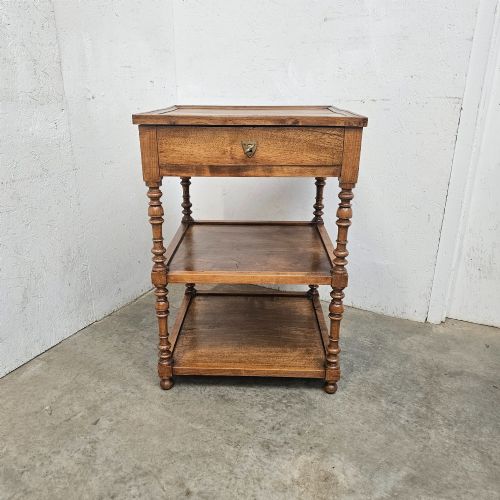
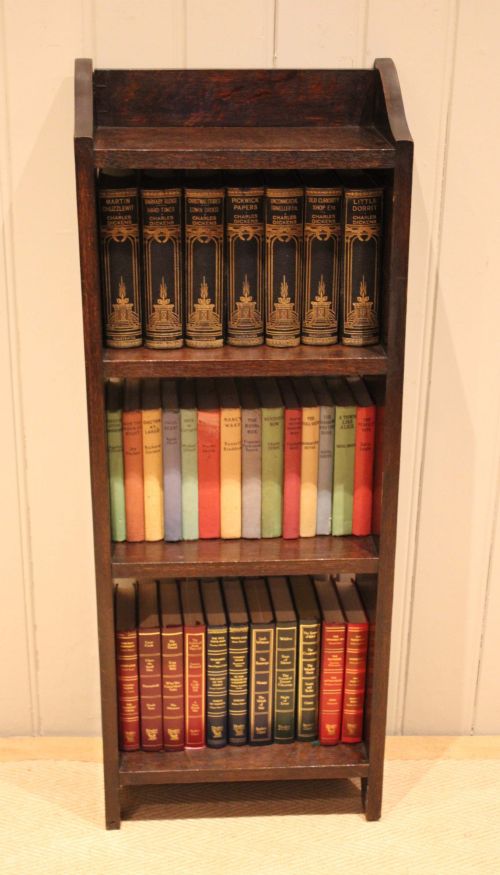
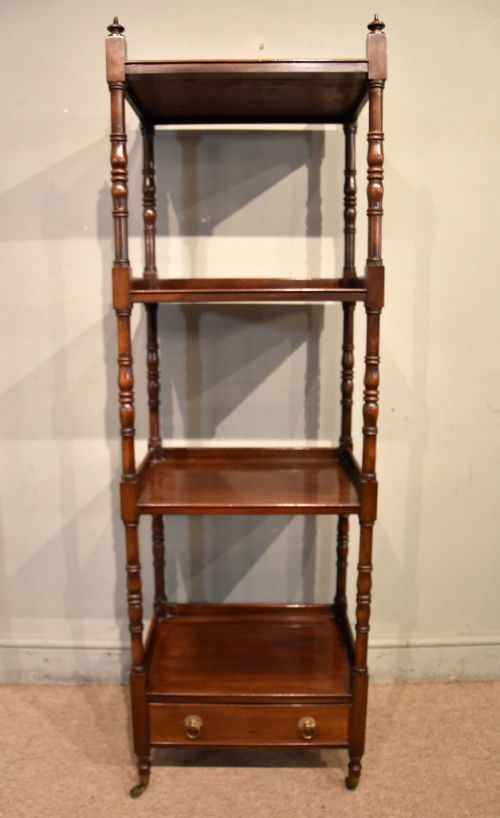
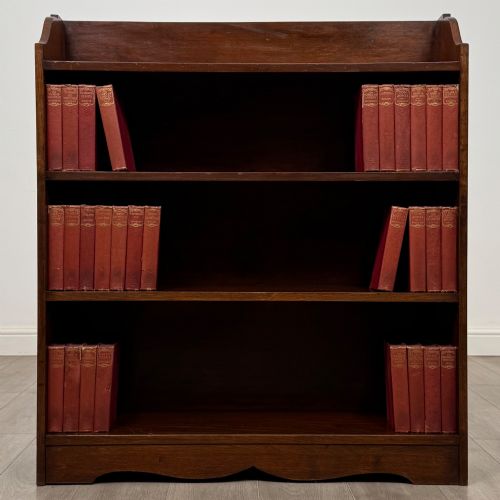
Most pieces you encounter take the form of freestanding wooden open bookcases, graduated waterfall tiers, multi-level whatnots, and wall-mounted shelves. These variations allow the furniture to serve as compact bedside units, library storage, or prominent display stands.
The origins and styles visible in the current selection range from formal English country pieces to refined rosewood and mahogany formats. Buyers searching for a vintage open tier bookcase will find formats that combine open display surfaces with compact footprints suited to modern interiors.
How they were made
Cabinet makers constructed these tier bookcases using sturdy hardwoods such as mahogany, oak, walnut, rosewood, and pine. Timber selection defined the structural integrity and visual weight of each piece, from dense burr walnut veneers to durable solid oak frames.
Joinery techniques matched the functional demands of open shelving, utilising turned legs, fitted brackets, and structural framing. Metal elements such as brass fixtures and castors occasionally appeared on larger tiered units to assist mobility and support heavy book collections.
The inventory spans Victorian, Edwardian, Regency, Georgian, and Arts and Crafts design movements.
What varies in quality
The refinement of the timber figure and the complexity of the tiered silhouette dictate the standing of an individual piece. Finer examples display carefully chosen mahogany grains, burr walnut patterns, or delicate inlays that elevate simple shelving into decorative furniture.
Structural harmony also separates standard utility pieces from exceptional cabinet work. Well-balanced proportions, clean tier transitions, and integrated architectural details demonstrate the skill of the maker long before considering age alone.
Heals
The Vintage Open Tier Bookcase Glossary
- Waterfall bookcase
- A tiered shelving unit where each lower shelf steps forward and widens progressively from top to bottom. This graduating shape creates a cascading profile popular in nineteenth-century designs.
- Whatnot
- A multi-shelved open furniture piece designed for displaying ornaments, books, and small possessions. Originating in the eighteenth century, these tiers became staples of Victorian drawing rooms.
- Etagere
- A set of open shelves or tiers used for display, often featuring slender upright supports. French walnut and mahogany versions brought lighter decorative proportions to domestic interiors.
- Inlay
- A decorative technique where contrasting woods or materials are set into the surface of a primary timber. Victorian and Edwardian makers utilised this method to accent shelf edges and backboards.
- Brass castor
- A small swiveling wheel attached to the base of heavy furniture legs to aid movement. These metal fittings frequently appear on larger nineteenth-century library and display pieces.
Vintage Open Tier Bookcase: Frequently Asked Questions
What is a vintage open tier bookcase used for?
These open shelving units serve as practical storage for books, magazines, and everyday items while keeping collections visible. They function effectively in studies, living rooms, and bedrooms as accessible display furniture.
The absence of doors encourages an open, airy arrangement for decorative objects and frequently referenced volumes. Their tiered formats allow smaller items to sit on upper levels while heavier books occupy the deeper base shelves.
How do I identify a Regency period bookcase?
Regency pieces typically feature rich mahogany or rosewood timbers, clean architectural lines, and occasionally graduated waterfall tiers. Cabinet work from this era emphasises structural balance and classical restraint.
Makers during the early nineteenth century focused on functional elegance, often pairing open shelving with slender vertical supports. Examining the grain and joinery helps distinguish these formal designs from later revival pieces.
Are these bookcases suitable for heavy books?
Solid hardwood variants constructed from oak, mahogany, or walnut provide robust support for substantial volumes. Their fixed horizontal tiers bear significant weight when the underlying timber frame remains sound.
Lighter formats, such as bamboo or wall-mounted shelves, suit display purposes and smaller paperbacks better than dense collections of heavy folios. Checking the depth and thickness of the shelves indicates their practical load capacity.
What distinguishes a whatnot from a standard bookcase?
A whatnot is specifically designed with multiple open tiers primarily intended for displaying ornaments, ceramics, and miscellaneous items rather than housing large libraries. These pieces often feature turned uprights and decorative fretwork.
Traditional bookcases prioritize shelf depth and vertical capacity for book storage. However, many Victorian and Edwardian examples overlap these categories by combining tiered display tops with lower book compartments.