



Vintage Open Salt Dishes
Vintage open salt dishes are small tableware vessels used to hold loose salt at the table, prized for their decorative variety and craftsmanship.
Vintage Open Salt Dishes
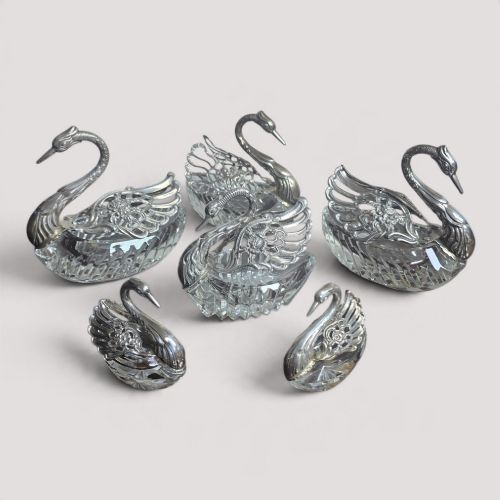
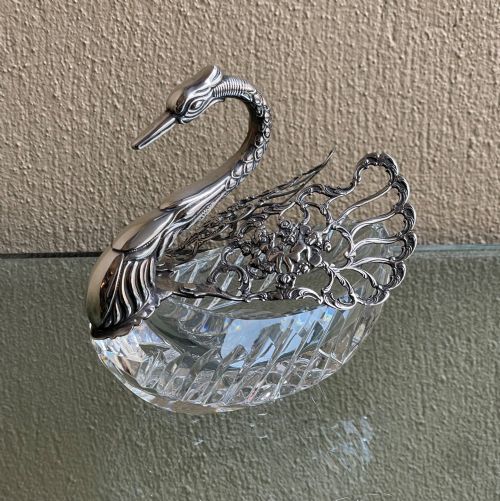
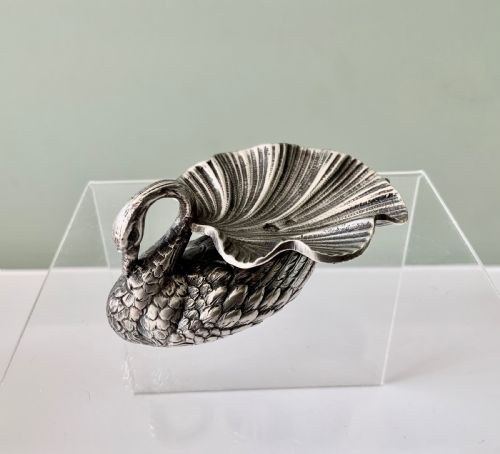
Vintage open salt dishes include salt cellars, table salt vessels, and small decorative dishes designed to hold salt before the era of individual shakers. These pieces appear in forms ranging from simple glass bowls to elaborate animal figures like swans.
The selections available span periods from the Georgian and Victorian eras through the Edwardian period, 19th century, and into the mid-twentieth century including the 1920s, 1930s, and 1960s. You will encounter styles such as Traditional European, Art Nouveau, Rococo Revival, Art Deco, and French Country.
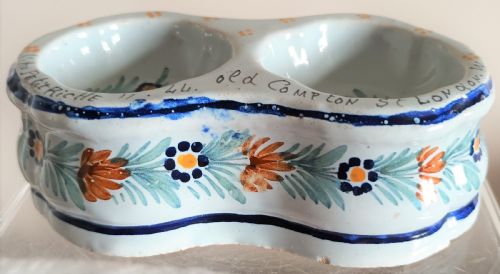
Makers and origins represented include firms like Barnards, Georg Jensen, HB Quimper, and Limoges, alongside unbranded pieces in sterling silver, silver plate, glass, and earthenware.
How they were made
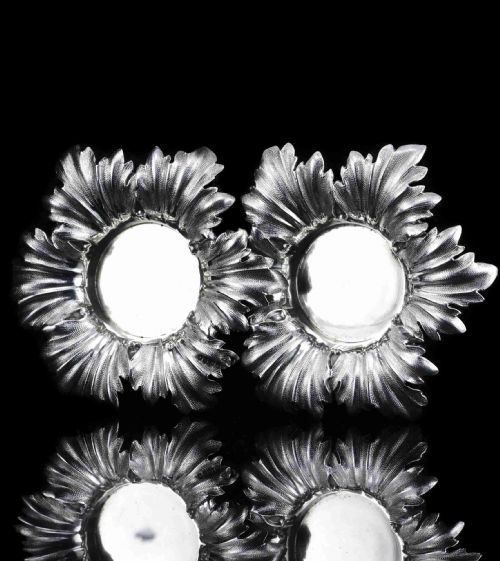
Silversmiths and manufacturers utilised sterling silver, silver plate, and solid silver to create chased, engraved, and cast vessels, often incorporating movable wings or detailed foliate chasing.
Glassmakers produced cut glass, crystal, and coloured vessels, including cranberry glass and cobalt glass liners paired with metal frameworks or used as standalone bowls.
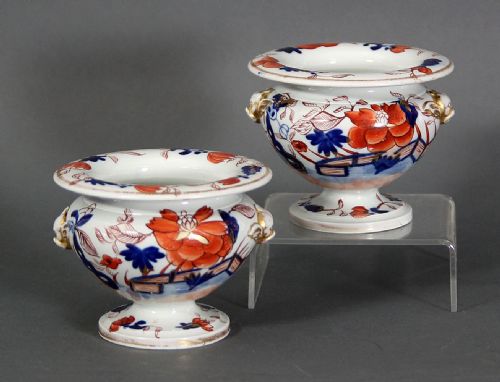
Ceramic and enamel pieces draw on earthenware, ceramic, ironstone china, and French faience, decorated with enamel work or traditional hand-painted regional designs.
Vintage Open Salt Dishes Retail Price Guide 2026
Typical asking prices for vintage open salt dishes among the pieces listed under this phrase on Sellingantiques today, from the lower quarter to the upper quarter. They describe what is for sale here now, not the wider market.
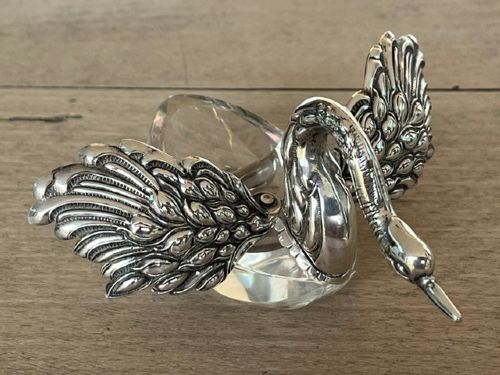
Several silver swan salt cellars feature hinged, movable wings that open to reveal the salt basin resting on the bird's back.
What varies in quality
The standard of metalwork distinguishes simpler plated items from solid silver and sterling pieces carrying maker marks and detailed hand chasing.
Material pairing elevates certain designs, particularly where hand-cut crystal, cobalt glass liners, or cranberry glass insert cleanly into fitted metal mounts or silver swan bodies.
Barnards·Georg Jensen·HB Quimper·Limoges·Mason
The Vintage Open Salt Dishes Glossary
- Salt Cellar
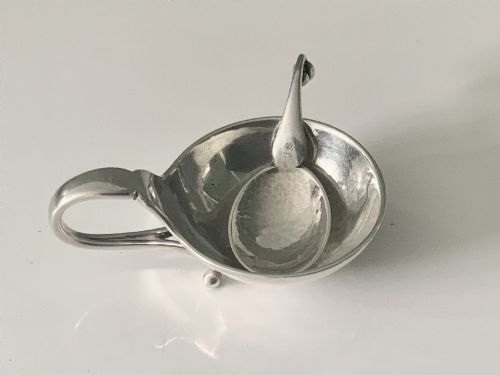
- A small open bowl or dish placed on the dining table to hold loose salt. These vessels predated modern shakers and required guests to pinch salt using small spoons or fingers.
- Faience
- Tin-glazed earthenware produced in France and other European countries. Pieces from potteries like Quimper feature hand-painted regional decoration.
- Cobalt Glass
- Deep blue glass frequently utilised for removable liners inside silver-plated or metal salt cellars. The dark colour provides a striking contrast against polished metal.
- Foliate Chasing
- Surface ornamentation hammered into metal using punches to create leaf and plant motifs. This technique adds texture and depth to Victorian and Georgian silver pieces.
- Ironstone China
- A durable type of heavy earthenware patented in the nineteenth century. It offered a robust alternative to porcelain for everyday tableware.
Vintage Open Salt Dishes: Frequently Asked Questions
What are vintage open salt dishes?
Vintage open salt dishes are small vessels designed to hold salt on the dining table before the widespread adoption of salt shakers. Guests would take pinches of salt directly from the dish.
They appear in various materials including sterling silver, cut glass, cobalt glass, and earthenware, often shaped as bowls, double salt holders, or animals.
How do I use them today?
These dishes make excellent small containers for holding rings and jewellery on a dressing table or organising small items on a desk.
At the dining table, they can still serve salt, condiments, or individual portions of butter and sauces.
How do I identify the period?
Dating relies on stylistic clues, hallmarks on silver items, and maker marks stamped on ceramics and glass. Georgian and Victorian pieces often feature heavy chased decoration or Georgian silhouettes.
Later pieces from the 1920s and 1930s adopt geometric Art Deco lines, while mid-century items utilise distinct glass cutting and manufacturing techniques.
Are liners necessary?
Liners made of cobalt glass or crystal protect metal salt cellars from corrosion, as salt can react aggressively with silver over extended periods.
Many metal frames were manufactured specifically to house removable glass liners.