
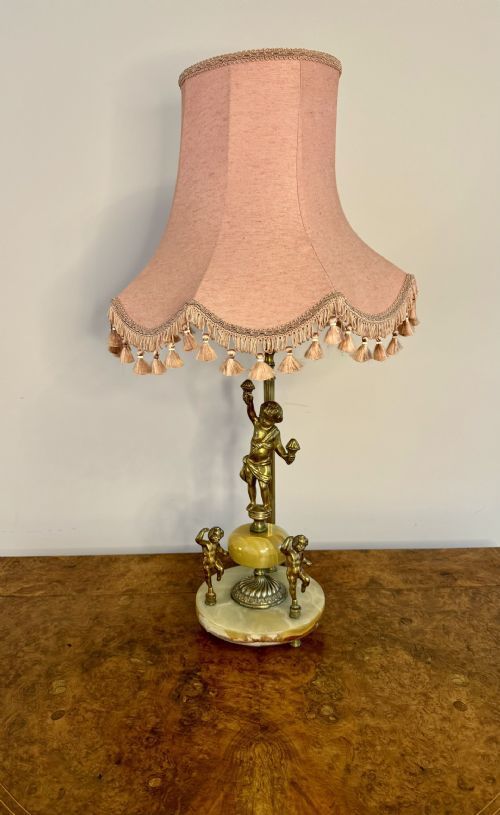


Vintage Onyx Table
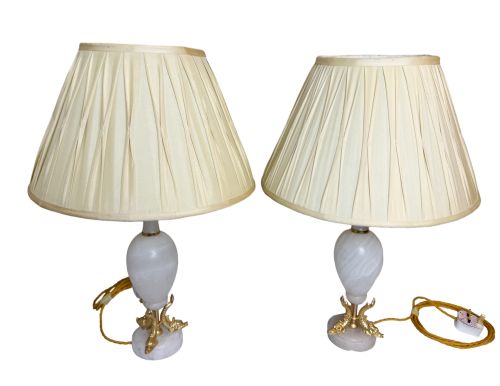
A vintage onyx table brings warm, banded stone surfaces and period metalwork into a room.
Vintage Onyx Table
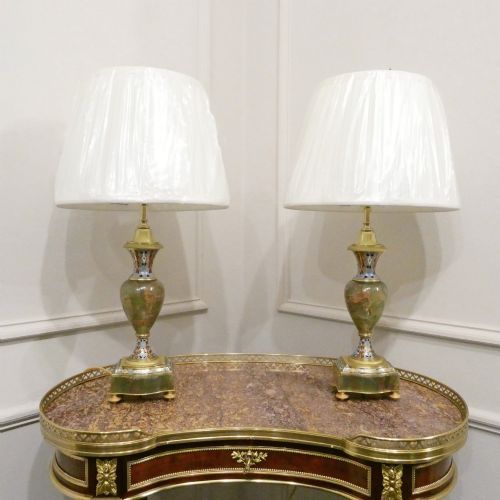
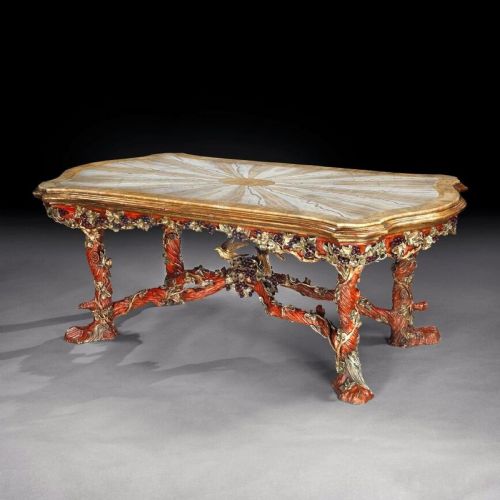
A vintage onyx table encompasses occasional pieces, centre tables, plant stands, and occasional furniture featuring polished stone tops supported by brass, gilt bronze, or carved wood. These pieces span the late nineteenth century through the Art Deco period of the nineteen-thirties.
The versions most commonly met here include French occasional tables from nineteen hundred with galleried wooden frames, and nineteen-thirties pedestal tables combining chiseled brass with green onyx. Smaller items like dressing mirrors and plant stands also appear frequently.
Makers and designers worked within Victorian, Edwardian, and Art Deco idioms, utilising the natural patterning of white and green onyx to create decorative surfaces for domestic interiors.
Evaluating quality and execution
Quality rests upon the depth of the stone polishing and the complexity of the mineral banding within the onyx top. Superior examples show minimal internal fracturing and an even, lustrous sheen across the entire surface.
The supporting metalwork dictates the overall caliber of the piece. Finely chased brass, crisp ormolu mounts, and solid bronze indicate high-grade production compared to simpler stamped metal elements.
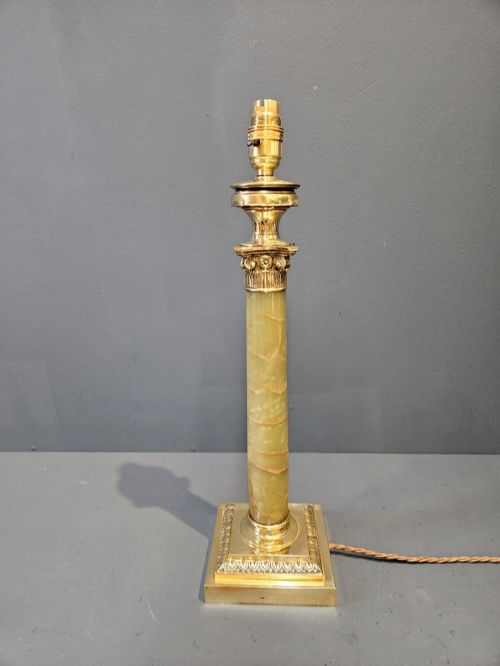
Listings feature green onyx alongside standard white varieties, paired with materials such as brass, gilt bronze, and walnut across the Victorian and Art Deco periods.
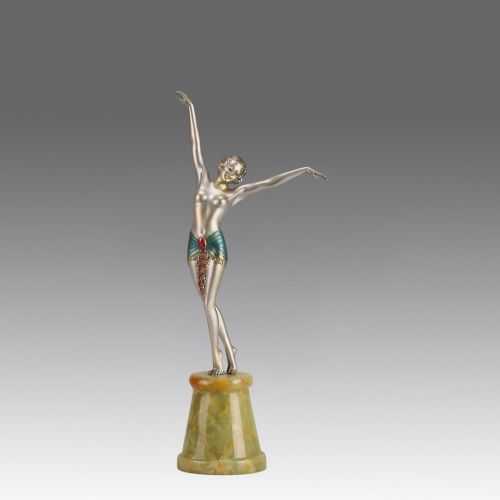
Amleto Bertoni·Josef Lorenzl·Ferdinand Priess
The Vintage Onyx Table Glossary
- Onyx
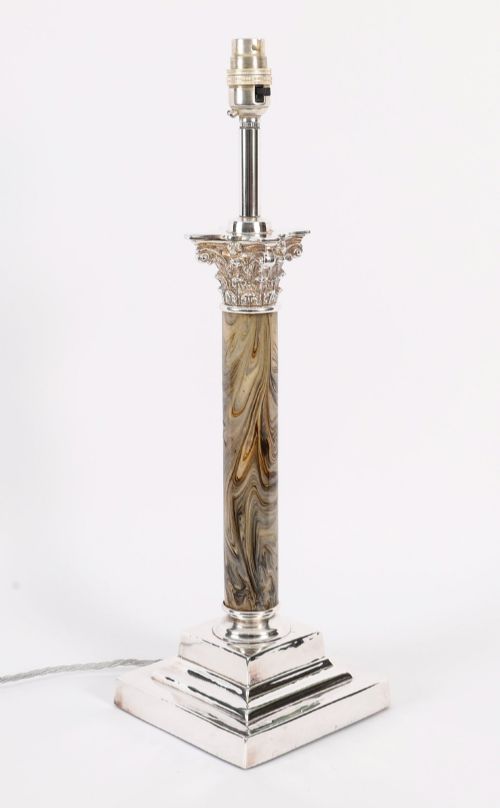
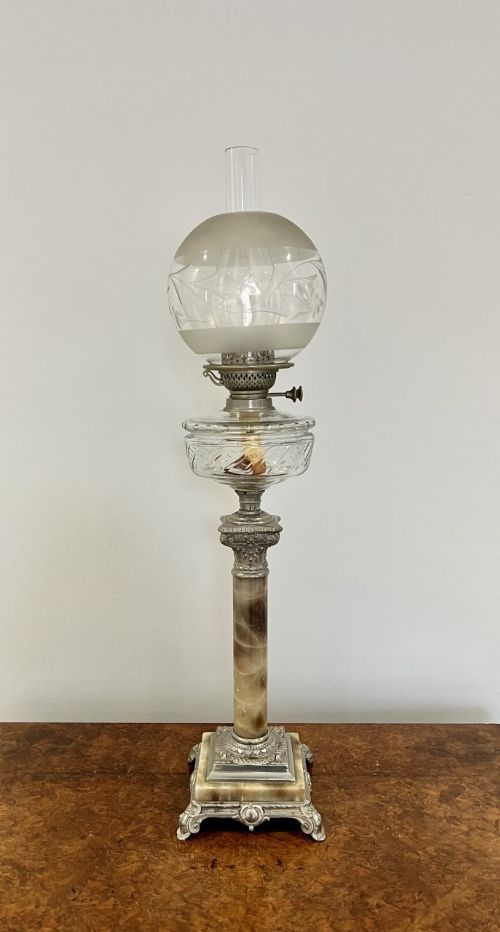
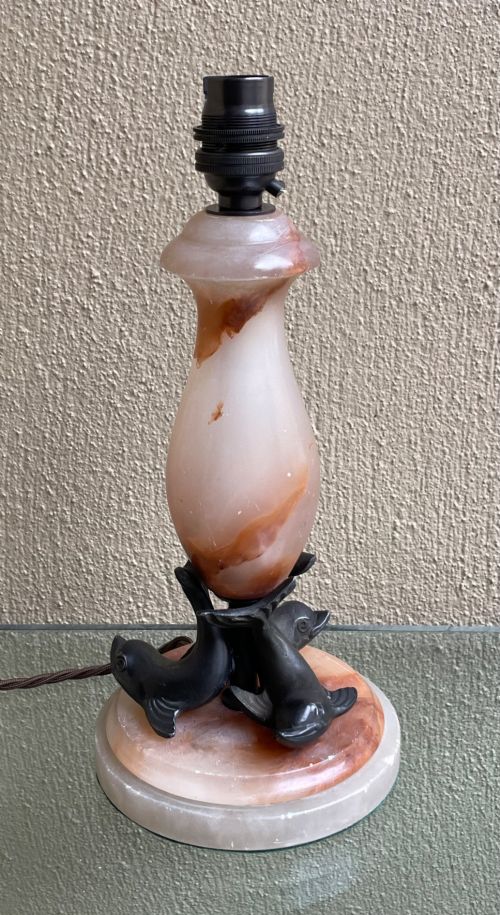
- A varieties of chalcedony quartz featuring parallel curved bands of contrasting colours. It provides a smooth, decorative surface for tabletops and lamp bases.
- Ormolu
- Gilded bronze produced by applying a mercury and gold amalgam to cast bronze. This technique creates a rich, bright gold finish on metal mounts.
- Champleve
- An enamelling technique where troughs are carved into a metal surface and filled with vitreous enamel. It appears on decorative mounts and lamp bases.
- Galleries
- Low decorative borders fitted around the perimeter of a tabletop to keep items from sliding off. They are typically cast in brass or shaped from walnut.
Vintage Onyx Table: Frequently Asked Questions
How do I clean a vintage onyx table?
Use a soft, dry cloth to remove dust from the polished stone surface. Avoid acidic cleaners or excessive water, which can damage the natural polish and the metal mounts.
For the brass or bronze supports, gentle wiping with a dry microfiber cloth maintains the metal finish without stripping patination.
Are these tables sturdy enough for daily use?
Most examples function well as occasional tables, plant stands, or side tables for holding lightweight objects. The stone tops carry considerable weight, making the pieces stable on level floors.
Care should be taken to avoid heavy impacts on the edges of the onyx, as natural stone can chip under sharp blows.
How do I date a vintage onyx table?
Stylistic markers help determine the period, such as ornate carved wood and galleried edges on Victorian or nineteen hundred pieces. Geometric lines and green onyx paired with chiseled brass typically point toward nineteen-thirties Art Deco production.
Construction methods also provide clues, with earlier pieces showing hand-finished joinery and later examples incorporating mass-produced cast metal mounts.
Can I place hot items on the stone top?
Placing hot cups or dishes directly on the polished onyx should be avoided. Sudden temperature changes can stress the stone and dull the protective surface polish.
Utilising coasters or mats protects the natural banding from moisture rings and thermal shock.