



French Onyx Stand
A French onyx stand brings rich mineral warmth and gilt metal detail to a room, offering a sturdy yet decorative platform for display.
French Onyx Stand
When you search for a french onyx stand, you encounter tall pedestals, multi-tiered plant stands, and occasional tables designed to elevate ornaments or lighting.
The pieces on this page span the nineteenth century into the twentieth, drawing on Neoclassical, Napoleon III, and Louis XVI revival aesthetics.
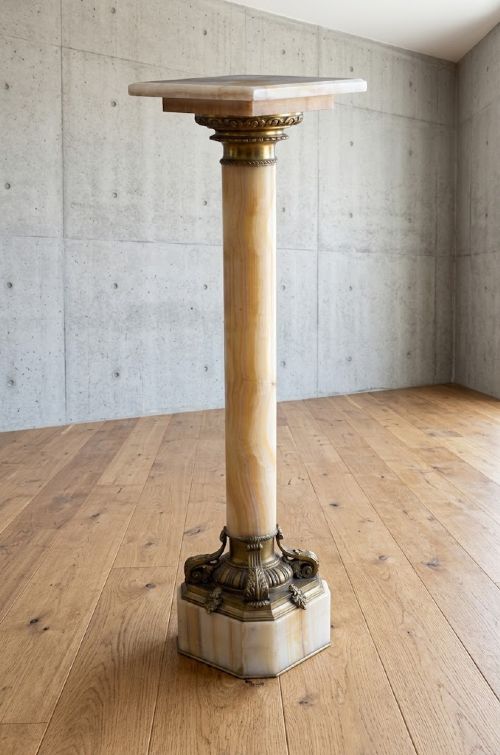
Tall columns and torcheres dominate the selection, alongside smaller tea tables, display stands, and ink-stands fitted with decorative metal mounts.
How they were made
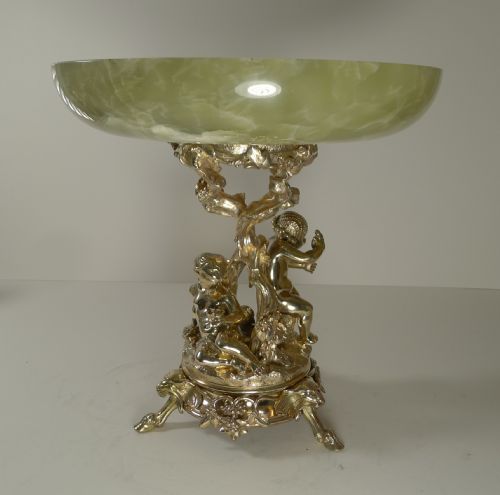
Makers combined natural stone with cast and chased metal, mounting solid or veneered onyx onto frames of brass, ormolu, and gilded bronze.
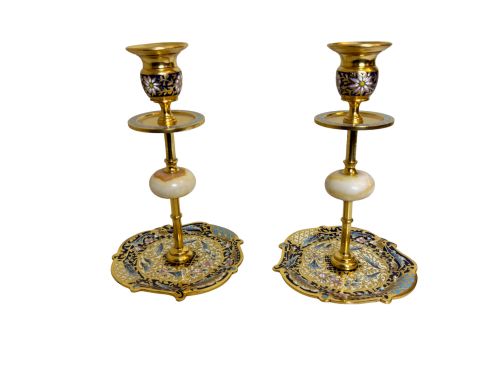
Details such as champleve enamel, flower mouldings, and ormolu collars were integrated to accent the banded patterns of the stone.
Listings combine nineteenth-century periods with twentieth-century Edwardian and 1930s examples, uniting brass, marble, and gilt bronze.
What varies in quality
The distinction between standard items and finer examples lies in the weight and figuring of the onyx, alongside the crispness of the bronze or ormolu mounts.
Subtleties in casting, such as the depth of chiseled brass work and the precision of column joints, separate mass-produced items from exhibition pieces.
The French Onyx Stand Glossary
- Onyx
- A banded variety of chalcedony prized for its translucent layers and variegated mineral tones. It serves as the primary stone surface for these stands and columns.
- Ormolu
- Gilded bronze produced through a mercury amalgamation process, applied to metal mounts and collars. It provides a bright, durable golden finish.
- Champleve
- An enamelling technique where troughs are dug into a metal surface and filled with vitreous paste before firing. It decorates candlesticks and smaller fittings.
- Torchere
- A tall ornamental stand originally designed to support a torch or candle. In later periods, these evolved into plant stands and sculpture columns.
- Neoclassical
- A revival style drawing on classical Greek and Roman motifs, visible in the strict symmetry and column forms of these pieces.
French Onyx Stand: Frequently Asked Questions
What rooms suit a pedestal?
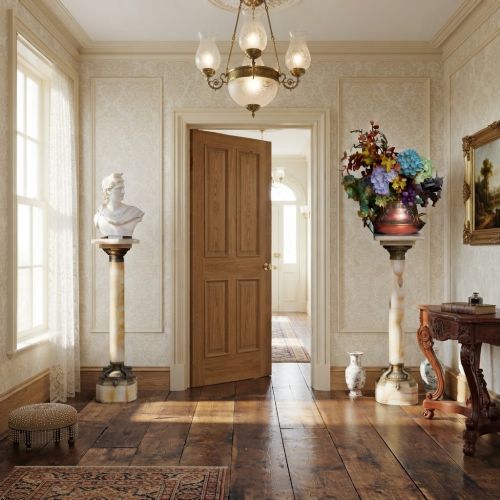
These columns and stands fit neatly into corners or empty wall spaces where a vertical element is required to break up flat expanses.
They provide a stable surface for urns, sculptures, or table lamps without consuming excessive floor area.
How do I clean the stone?
Onyx benefits from gentle dusting with a dry microfibre cloth to protect the polished surface from abrasive grit.
Moisture and chemical polishes should be avoided to prevent damage to both the mineral layers and the surrounding ormolu mounts.
Are these tables sturdy?
The combination of heavy stone tops and substantial bronze or brass frames gives these stands considerable physical weight.
While robust enough for plants and decorative objects, taller columns should be placed away from heavy foot traffic to prevent tipping.
How do I date a piece?
Dating relies on observing the stylistic vocabulary, such as Napoleon III mounts or Edwardian turnings, matched against construction methods.
Makers often left subtle clues in the casting quality and the type of brass screws or fixings used beneath the stone.