




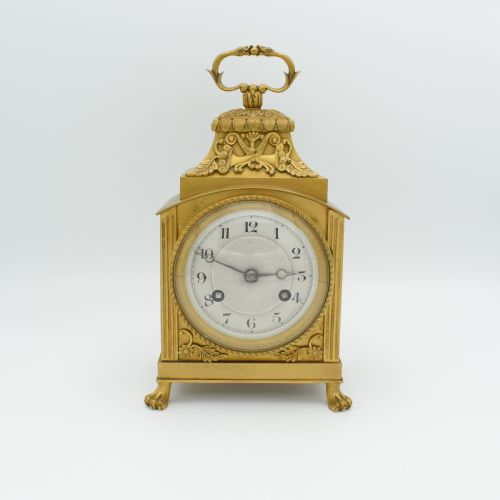


Vintage Officer Clock
These vintage officer clock examples span nineteenth-century French gilt brass carriage designs to military mess timepieces, offering reliable mechanical precision and portable elegance.
Vintage Officer Clock
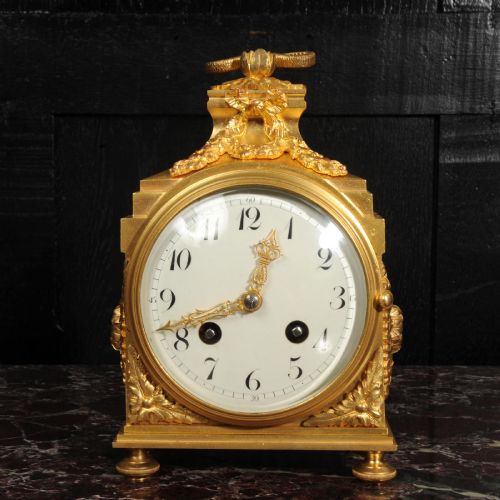
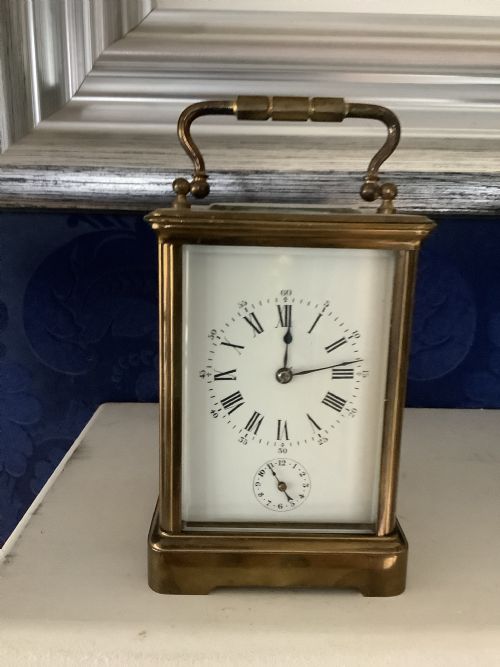
When you search for a vintage officer clock, you encounter portable timepieces built for travel or military deployment, spanning the mid-nineteenth century up to the Second World War. The most frequent examples on this page are French carriage clocks and British military mess pieces.
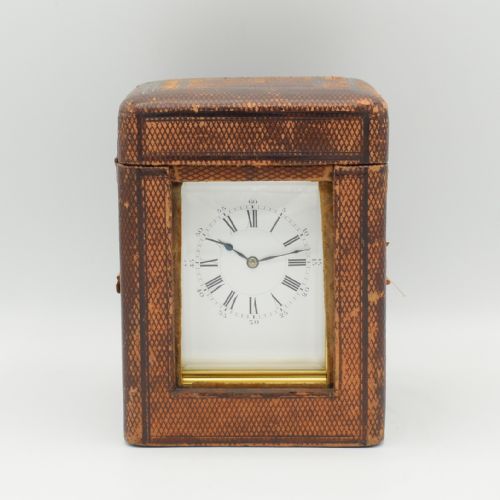
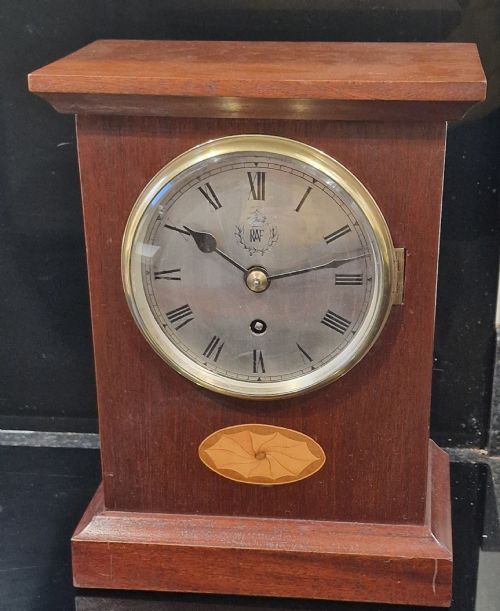
The selection ranges from Victorian carriage clocks housed in leather travel cases to heavy-duty Royal Air Force officers' mess clocks from the nineteen-forties. These objects bridge formal domestic mantel decoration and functional utilitarian service use.
French models often display classical architectural styling, while military examples prioritise plain dials and robust metal cases suitable for communal service environments.
How they were made
Maker workshops utilised heavy brass, gilt bronze, or ormolu for the structural cases, housing intricate mechanical gear trains behind bevelled glass panels. Enamel dials provide the crisp white background for black Roman or Arabic numerals.
Travel variations incorporated sturdy leather cases lined with velvet to protect the polished metal surfaces during transit, while military mess clocks relied on simpler wooden or metal housings designed for durability.
What varies in quality
Quality differences emerge in the complexity of the movement and the crispness of the case casting. Simple time-only mechanisms sit at one end, while grande sonnerie striking complications and alarm functions represent higher tiers of horological craftsmanship.
The presence of original signed enamel dials, matching numbered travel cases, and finely engraved gilt brass mounts distinguish superior examples from standard production pieces.
Henri Jacot·J. F. Bautte Et Cie·Le Roy et Fils·Bourdin Paris·Tiffany·E.J. Dent·Paul Garnier·J.W. Benson·Joseph Soldano
The Vintage Officer Clock Glossary
- Carriage clock
- A small, spring-driven clock designed for travel during the nineteenth century. These pieces usually feature a carrying handle on top and glass panels to view the movement.
- Grande sonnerie
- A striking mechanism that chimes the hours and the quarters automatically on every quarter hour. It represents an advanced level of clockmaking skill.
- Pendule d'officier
- A traditional French officer's clock style, often featuring an architectural case and distinct swinging handle. They emerged from military campaigns where reliable portable time was essential.
- Ormolu
- Finely ground high-carat gold mercury-gilded to a bronze base metal. This technique creates a rich, durable golden finish on nineteenth-century clock cases.
Vintage Officer Clock: Frequently Asked Questions
How do I wind a carriage clock?
Most mechanical carriage clocks utilise a key inserted into arbors located on the backplate of the movement. Turn the key gently until you feel resistance, taking care not to overwind the mainspring.
Ensure you wind both the time train and any striking or alarm trains fully to maintain accurate timekeeping and chime synchronization.
What is a grande sonnerie movement?
A grande sonnerie is a complex clock movement that strikes both the hour and the preceding quarters automatically at every quarter-hour interval. This contrasts with petite sonnerie clocks, which chime only the quarters on the intermediate hours and both the hours and quarters on the hour.
These sophisticated mechanisms require precise gear trains and multiple hammers striking gongs or bells inside the brass case.
How were officer clocks used originally?
Officer clocks served as portable timekeepers for military personnel on campaign or during garrison duties, providing reliable time away from fixed domestic interiors. Their robust brass construction and fitted leather travel cases protected the delicate gear trains from dust and rough handling.
Later variations, such as mess clocks, hung on the walls of military dining quarters to regulate daily routines and schedules.
How do I care for a vintage clock?
Keep your clock on a stable, level surface away from direct sunlight, extreme temperature fluctuations, and damp environments. Winding should happen regularly and gently at the same time each week.
Professional servicing every few years ensures the internal brass pivots and gear trains remain properly lubricated and free from accumulated dust.