




Antique Clock with Alarm
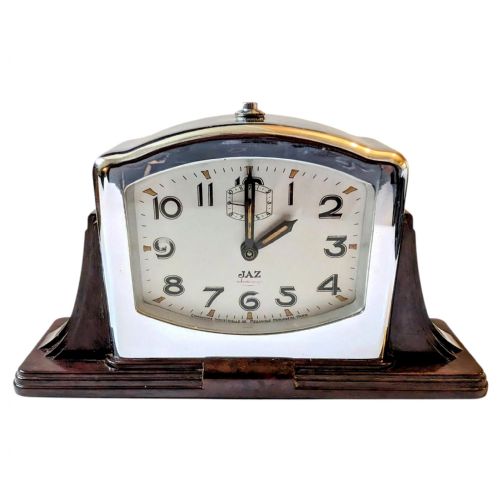
An antique clock with alarm is a mechanical timepiece designed to wake or alert its owner, combining precision timekeeping with an audible strike.
Antique Clock with Alarm
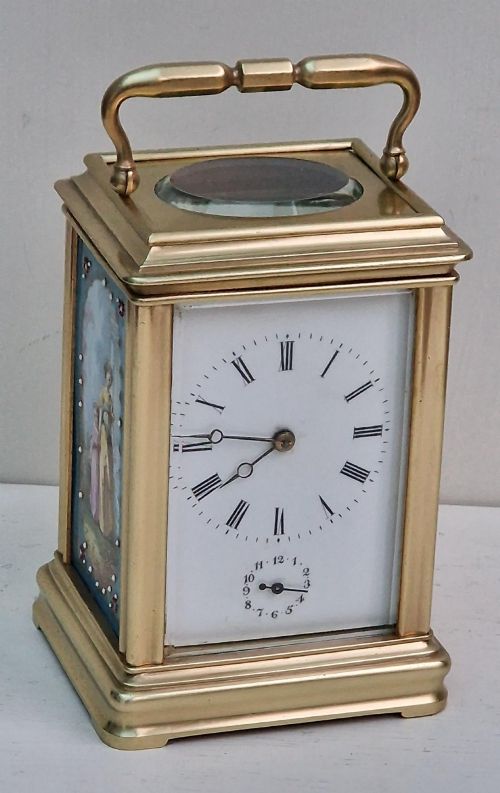
An antique clock with alarm is primarily encountered on this page in the form of portable carriage clocks and traditional bracket clocks. These pieces span from the eighteenth century through the Edwardian period, originating predominantly from English and French workshops.
Carriage clocks dominate the selection, featuring brass and gilt bronze gorge or corniche cases housing mechanical movements. Bracket clocks in mahogany, wood, and red and gold lacquer represent the earlier eighteenth-century English tradition on the page.
How they were made
The construction of these pieces relies heavily on brass, steel, and glass, often combined with gilt bronze, enamel, and mahogany. Movements incorporate complex mechanisms such as verge escapements, fusee systems, and repeater functions alongside the alarm complication.
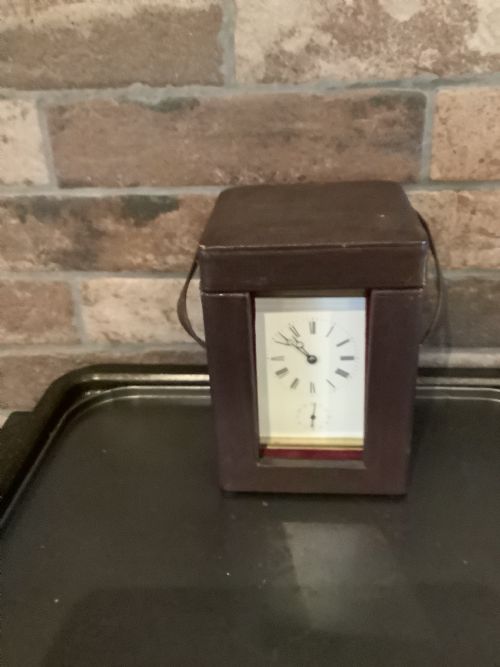
Cases are cast, polished, and glazed to display the internal gear train, while wooden bracket clocks utilise mahogany and lacquered finishes decorated with gold leaf. Original leather travel cases and fitted wooden presentation boxes frequently accompany the French carriage clocks.
Listings on this page span the eighteenth, nineteenth, and early twentieth centuries, featuring English bracket clocks alongside French and Swiss carriage clocks.
What varies in quality
Quality diverges between standard timepieces and those equipped with grande sonnerie striking, quarter repeating, and complex escapements. The refinement of the case casting, the weight of the gilt bronze or brass, and the crispness of the enamel dial markings distinguish finer examples.
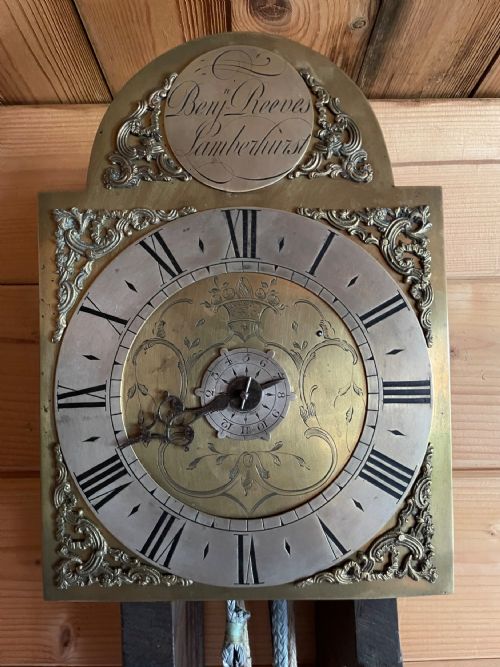
The presence of original matching components, such as winding keys, fitted leather travel cases, and documented maker signatures on the dial or movement, elevates the standing of an individual piece.
William Barrow London·John Taylor London·James Smith London·Chater And Son·J F Bautte Et Cie·Drocourt·Dent
The Antique Clock with Alarm Glossary
- Alarm
- A secondary mechanism in a clock designed to sound a mechanical strike at a pre-set time. This function is typically integrated into the main movement or driven by an auxiliary train.
- Carriage clock
- A small, portable spring-driven timepiece developed for travel in the nineteenth century. These clocks usually feature a brass frame with glass panels and a folding handle on top.
- Verge escapement
- An early type of mechanical escapement utilising a crown wheel and a verge axis with pallets. It is commonly found in seventeenth and eighteenth-century lantern and bracket clocks.
- Grande sonnerie
- A complex striking train that chimes the hours and the quarters automatically on every quarter hour. Such movements represent a high degree of watchmaking skill.
- Gorge case
- A distinct style of carriage clock case featuring stepped mouldings at the top and bottom. It is characteristic of better-quality nineteenth-century French production.
- Fusee
- A conical pulley used in spring-driven clocks to equalize the diminishing torque of the mainspring as it unwinds. This ensures a more consistent force is delivered to the escapement.
Antique Clock with Alarm: Frequently Asked Questions
How do you set the alarm on an antique carriage clock?
Setting the alarm typically involves turning a small auxiliary hand on the dial or winding a separate alarm train via a dedicated arbour on the backplate. The mechanism releases a hammer to strike a bell or the inside of the case when the hour hand reaches the designated position.
Most portable examples require the alarm spring to be wound independently from the timekeeping train to function properly.
What is the difference between a bracket clock and a carriage clock?
Bracket clocks are larger, weight-driven or spring-driven table clocks originating primarily in England during the seventeenth and eighteenth centuries, housed in wood or lacquered cases. Carriage clocks are smaller, transportable French or Swiss timepieces encased in brass and glass designed for travel.
Bracket clocks usually remain stationary on furniture, whereas carriage clocks are built with carrying handles for mobility.
Why do some carriage clocks have leather cases?
Carriage clocks were originally built for travel by coach or train, necessitating protective leather outer cases to shield the delicate brass and glass housing from impact. These fitted cases often feature cutouts for viewing the top glass panel and slots for storing the winding key.
Finding a clock with its original leather case is uncommon and adds to the historical completeness of the object.
What does a repeating function do?
A repeating mechanism allows the owner to press a button or pull a cord on the case to make the clock restrike the last hour or the most recent quarters. This was particularly useful for telling the time in the dark before reliable artificial illumination.
Repeating complications require additional gear trains and intricate rack-and-snail assemblies within the movement.